
Last updated September 22, 2026
Level 1 sweep and inspection to the NFPA 211 annual standard - flue, crown, cap, and flashing checked and photographed
Chimney sweep logs do not sweep chimneys. They loosen some creosote - which then falls where a brush and vacuum still have to collect it.
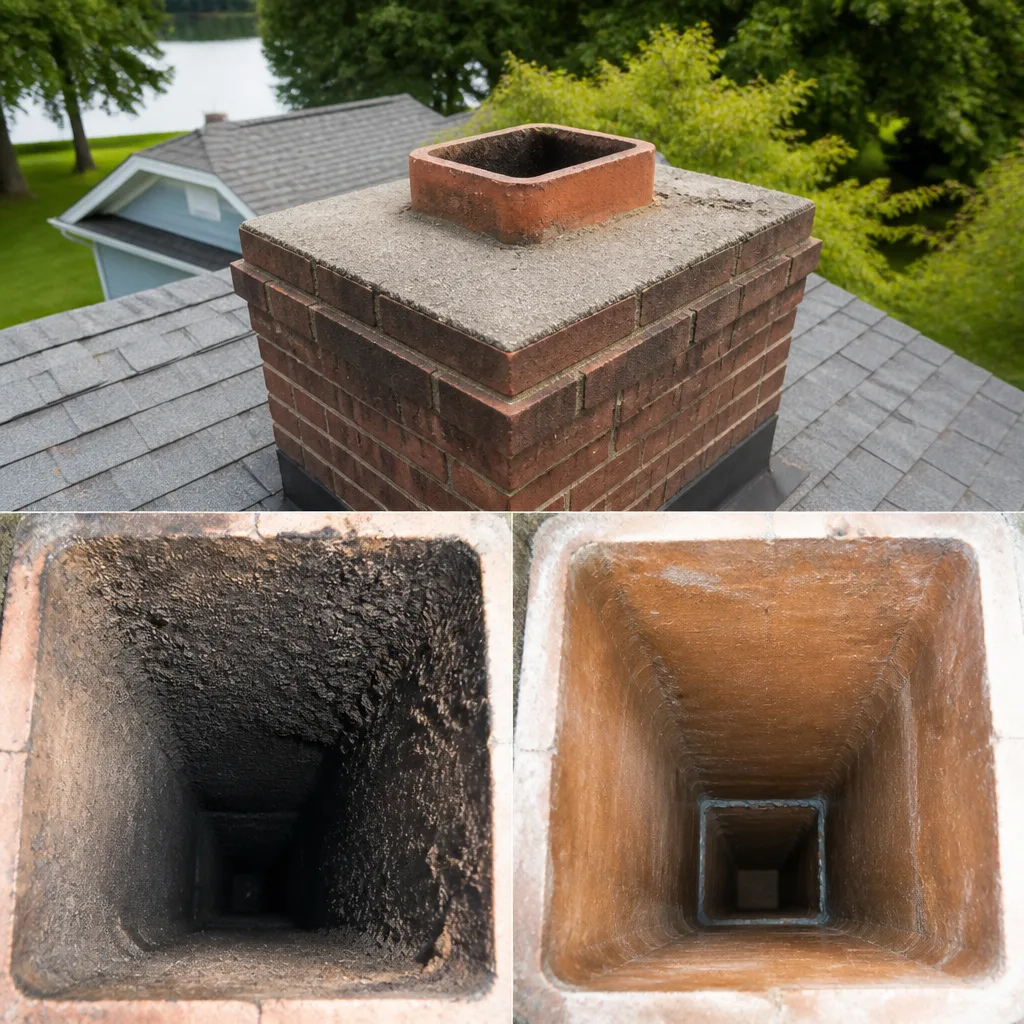
 Before
 After
After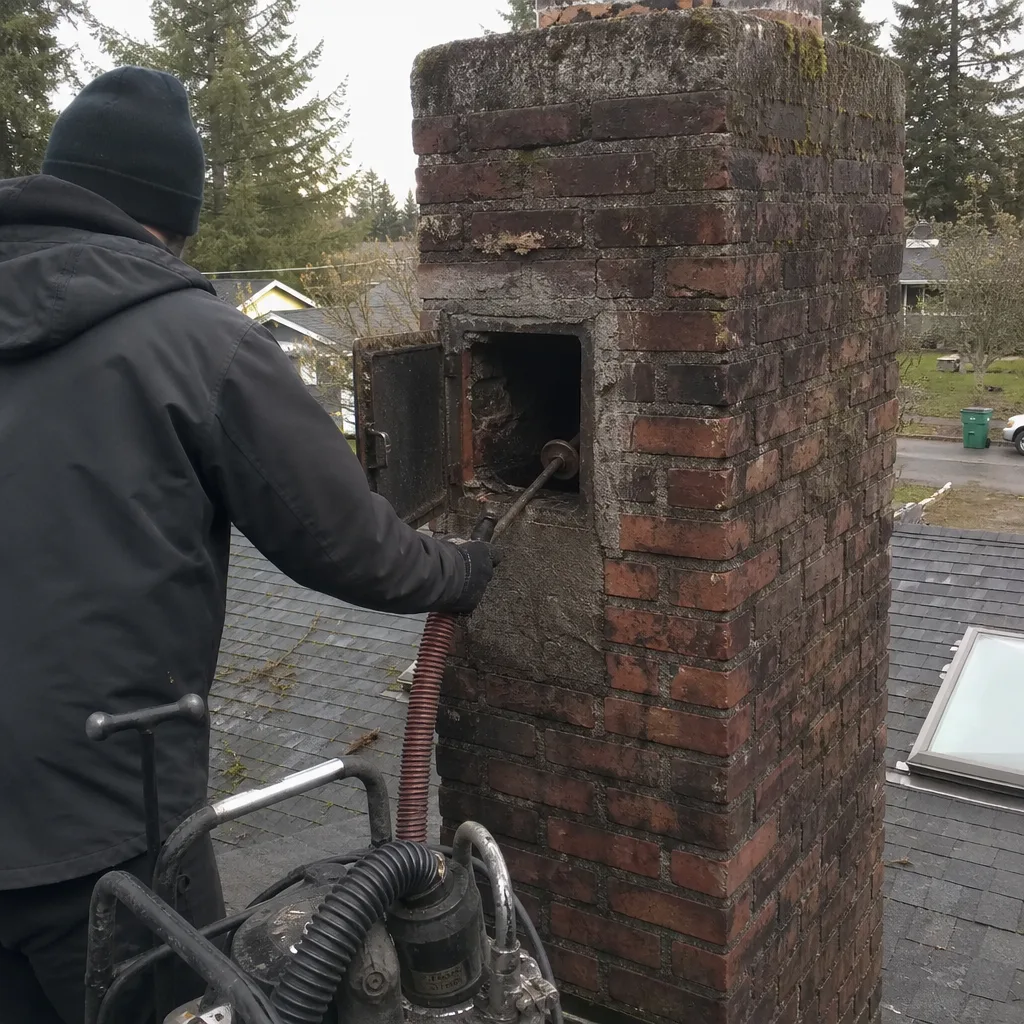 Before
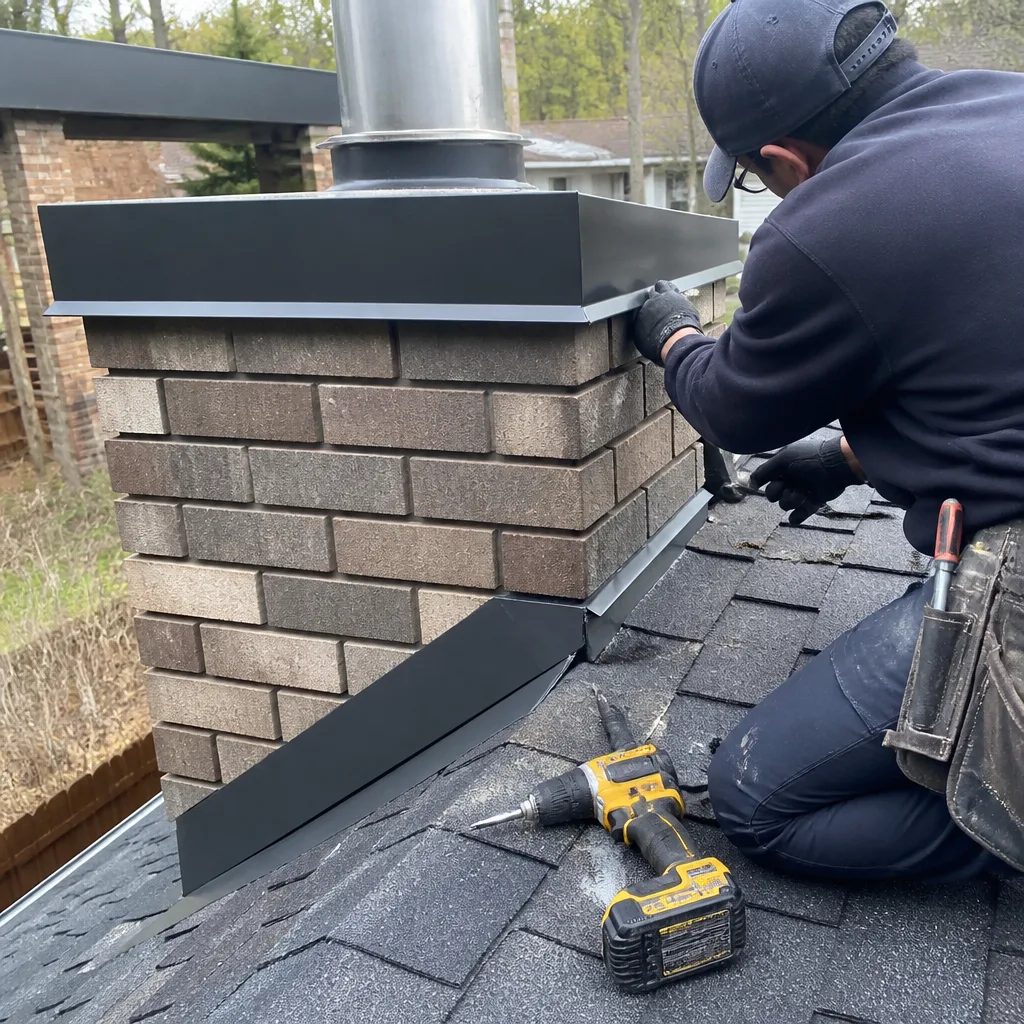 After
After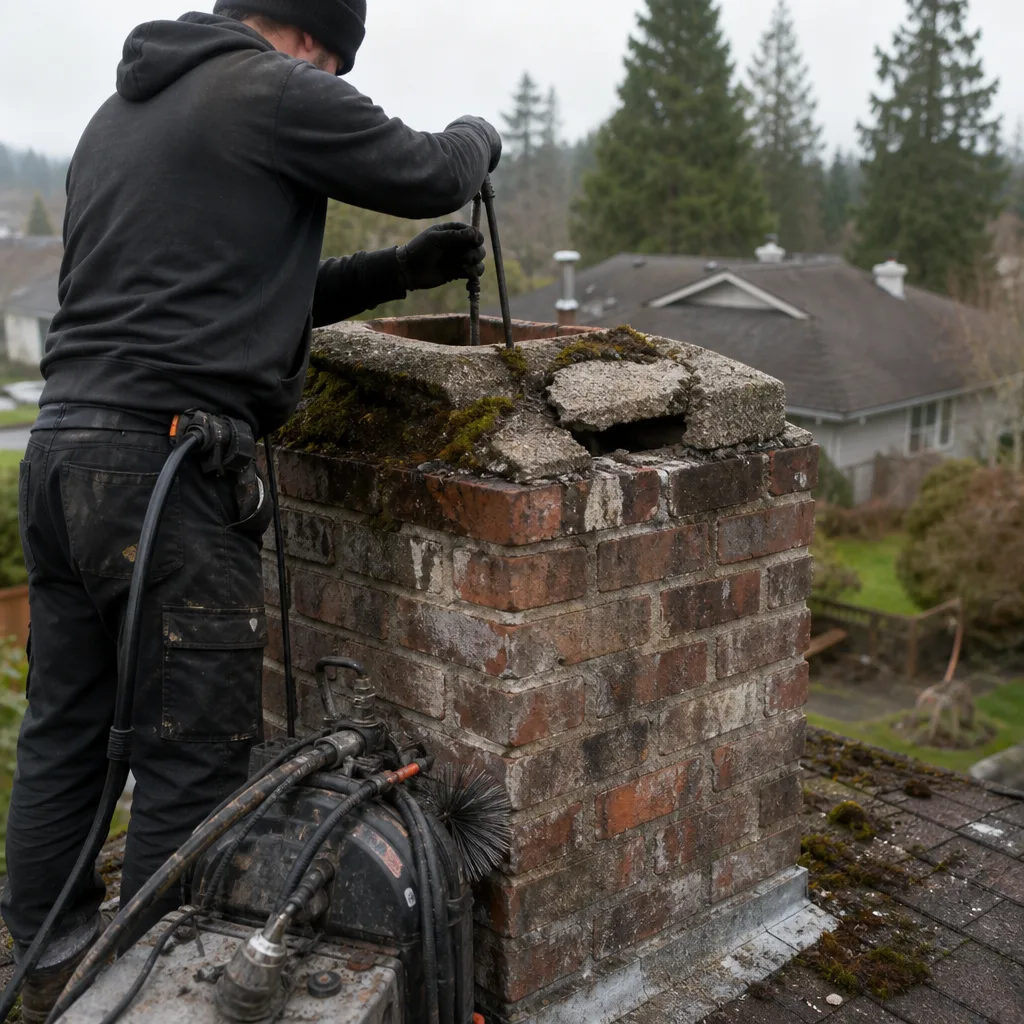 Before
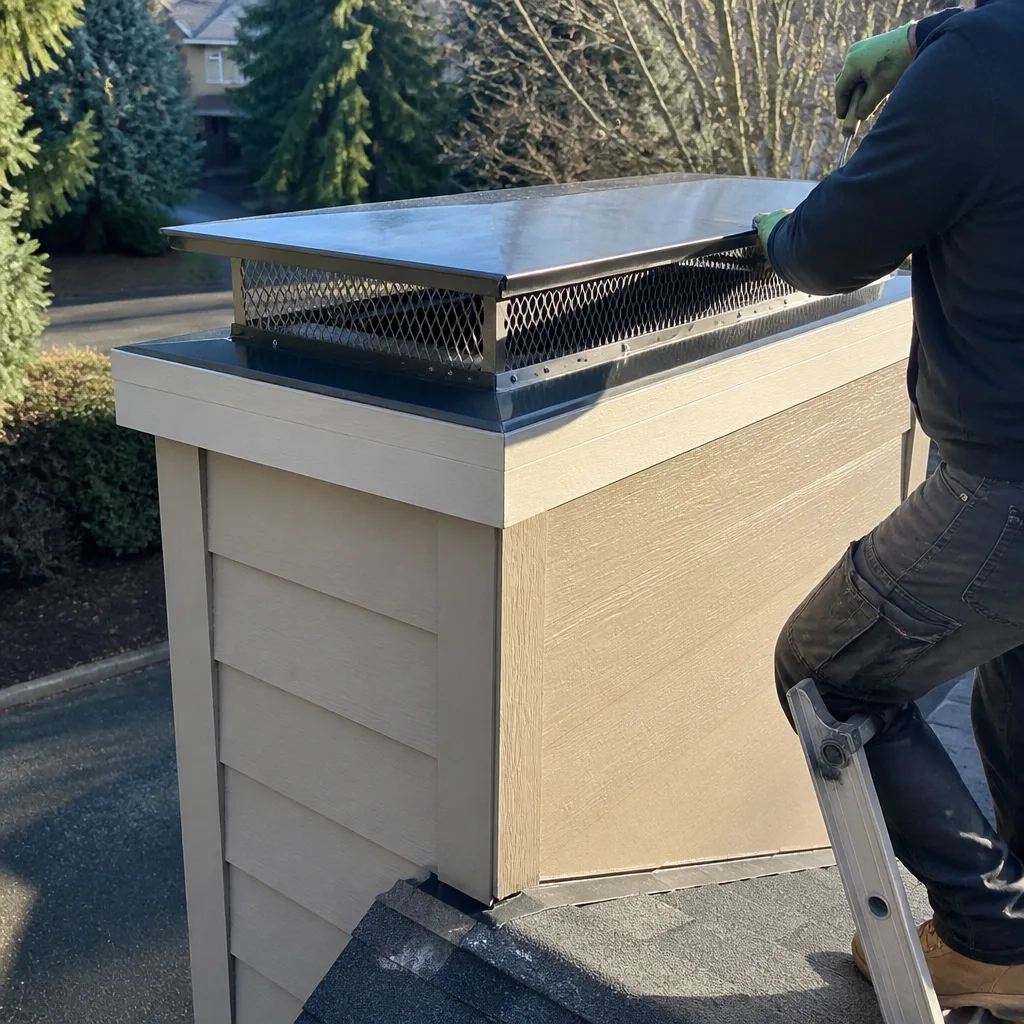 After
AfterThe Complete Guide to Chimney Cleaning in Puyallup
The NFPA estimates that 25% of home heating fires involve chimneys that were “cleaned” within the previous 12 months. That statistic only makes sense once you understand what most sweep visits actually are: a brush run through the flue, a receipt, and a handshake. A sweep without camera verification is paperwork, not clearance. In Puyallup, where 38-plus inches of annual rainfall push moisture through masonry year-round, the gap between “looks clean” and “is safe” widens faster than homeowners realize. This guide maps the full chimney cleaning sequence, what each phase should produce, and how to verify you received all three - not just the middle one. For more guides & resources on protecting your home, see our blog.
Quick Answer
Professional chimney cleaning in Puyallup costs between $199 and $349 for a standard sweep with Level 2 camera inspection, and the complete service requires three documented phases: pre-clean camera scan, mechanical cleaning, and post-clean photo record. If you’re weighing whether to tackle this yourself, read our DIY vs Professional Chimney Cleaning: The Puyallup Homeowner’s Decision Guide first. Anything less leaves you with a receipt that won’t satisfy your insurer or a future buyer.
Table of Contents
- What Chimney Cleaning Actually Includes (The Three-Phase Sequence)
- Level 1 vs. Level 2: What NFPA 211 Says and Why It Matters
- How Puyallup’s Rainfall Pattern Damages Chimneys Faster Than Inland Markets
- What a Written Service Record Should Contain
- How to Read a Bid and Spot the “Cheap Clean, Expensive Repair” Pattern
- Chimney Cleaning Cost Breakdown in Puyallup
- Common Mistakes to Avoid
- When to Call a Professional
- Frequently Asked Questions
 Before
 After
AfterWhat Chimney Cleaning Actually Includes (The Three-Phase Sequence)
Most homeowners believe chimney cleaning is one thing: a brush, a vacuum, and done. The actual service, when performed to professional standard, is three distinct phases. Each produces its own documentation. If you only received one piece of paper, you got phase two without phases one or three.
Phase 1: Pre-Clean Camera Scan
Before any brush touches the flue, a technician should run a chimney camera from the firebox to the crown. This scan establishes baseline condition and identifies hazards that cleaning alone won’t fix. We’re looking for:
- Cracked or displaced flue liner tiles that creosote may be masking
- Spalling (flaking) masonry inside the smoke chamber
- Class III creosote - glazed, hardened deposits that require chemical treatment before mechanical removal
- Obstructions: bird nests, collapsed liner sections, or debris from deteriorated mortar joints
In Puyallup’s South Hill and Edgewood neighborhoods, we regularly find liner cracks that were invisible from the firebox but obvious on camera. The creosote had filled the gap like caulk. A brush run without this scan would have “cleaned” right past a breach that allows heat transfer to combustible framing.
Clause 4 of the Haven Standard requires this photo record on every job. We’ve maintained that practice since 2009, before NFPA 211 made camera documentation a recommended element of Level 2 inspections.
Phase 2: Mechanical Cleaning
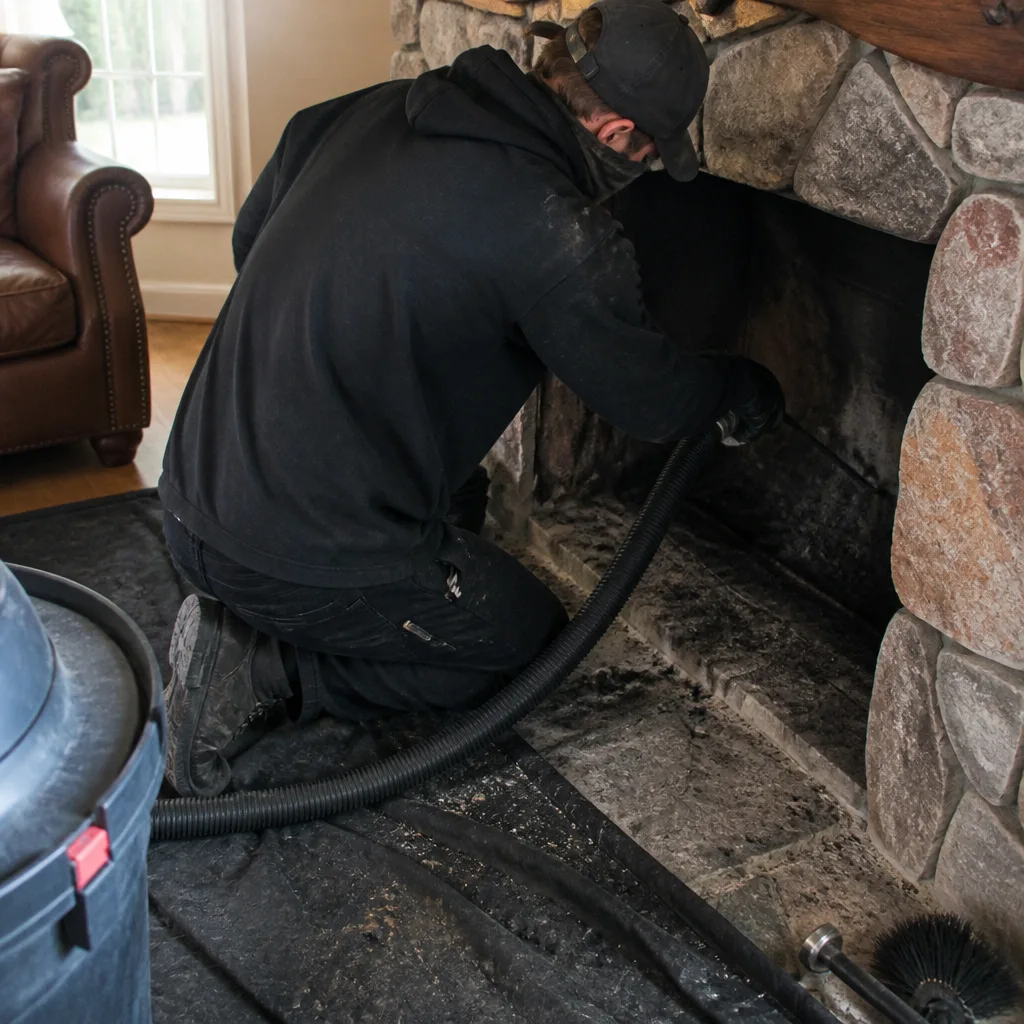
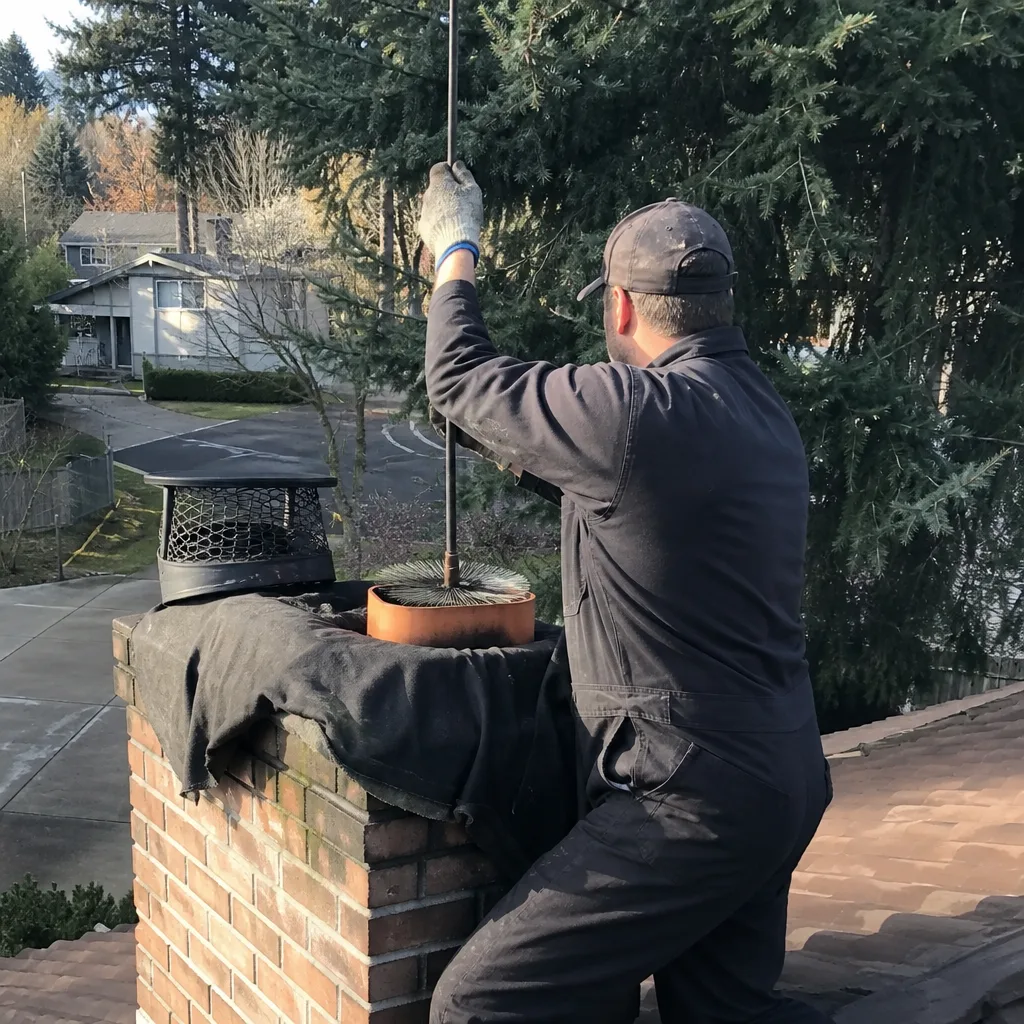
This is what homeowners picture: rotary brushes, rods, and industrial vacuums with HEPA filtration. The work varies by fuel type and creosote class.
- Wood-burning systems: Poly or steel brushes sized to the flue diameter, run on flexible rods with a reversing drill. Class I and II creosote (sooty or flaky) removes mechanically. Class III (glazed, tar-like) requires a chemical pretreatment - we apply a magnesium-based modifier like ACS or SaverSystems, return 7-14 days later, then brush.
- Gas systems: Lower-temperature deposits, but inspection-critical. We check for condensate staining, corroded connections, and proper draft. No brush needed for the flue itself, but the firebox and burner assembly get detailed cleaning.
- Pellet systems: Ash removal, auger cleaning, and venting inspection. Pellet exhaust is corrosive; stainless steel venting gets particular attention.
The vacuum runs continuously during brushing. If a company shows up with a shop vac and no containment, that’s a red flag. Fine particulate from creosote is a respiratory hazard and a combustion risk.
Phase 3: Post-Clean Documentation
After cleaning, the camera runs again. The post-clean record proves:
- The flue is clear of obstructions and measurable deposits
- Any defects found in Phase 1 are still documented - cleaning didn’t make them disappear
- The work performed matches the scope agreed to in writing
You should receive: dated photos from both camera runs, a written scope of work performed, and a condition assessment with any recommended repairs ranked by urgency. Our How to Hire a Chimney Cleaning Contractor in Puyallup: A Step-by-Step Guide walks you through vetting providers before you commit. This packet is what your insurer or a home inspector will ask for at sale time. A one-line invoice reading “chimney sweep - $149” satisfies nobody.
We’ve completed more than 38,000 chimney inspections and cleanings since 2009. Every one had a written price before work started and a documented record when it was done.
Level 1 vs. Level 2: What NFPA 211 Says and Why It Matters
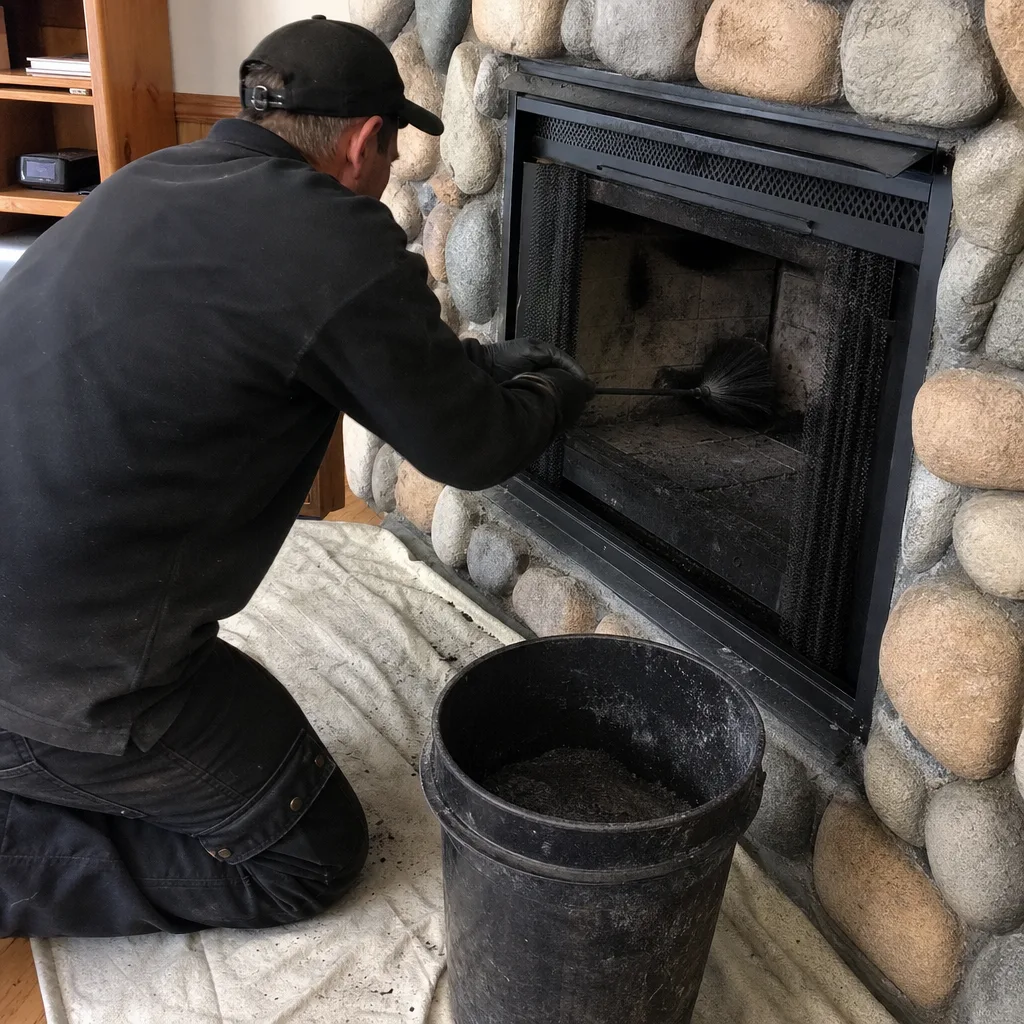
NFPA 211, the National Fire Protection Association’s standard for chimneys, fireplaces, vents, and solid fuel-burning appliances, defines inspection levels. Most homeowners don’t know which they received. Contractors often don’t clarify.
Level 1: A visual examination of readily accessible portions of the chimney exterior and interior, and the connected appliance installation. No tools. No camera. No roof access required. Appropriate for annual maintenance when no changes have been made to the system.
Level 2: Everything in Level 1, plus examination of accessible areas in attics, crawl spaces, and basements; video scanning of internal surfaces; and evaluation of clearance to combustibles. Required at property sale, after an operating malfunction or external event (earthquake, chimney fire), or upon installation of a new appliance.
The critical distinction: Level 2 includes camera documentation. A flashlight held at arm length into a dark flue is not a Level 2 inspection, regardless of what the invoice calls it.
In Puyallup’s older neighborhoods - the Craftsman homes near Pioneer Park, the mid-century builds in Sunrise - we frequently encounter chimneys that have received decades of Level 1 “inspections” while concealed damage progressed. The 2021 chimney fire on 9th Street SW started in a flue with a documented “clean” status from three consecutive years of flashlight passes. The creosote buildup was visible; the cracked liner behind it was not.
When you schedule Chimney Cleaning & Sweep in Puyallup, specify Level 2. Ask whether camera documentation is included or an add-on. At Level Two Chimney Co., it’s standard, not optional, under Haven Standard Clause 4.
How Puyallup’s Rainfall Pattern Damages Chimneys Faster Than Inland Markets
Puyallup averages 38.4 inches of precipitation annually, concentrated October through May. That rainfall pattern creates specific chimney deterioration mechanics that inland Washington markets don’t experience at the same intensity.
The Freeze-Thaw-Spall Cycle
Brick and mortar are porous. Water enters capillary spaces during rain, expands when temperatures drop below freezing, and fractures the material from within. Puyallup’s winter temperature profile - frequent dips to 25-35°F with daytime recovery above freezing - is actually more damaging than sustained deep cold. The freeze-thaw cycle repeats more often.
We see this most clearly on crown surfaces and exterior chimney faces in neighborhoods with mature tree cover: North Puyallup, the valley floor near the Puyallup River, and the older hillside homes in Summit. Shaded chimneys stay wet longer. Spalling - the flaking or popping of brick faces - accelerates.
A pre-clean camera scan catches spalling inside the flue that exterior inspection misses. Interior spall debris falls and accumulates. It blocks draft. It creates localized hot spots. It looks like “just ash” until the camera shows angular brick fragments mixed with creosote.
Chimney Cap Failure Modes
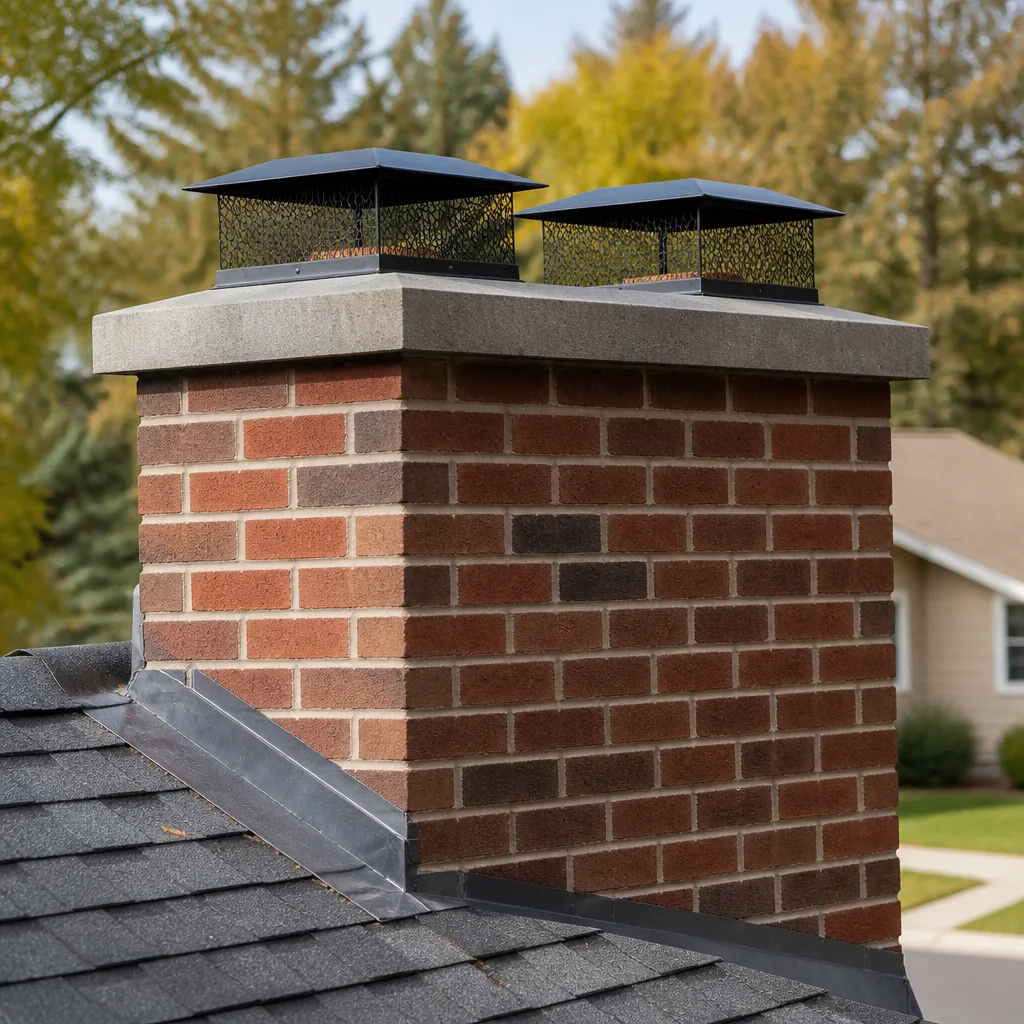
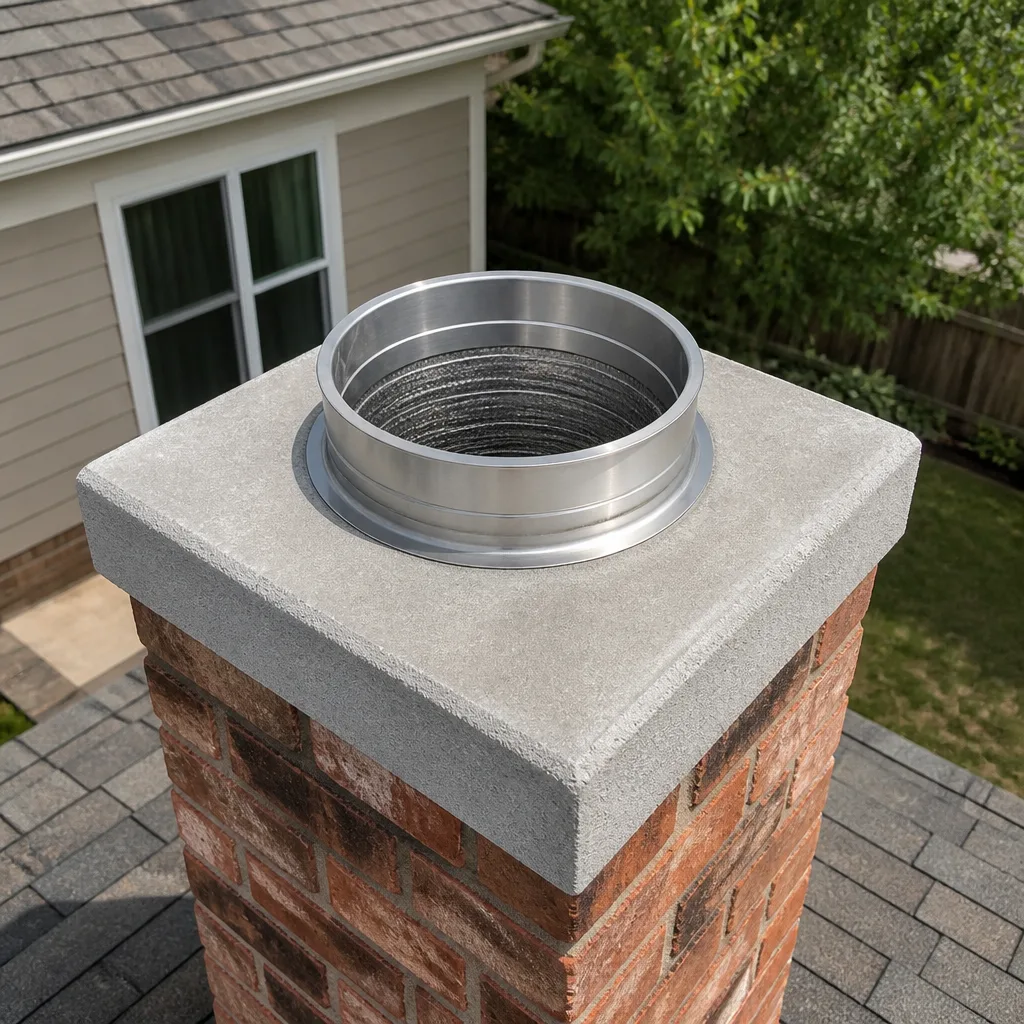
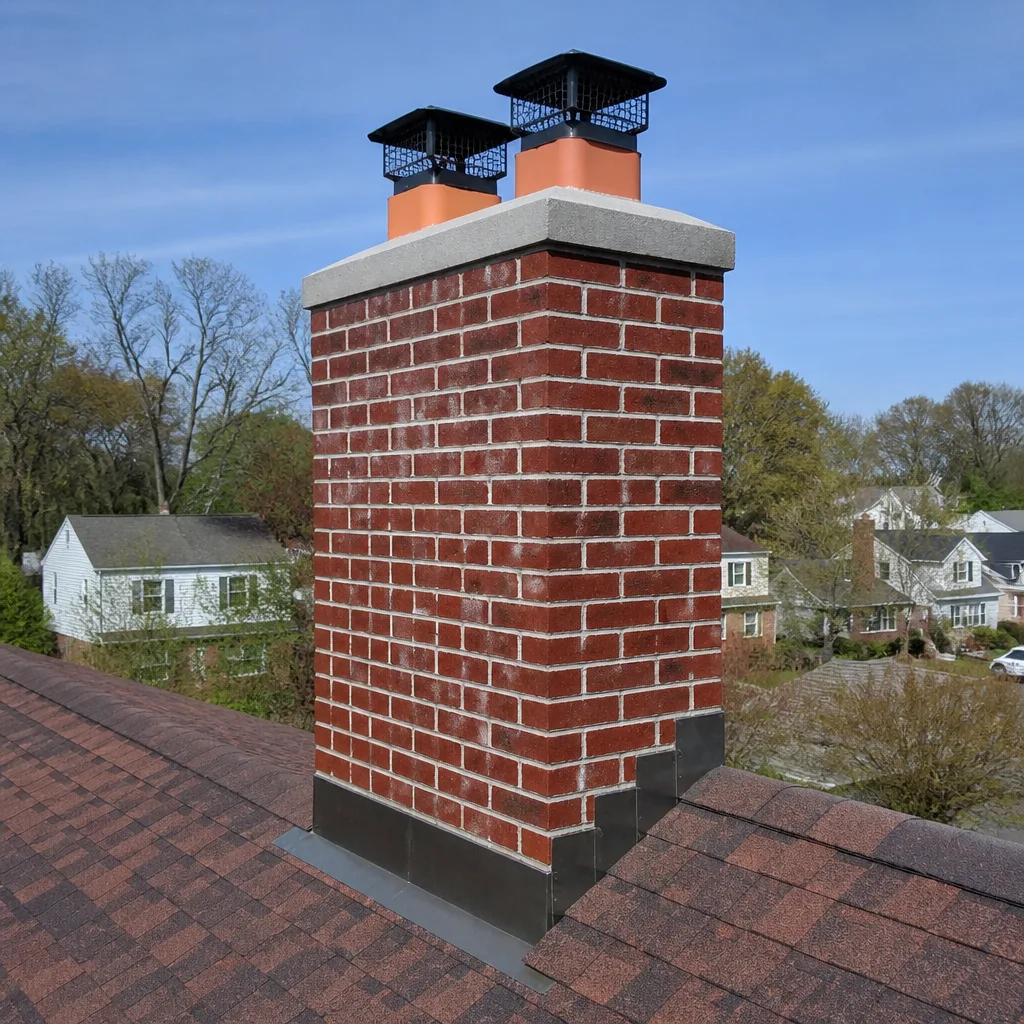
Rain enters uncapped or poorly capped flues directly. In Puyallup’s climate, a missing cap means hundreds of gallons of water annually in the flue system. We find:
- Rust-stained stainless steel liners that should outlast the house
- Deteriorated mortar between flue tiles, washed out by continuous moisture
- Musty fireboxes with efflorescence (white mineral deposits) on brick faces
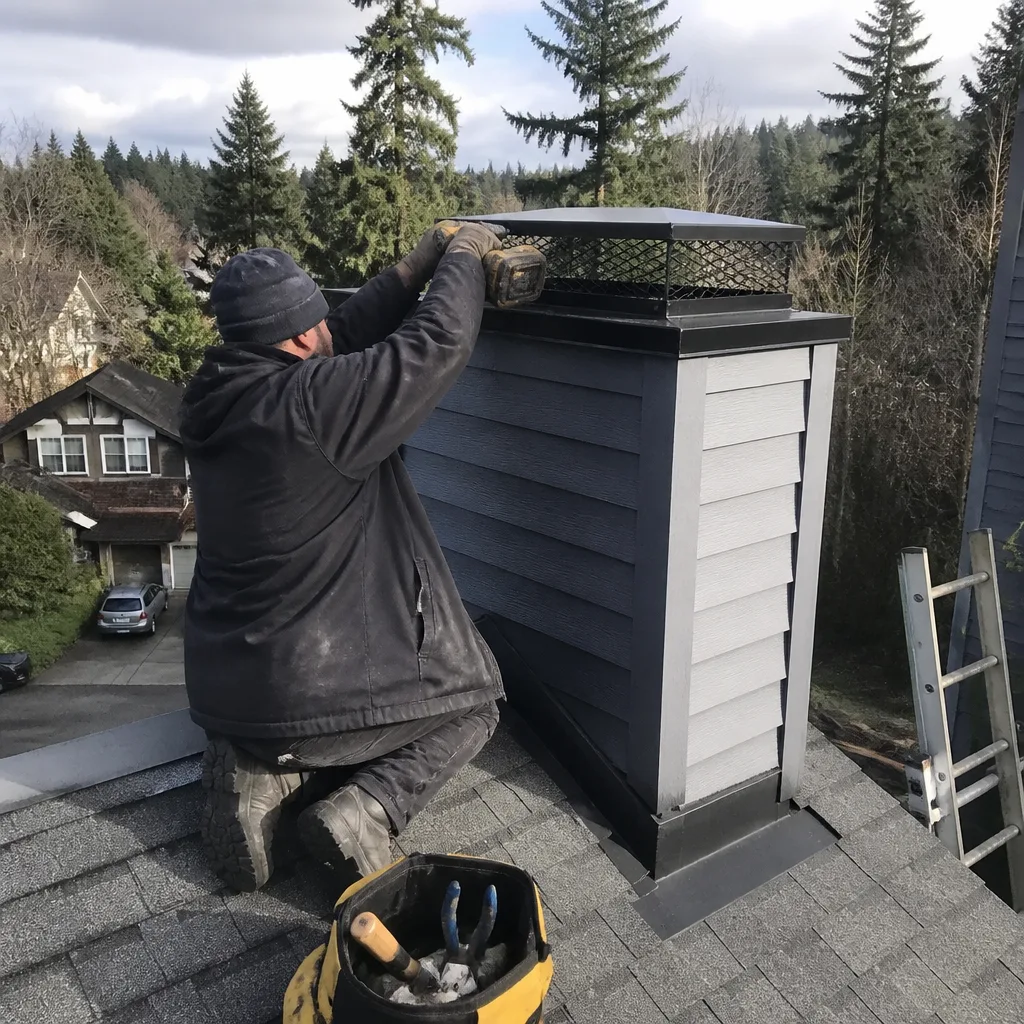
During cleaning, we document cap condition and provide replacement specifications using materials from Gelco or Copperfield - both sourced through our Haven buying network to keep pricing honest. A cap replacement at $280-$450 prevents liner replacement at $2,800-$5,500.
Proximity to Salt Air
Puyallup isn’t coastal, but it’s closer than Spokane or Yakima. Marine air influences corrosion rates on metal components. Stainless steel chimney liners in Puyallup show pitting corrosion patterns we don’t see 100 miles inland. The camera scan reveals this before the liner fails structurally.
What a Written Service Record Should Contain
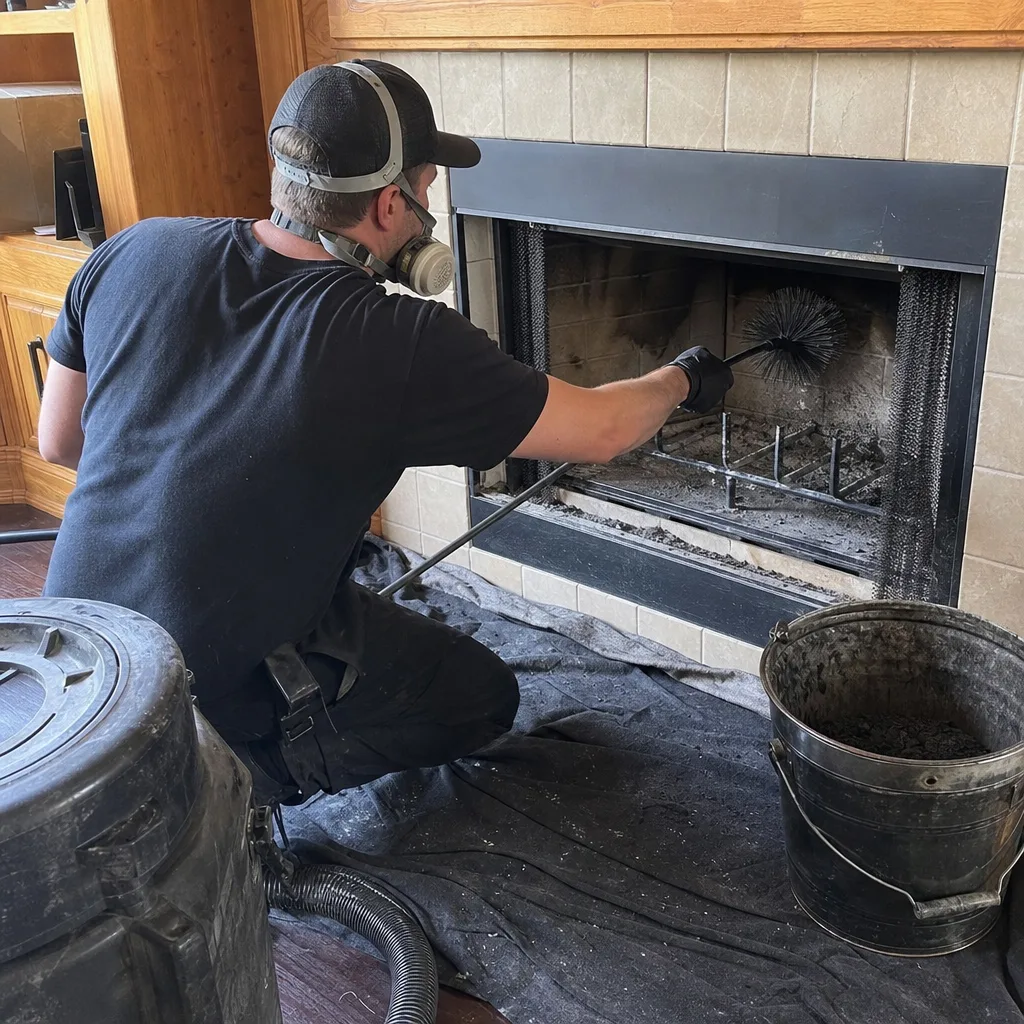
A chimney service record should function as evidence, not just an invoice. Here’s what we deliver on every job, and what you should demand from any contractor:
| Document Element | What It Proves | Why It Matters |
|---|---|---|
| Dated pre-clean camera images | Baseline flue condition before work | Establishes whether damage existed before cleaning; protects both parties |
| Written scope of work | Exactly what was performed | Eliminates disputes about whether inspection, cleaning, or both occurred |
| Creosote classification and measurement | Type and quantity of deposits removed | Determines appropriate cleaning method; indicates burning habits |
| Post-clean camera images | Flue condition after work | Verifies completeness; identifies remaining defects |
| Condition assessment with prioritized recommendations | What needs attention, ranked by urgency | Prevents surprise repair quotes; allows phased planning |
| Written price for any recommended work | Cost before commitment | Haven Standard Clause 1: “Have it in writing” before work starts |
| 365-Day Done Right Promise statement | Recourse if issues arise | Backed by Haven Standard; stamped on every job |
We archive these records indefinitely. When a Puyallup homeowner sells their home and the buyer’s inspector asks for chimney documentation, we can produce the complete file from 2012 or 2022. That archive practice, continuous since our founding, became the model for Haven Standard Clause 4.
Without this documentation, a “clean” chimney is just a story you tell your insurer. After a fire, the adjuster asks for evidence. A photo of glazed creosote with a dated timestamp carries weight. A verbal assurance does not.
How to Read a Bid and Spot the “Cheap Clean, Expensive Repair” Pattern
The lowest chimney cleaning quote in Puyallup is frequently followed by the highest repair quote. Understanding this pattern protects your budget and your safety.
The Bait Structure
A $99 sweep special gets the technician in your door. The inspection - if it happens at all - identifies “critical” issues requiring immediate repair: liner replacement, crown rebuild, tuckpointing. The repair quote runs $3,000-$8,000. The $99 was marketing; the profit is in the upsell.
This isn’t always dishonest. Some chimneys genuinely need repair. The problem is sequence and evidence: the “finding” precedes the documentation, or the documentation doesn’t exist.
Red Flags in Bids
- No pre-clean camera scan. If they can’t show you the damage, they haven’t verified it. A flashlight description of “cracked tiles” without images is insufficient.
- Urgency without gradation. Every recommended repair is “critical” or “unsafe to operate.” Real condition assessments rank hazards: monitor, repair this season, repair before next burning season, repair immediately.
- Verbal quotes or handwritten scraps. Haven Standard Clause 1 requires written price, written scope, written warranty before work begins. Anything less is unprofessional and unenforceable.
- Repair quotes without material specifications. “New liner: $4,500” tells you nothing. What alloy? What diameter? What manufacturer? We specify DuraFlex or HeatShield materials with model numbers, installed to manufacturer and code requirements.
- Pressure to decide immediately. “I can do it today for this price” expires when the truck leaves. A legitimate contractor lets you compare. We offer a Free Second Opinion on any written estimate - bring us a competitor’s quote and we’ll review it against what our camera shows.
The Honest Alternative
At Level Two Chimney Puyallup home, our standard sweep includes the full three-phase sequence. If we find damage, we show you the image, explain the mechanism, and provide a written repair quote you can take to another company. No same-day pressure. No undocumented findings.
The 38,000-plus chimneys in our archive include thousands where we recommended no repair at all. A clean flue with intact liner and proper clearances gets a clean report. That’s the outcome we prefer.
Chimney Cleaning Cost Breakdown in Puyallup
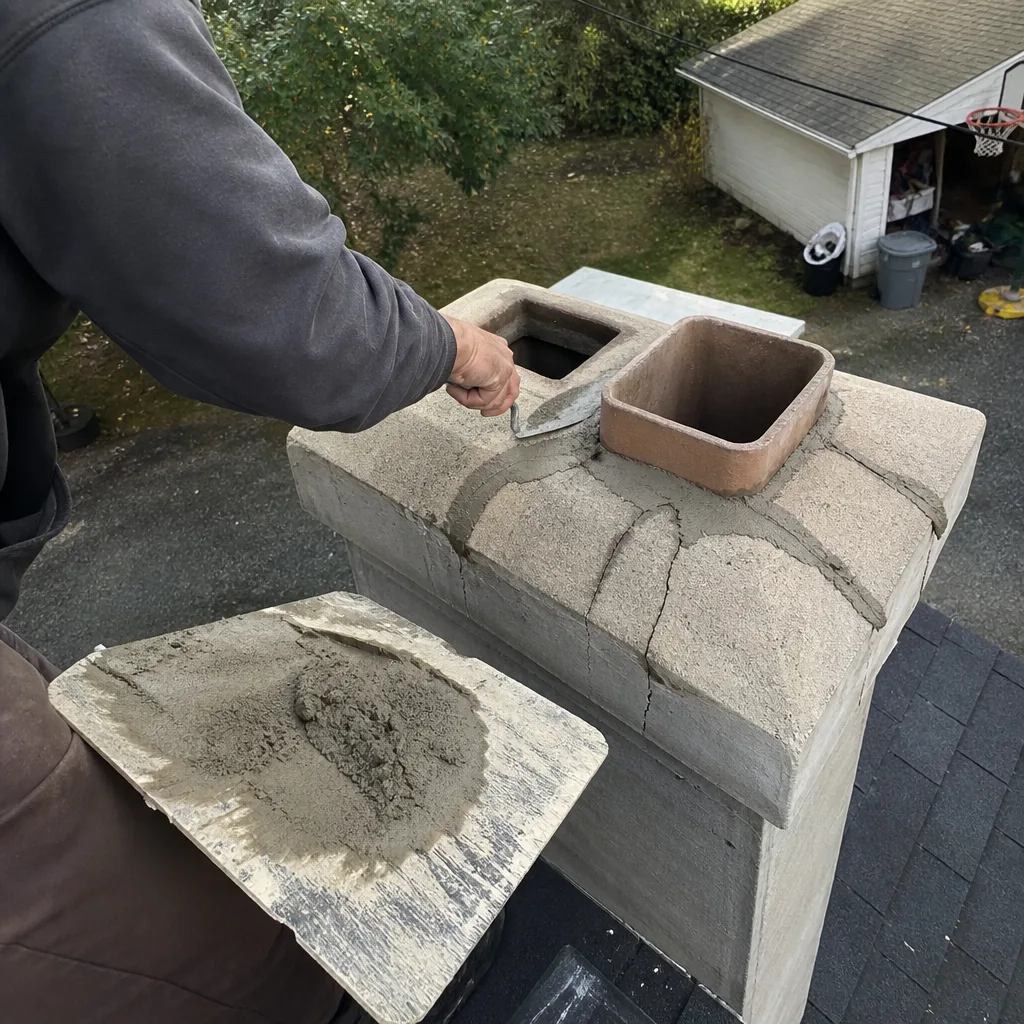
Chimney cleaning costs in Puyallup vary by system type, accessibility, and the inspection level included. Here’s what we charge and what drives the range.
| Service | Price Range | What’s Included |
|---|---|---|
| Standard wood-burning chimney sweep with Level 2 inspection | $199 – $349 | Pre-clean camera scan, rotary mechanical cleaning, HEPA containment, post-clean documentation, written condition assessment |
| Gas fireplace cleaning and inspection | $179 – $279 | Burner assembly cleaning, venting inspection, draft test, leak check, documentation |
| Pellet stove cleaning and venting inspection | $219 – $329 | Ash removal, auger and combustion chamber cleaning, venting inspection, documentation |
| Class III creosote removal (chemical treatment + return visit) | $399 – $649 | Initial chemical application, 7-14 day dwell, mechanical removal, full documentation |
| Chimney cap replacement (during sweep visit) | $280 – $450 | Custom-fit cap, stainless steel or copper, installed with proper clearance |
Factors that increase cost: steep roof pitch requiring additional safety equipment; chimney height exceeding 25 feet; heavy Class III creosote requiring chemical pretreatment; animal removal requiring specialized tools and permits.
Factors that should not affect cost: whether you ask for a written quote (always free), whether you want to see the camera images (always included), whether you request documentation (standard under Haven Standard Clause 4).
We don’t charge for estimates. Call (253) 323-5667 for a specific quote based on your chimney type and last service date.
Common Mistakes to Avoid
- Scheduling a sweep without confirming the inspection level. Ask directly: “Is this a Level 1 or Level 2 inspection? Is camera documentation included?” If the answer is vague, keep calling.
- Assuming a clean flue means a safe system. Creosote removal doesn’t repair cracked liners, spalling masonry, or improper clearances. The camera scan finds what the brush can’t fix.
- Ignoring Puyallup’s specific climate risks. That moss on your chimney crown isn’t cosmetic. It’s holding moisture against masonry through every freeze-thaw cycle. Clean it, or cap it, but don’t pretend it’s harmless.
- Accepting verbal repair recommendations. Every recommended repair should come with a written description, a photo of the defect, and a fixed price. Anything less invites inflation and dispute.
- Skipping service because “we barely use the fireplace.” Even occasional use produces creosote. And unused chimneys in Puyallup attract moisture, pests, and deterioration without the drying effect of occasional fires.
- Hiring based on lowest price without checking what’s excluded. The $99 special almost never includes camera inspection, documentation, or the time to do thorough work. Compare total deliverables, not headline prices.
- Discarding service records. Keep your chimney documentation with your home files. It transfers to buyers, satisfies insurers, and establishes maintenance history that affects home value.
When to Call a Professional
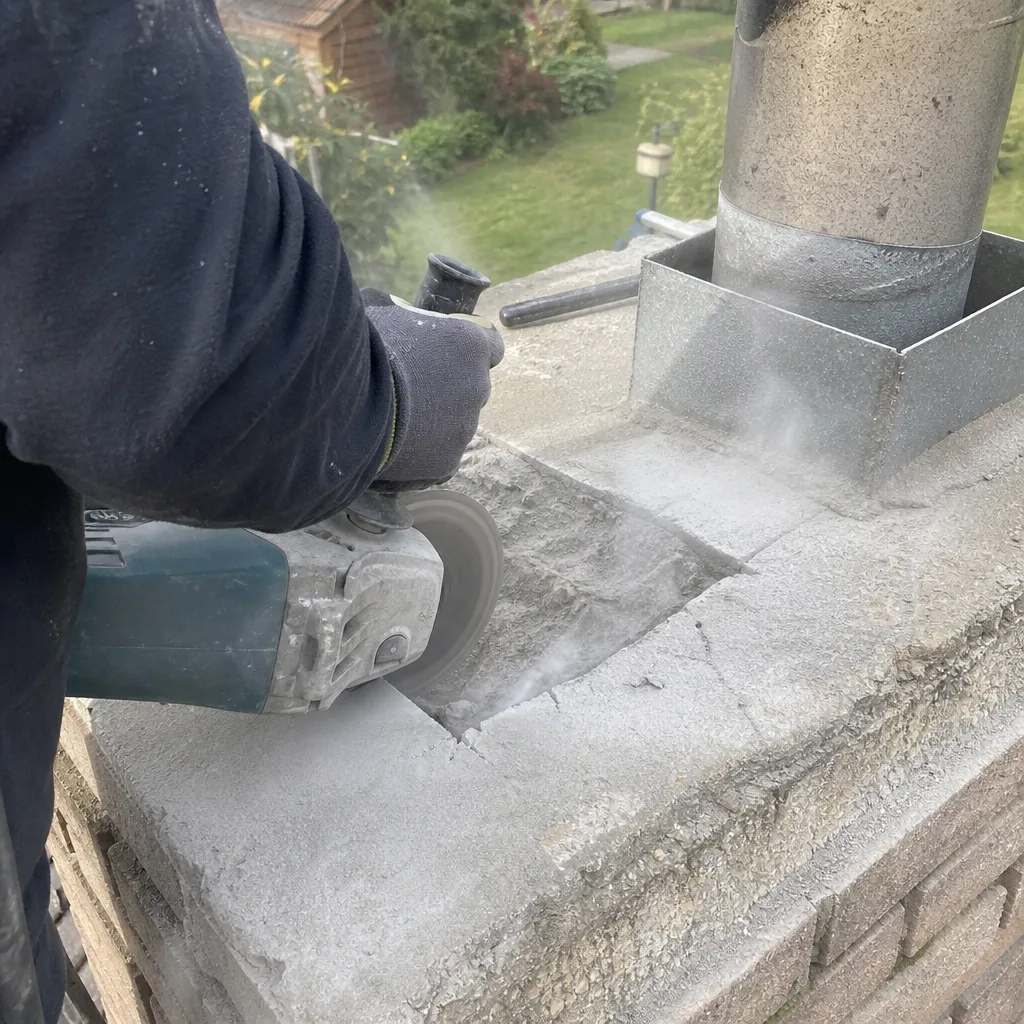
Call for service before burning season begins, ideally August through October in Puyallup. But certain conditions require immediate attention regardless of season:
- Smoke entering the living space during fireplace use
- Visible creosote flakes in the firebox or falling from the damper
- A chimney fire event - rapid drafting, loud cracking, or dense smoke from the top - even if it self-extinguished
- Water staining on interior walls or ceilings near the chimney chase
- Cracked or missing bricks, or deteriorated mortar joints visible from ground level
- Any changes to appliance type or fuel without professional evaluation of chimney compatibility
Carbon monoxide risk is real and unforgiving. A blocked or damaged flue can vent combustion gases into living spaces without visible smoke. If your CO detector alarms and you can’t identify a source, treat the chimney as suspect until inspected.
Level Two Chimney Puyallup offers free estimates in Puyallup - call (253) 323-5667. Our live phone support runs 24 hours a day, 7 days a week. You’ll speak to a person, not a voicemail system, and we’ll schedule your Level 2 inspection with a background-checked, uniformed technician who arrives with license information, a named assignment, and a text when en route.
Frequently Asked Questions
A standard chimney sweep with Level 2 camera inspection in Puyallup costs between $199 and $349, depending on system type, creosote accumulation, and accessibility. Gas fireplace cleaning runs $179-$279; pellet systems $219-$329. Call (253) 323-5667 for an exact quote - estimates are free.
NFPA 211 recommends annual inspection for all chimney systems, with cleaning frequency determined by creosote accumulation. Most wood-burning chimneys in Puyallup need annual cleaning due to our cool, moist climate that encourages slower, smoldering fires and heavier creosote deposition. Gas and pellet systems require annual inspection; cleaning varies by use. Call (253) 323-5667 to schedule based on your specific burning habits.
You should never accept a liner replacement recommendation without dated camera images showing the specific damage, a written description of the failure mode, and a fixed price before work begins. At Level Two Chimney Co., we show you the image, explain why the liner no longer protects combustible framing, and provide a written quote you can take elsewhere. Our Free Second Opinion service exists specifically for this concern. If the damage can safely wait, we say so plainly.
Skipped cleaning allows creosote to accumulate, increasing chimney fire risk and potentially blocking draft. In Puyallup’s wet climate, uncleaned chimneys also trap moisture against masonry, accelerating spalling and mortar deterioration. The combined effect: higher fire risk, structural damage, and carbon monoxide hazard from impaired venting. Annual service costs $199-$349; chimney fire damage or liner replacement runs $3,000-$8,000 or more. Call (253) 323-5667 to schedule before burning season.
A sweep is mechanical cleaning of the flue system. An inspection is evaluation of condition and safety. They are distinct services that frequently overlap. NFPA 211 Level 2 inspection includes both: camera evaluation of internal surfaces plus cleaning as needed. A sweep without inspection is just brushing; an inspection without cleaning leaves hazardous deposits in place. Our Chimney Cleaning & Sweep in Puyallup includes both by default.
Homeowners can perform basic firebox cleaning and ash removal. Mechanical flue cleaning requires proper brush sizing, rod handling technique, and respiratory protection against fine creosote particulate. More critically, without camera equipment, you cannot verify flue liner condition or identify concealed damage. For safety-critical components - high-temperature flue gases, potential carbon monoxide exposure, and structural fire risk - we recommend professional service with documented inspection. Call (253) 323-5667 for a free estimate.
Professional cleaning with proper containment should not. We use industrial HEPA vacuums with continuous suction, drop cloths in the work area, and dust containment around the firebox opening. Our background-checked, uniformed technicians treat your home with the care they’d expect in their own. The documented photo record you receive includes images of the work area before and after, so you can verify. If it’s not done right, our 365-Day Done Right Promise means we make it right.
Routine chimney cleaning and Level 2 inspection do not require permits in Puyallup or Pierce County. Structural repairs, liner replacement, and chimney rebuilds may require permitting depending on scope. We handle permit research and submission as part of any repair project, and we note permit requirements in our written scope before work begins. For cleaning and inspection only, no permit is needed - just a qualified technician and proper documentation.
The Bottom Line
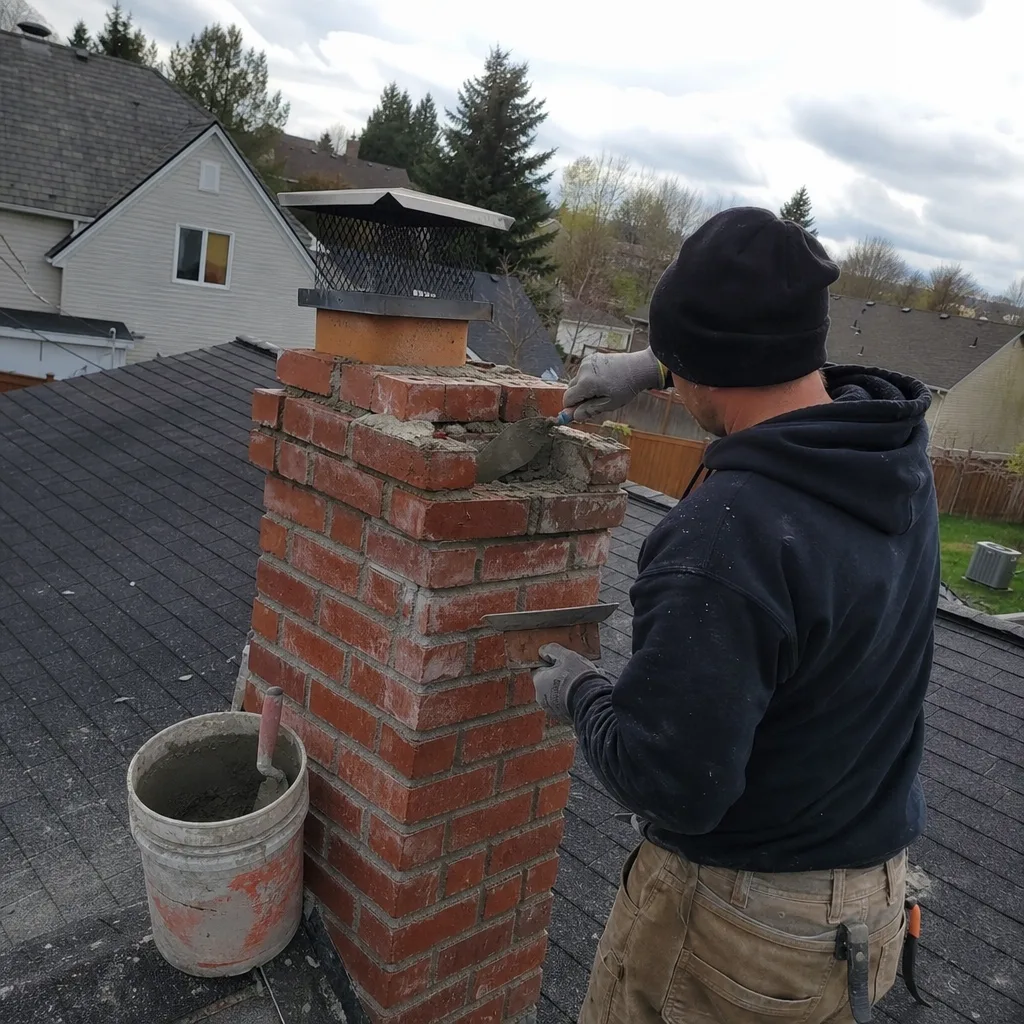
Chimney cleaning in Puyallup is three phases, not one: camera scan, mechanical cleaning, documented record. Skipping the first or last leaves you with a receipt that won’t protect your home, your insurer, or your buyer. Puyallup’s wet climate accelerates damage that only camera inspection reveals. The cheapest quote often costs the most. Demand Level 2, demand documentation, demand written price before work starts. That’s the standard we built our company on in 2009, and it’s the standard we apply to every chimney we touch.
Ready to schedule? Call Level Two Chimney Puyallup at (253) 323-5667 for a free estimate. We’ll answer live, assign a named technician, and deliver a written price before any work begins - backed by the 365-Day Done Right Promise and Haven Standard Clause 4 documentation on every job.
Written by Corrine Halstead, Owner at Level Two Chimney Puyallup, serving Puyallup since 2009.