
Last updated September 22, 2026
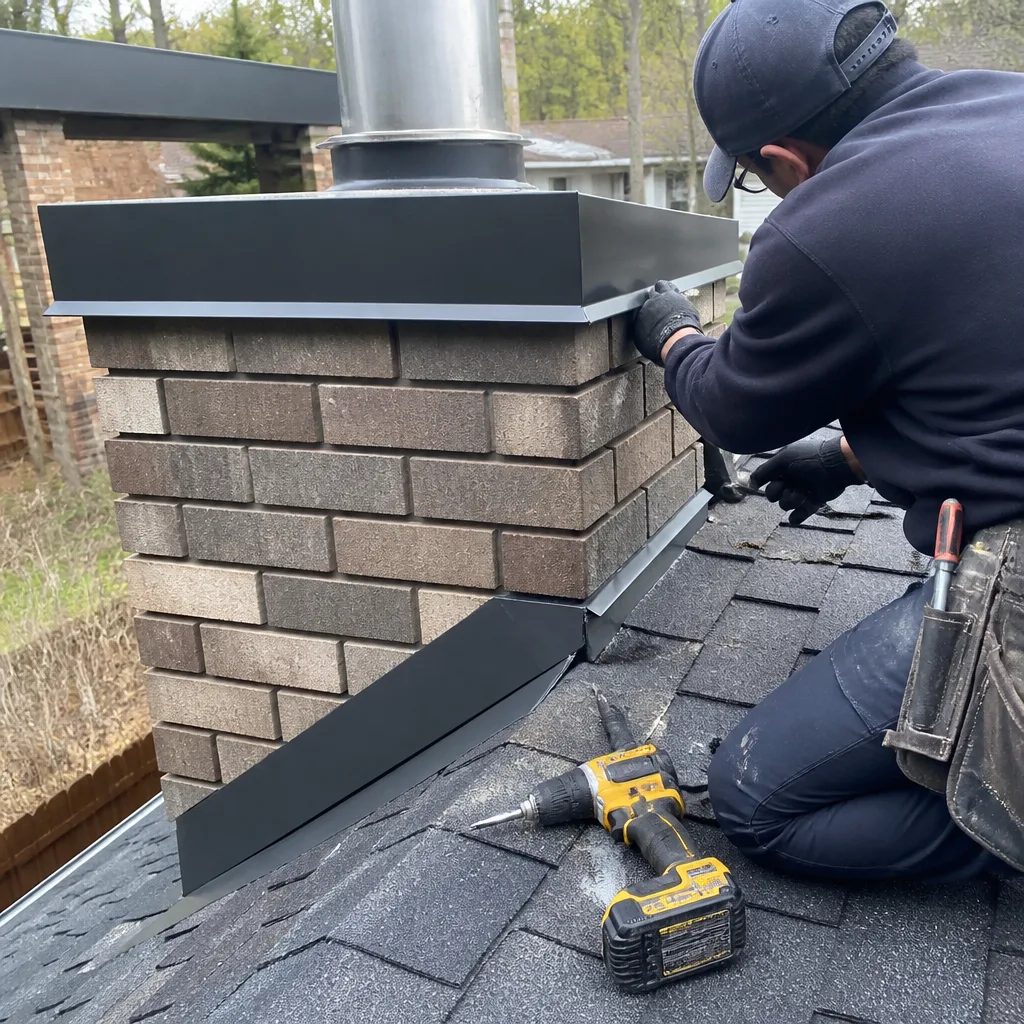
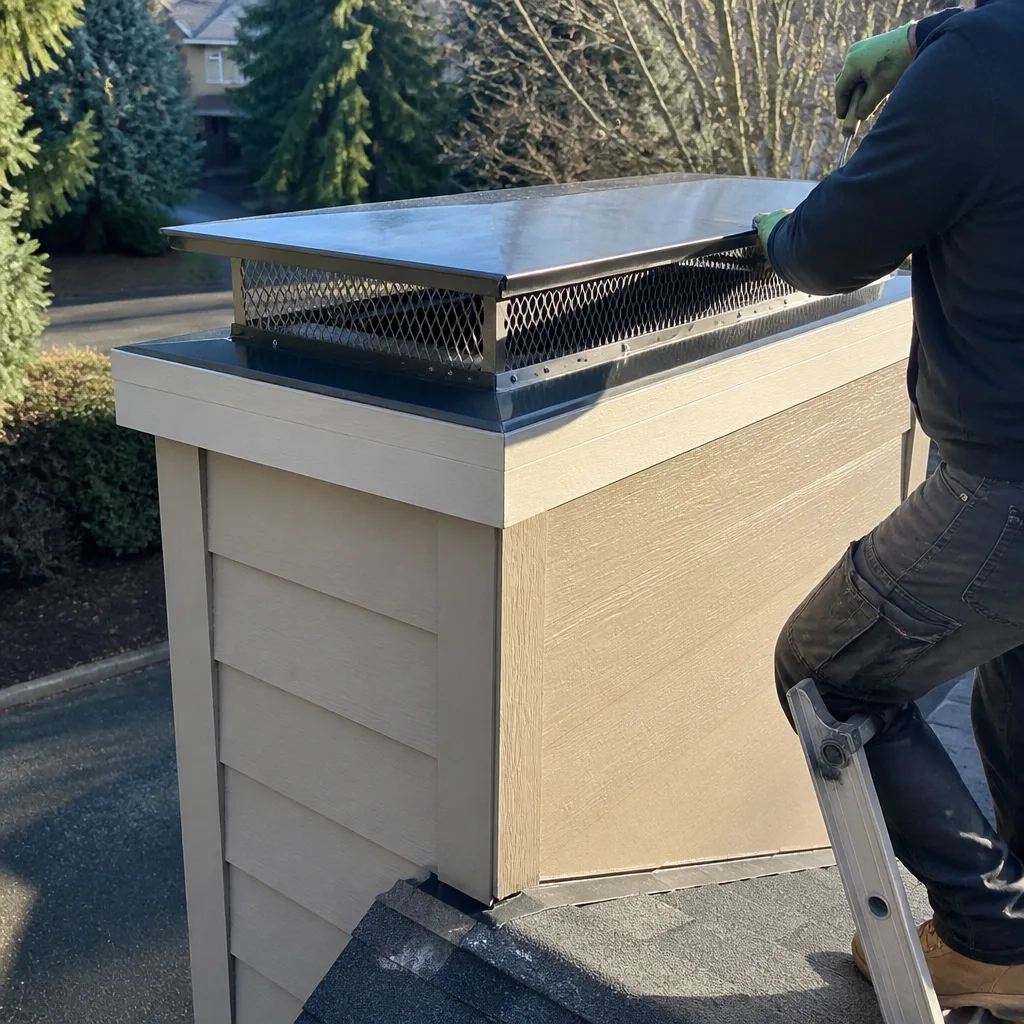
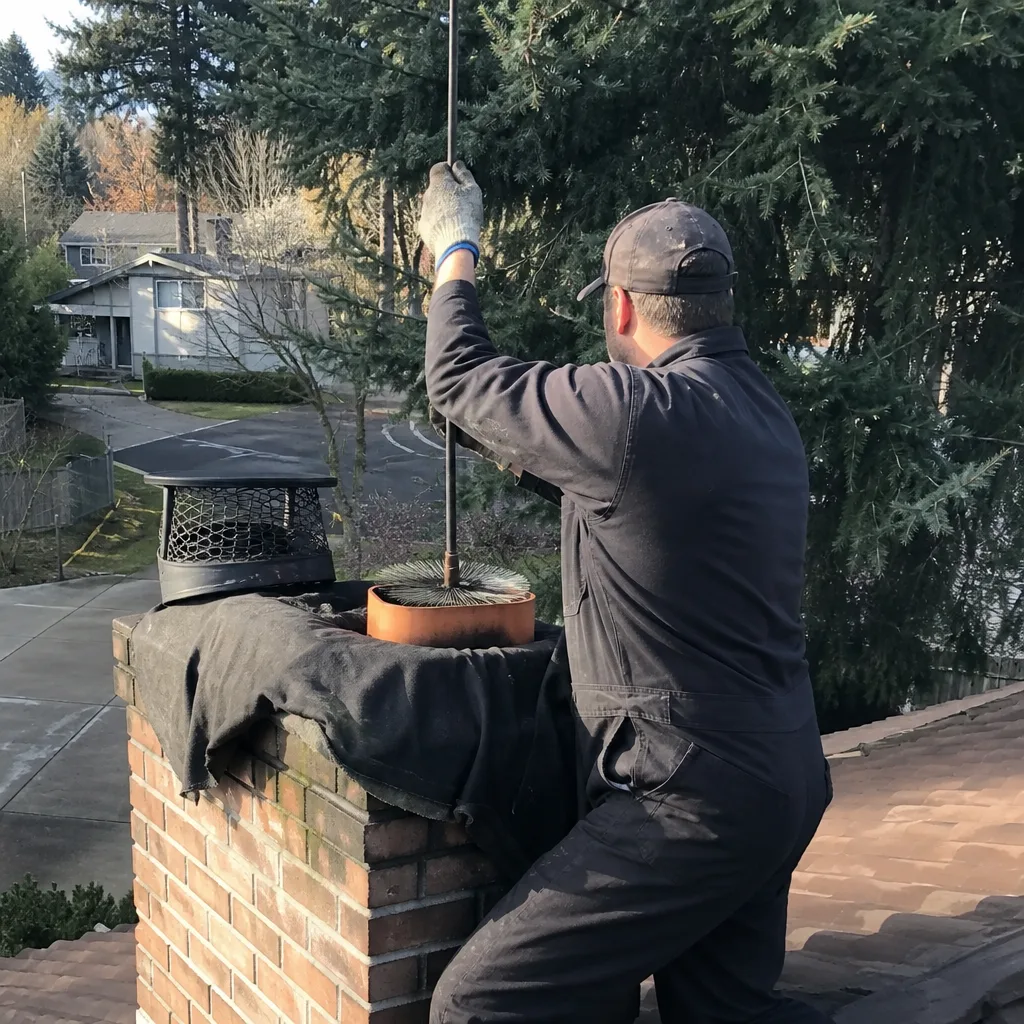
Level 1 sweep and inspection to the NFPA 211 annual standard - flue, crown, cap, and flashing checked and photographed
Chimney sweep logs do not sweep chimneys. They loosen some creosote - which then falls where a brush and vacuum still have to collect it.
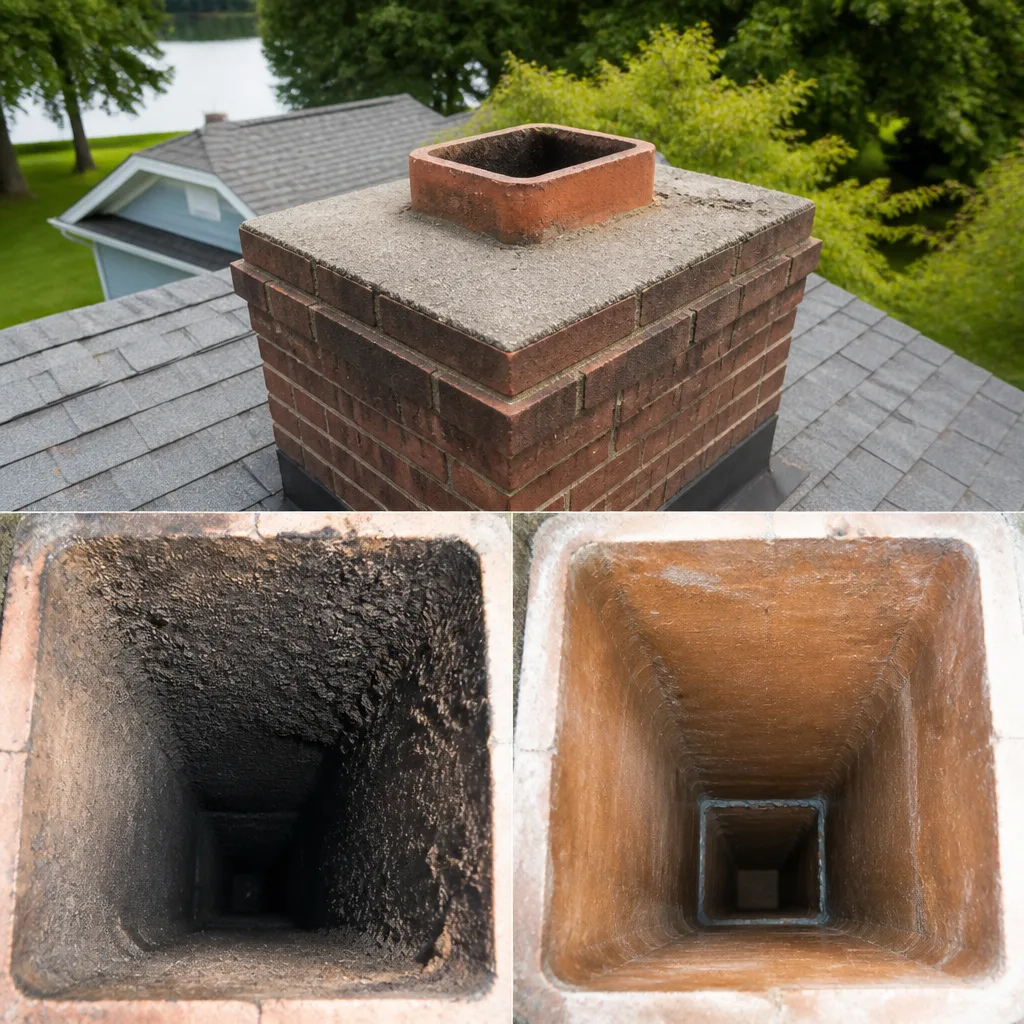
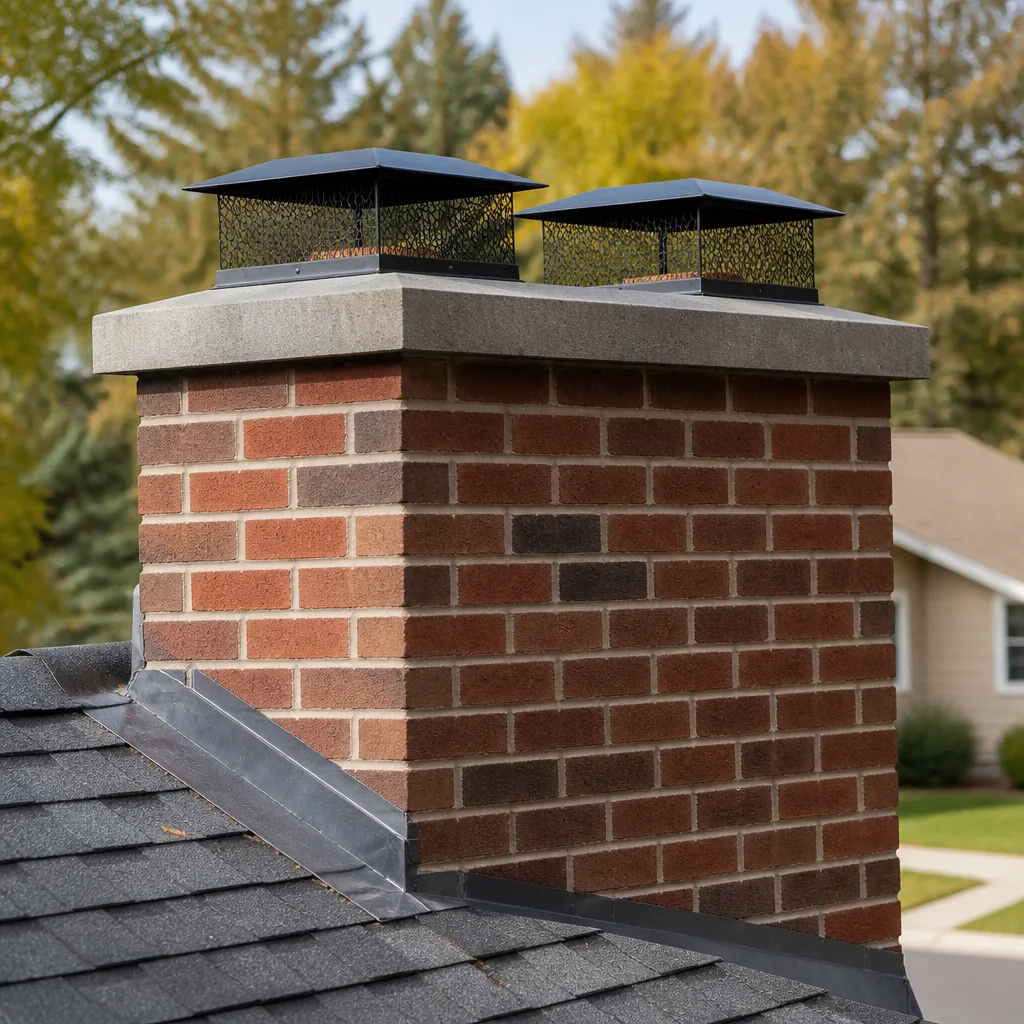
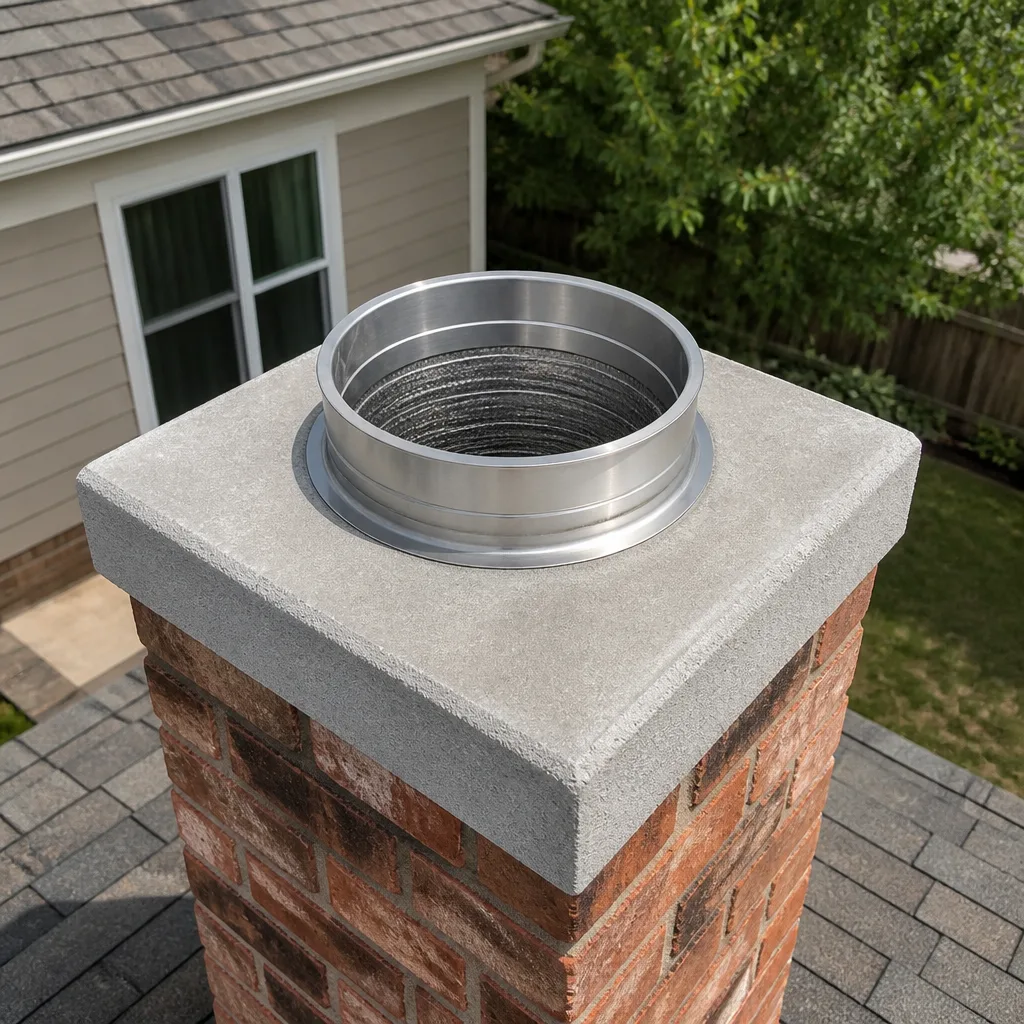
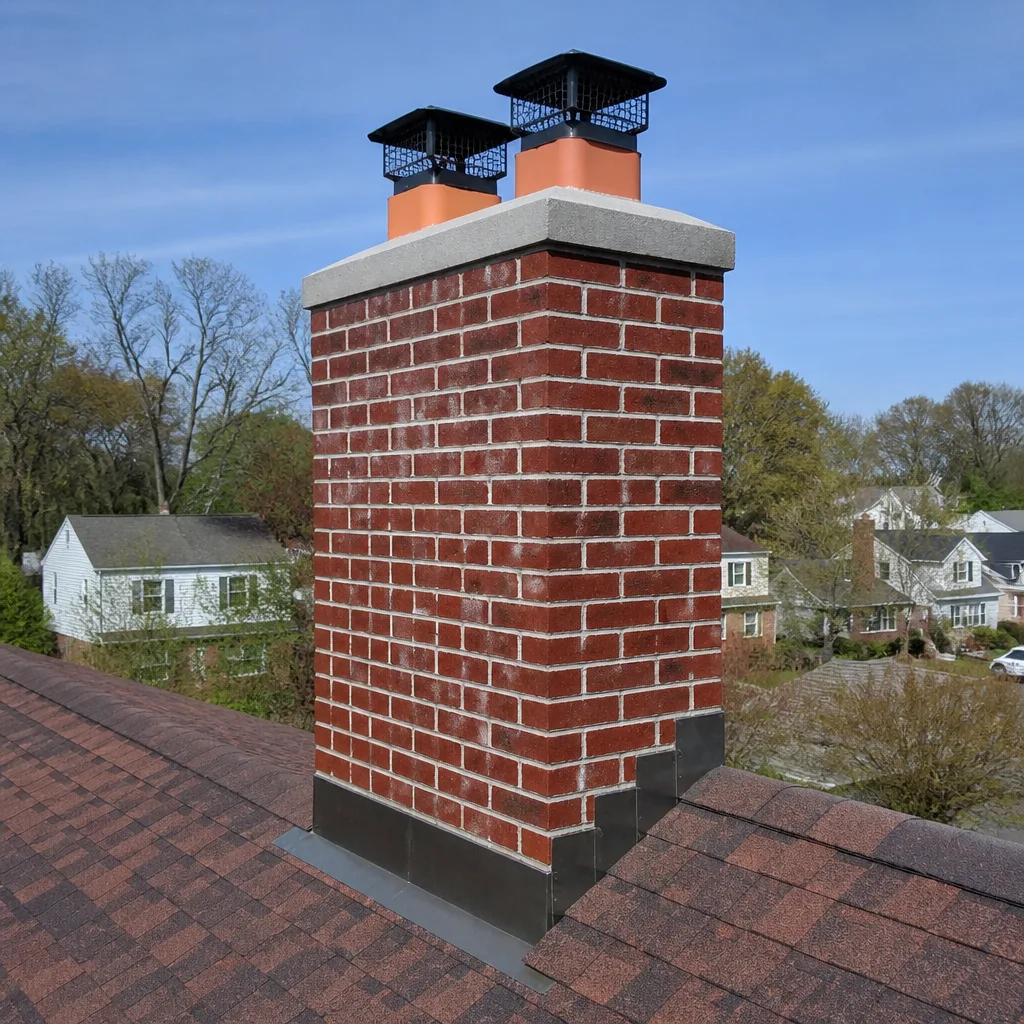
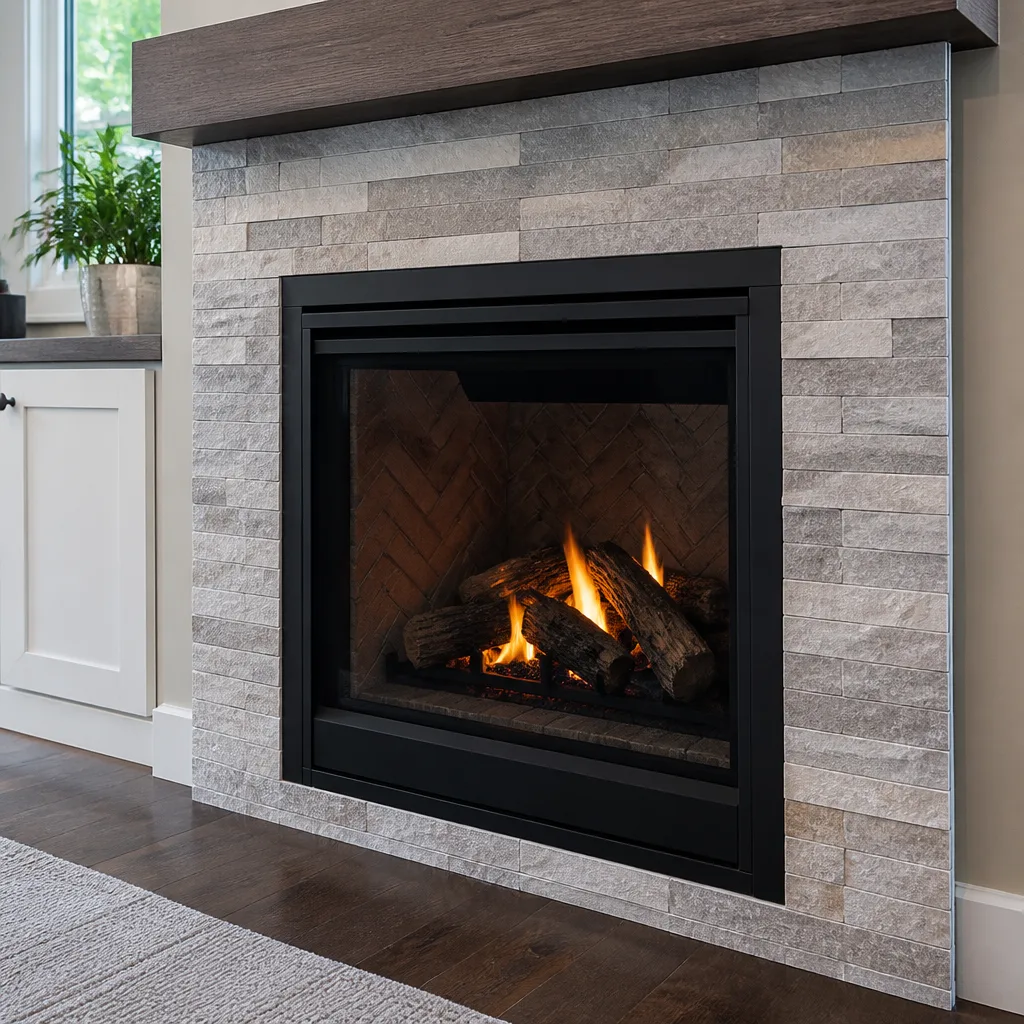
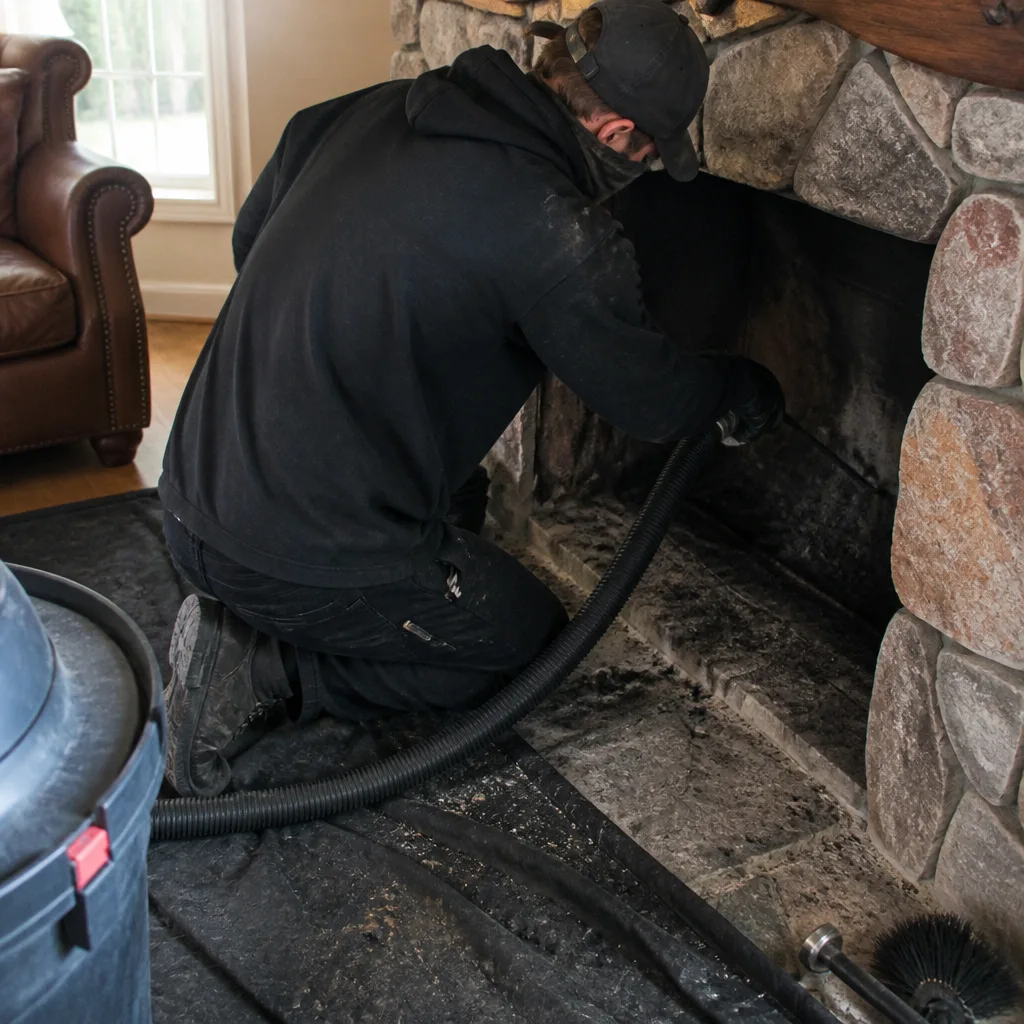 Before
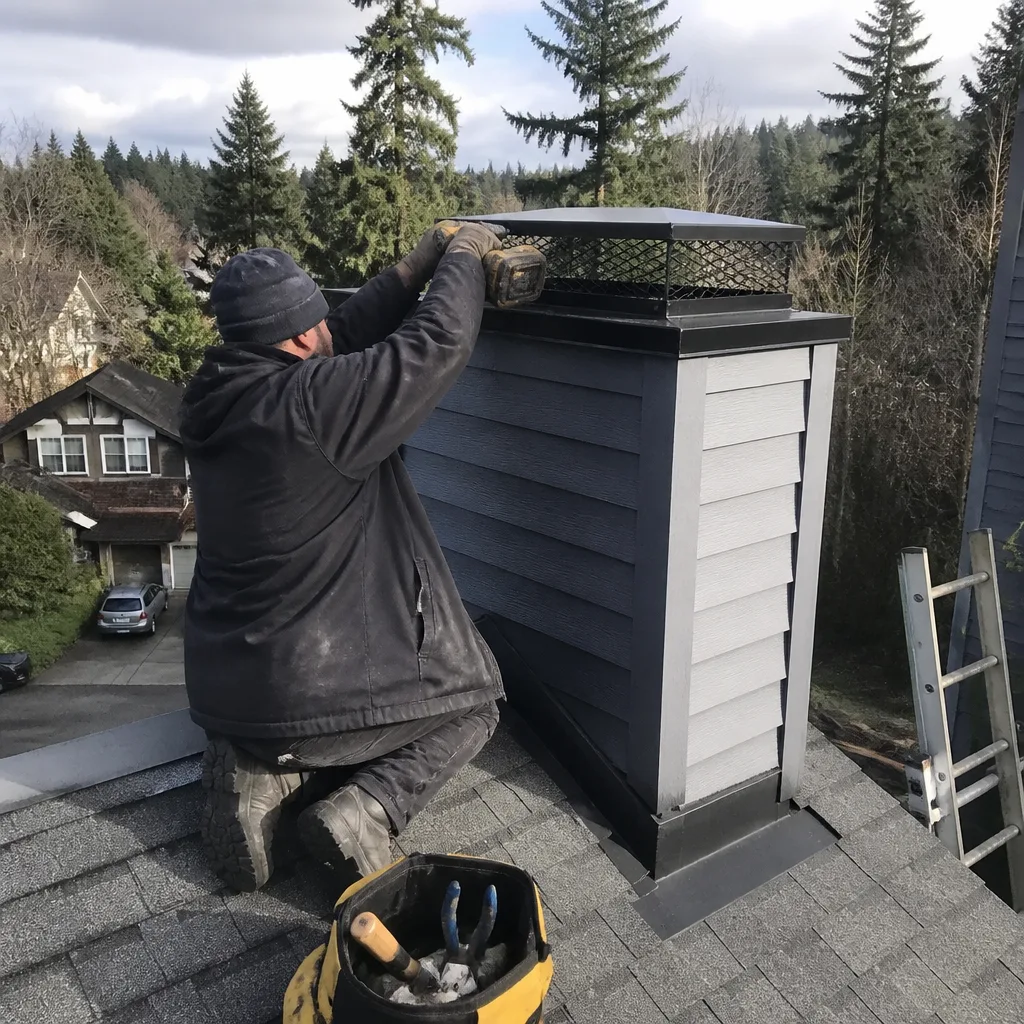 After
After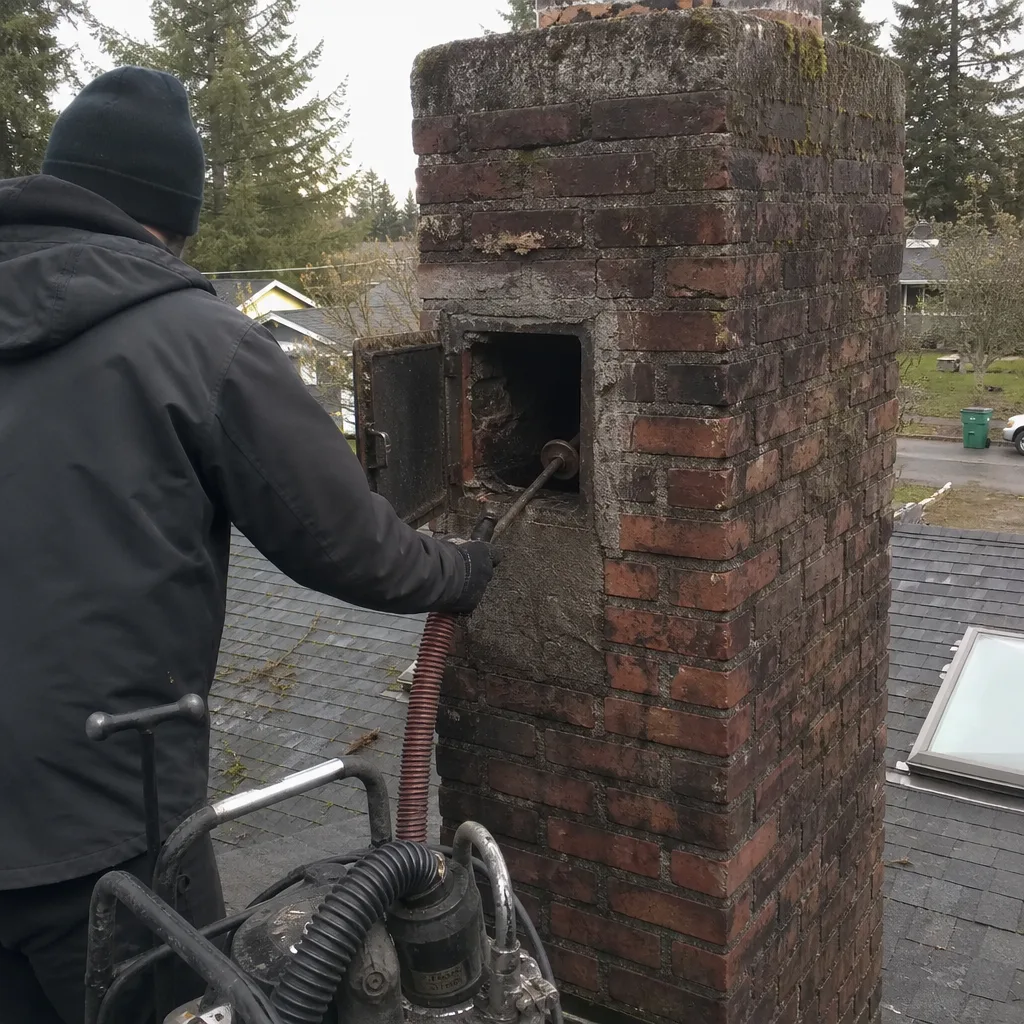 Before
 After
After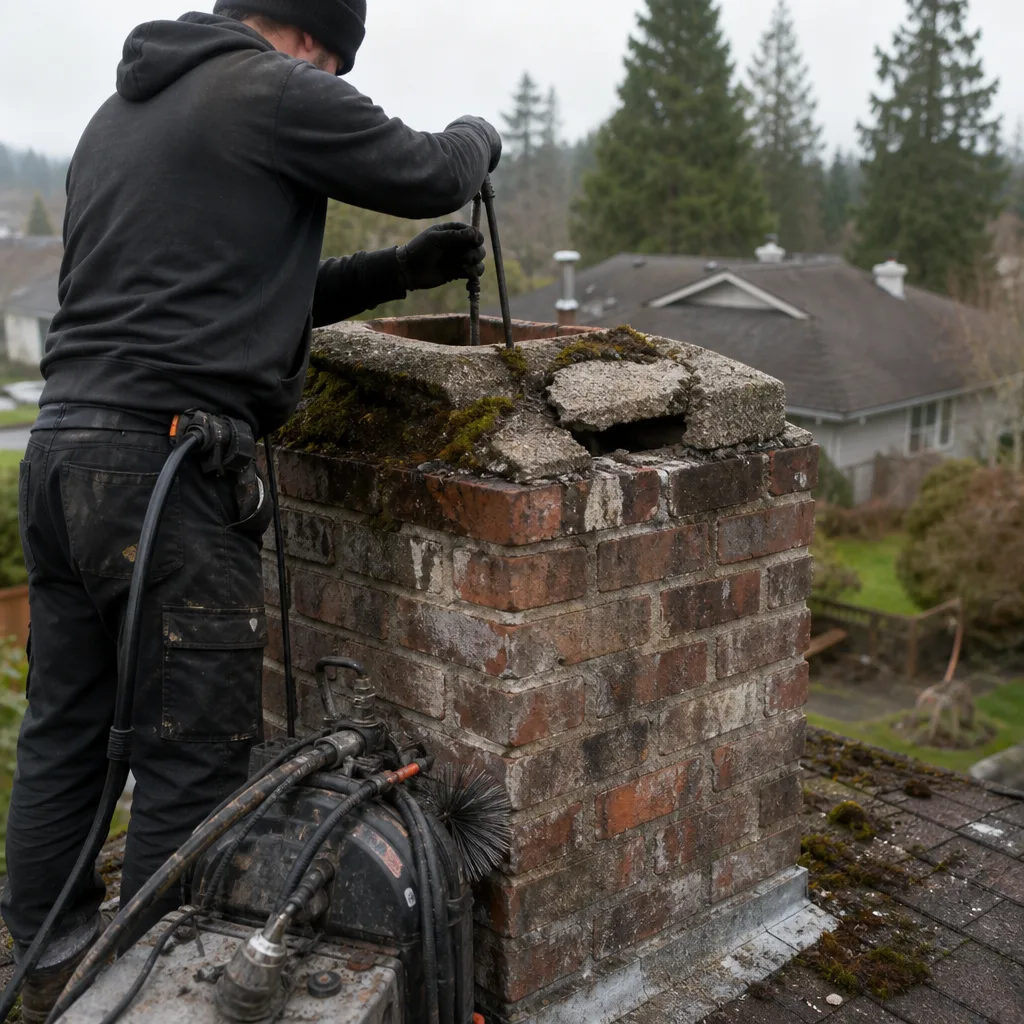 Before
 After
AfterChimney Cleaning Warning Signs: A Puyallup Homeowner’s Reference Guide
The smell of a campfire in a room where no fire is burning is not an odor problem. It’s a draft reversal event, which means combustion gases found a path into your living space that didn’t go up the flue. In Puyallup, where our wet winters and tight modern home envelopes create negative pressure zones, this signal shows up in more homes than most homeowners recognize. This guide decodes every warning sign your chimney gives you, mapping each one to a specific failure mode and urgency level, so you can match what you’re seeing to what’s actually happening inside the flue. For a deeper dive, see The Complete Guide to Chimney Cleaning in Puyallup, or use this article to avoid relying on a contractor’s verbal description to motivate a repair.
Quick Answer
Most chimney warning signs fall into three categories: visual staining (white, orange, black, or brown deposits indicating moisture intrusion or creosote buildup), operational symptoms during firing (smoke rollout, delayed ignition, popping sounds), and ambient signals without a fire (campfire odors in summer, cold drafts, or animal sounds). White staining on exterior brick means water is moving through the masonry. Smoke rolling out at the damper during a fire means an obstructed flue or failed liner. A smoky smell in July means negative pressure is pulling air down an open flue. Each maps to a specific repair path and a specific urgency.
Table of Contents
- Visual Staining: What Color Tells You About Moisture and Creosote
- Operational Symptoms During a Fire
- Ambient Signals Without a Fire
- “Watch This” Versus “Stop Using Immediately”
- How to Photograph and Describe Warning Signs for Your Sweep
- How Puyallup’s Climate Amplifies Specific Risks
- Common Mistakes to Avoid
- When to Call a Professional
- Frequently Asked Questions
 Before
 After
AfterVisual Staining: What Color Tells You About Moisture and Creosote
Every stain on a chimney is a chemical record. The color tells you what passed through the masonry or deposited on the surface, and that points to the entry path and the repair needed.
| Stain Color | Location | What It Indicates | Urgency |
|---|---|---|---|
| White (efflorescence) | Exterior brick, especially above the roofline | Water moving through masonry, dissolving salts, depositing them on the surface as it evaporates | Monitor annually; indicates crown or cap failure allowing bulk water entry |
| Orange / rust | Firebox walls, damper plate, or exterior metal components | Corroded metal: damper, fire grate, or galvanized chase cover deteriorating | Schedule inspection within 30 days; rusted damper plates fail to seal |
| Black, glossy | Interior firebox walls, glass doors, or exterior brick near the top | Class II or III creosote (tar-like, concentrated); incomplete combustion or restricted airflow | Stop using; schedule sweep and Level 2 inspection before next fire |
| Brown, flaky | Smoke chamber or upper firebox | Class I creosote (sooty, powdery); normal byproduct, but excessive volume indicates need for cleaning | Schedule routine sweep; usable but dirty |
| Black streaking at crown | Concrete crown surface, especially at edges | Exhaust gases escaping at the crown joint; flue gases tracking through deteriorated mortar | Stop using; crown seal or rebuild needed, possible liner breach |
We’ve documented these patterns across thousands of Puyallup inspections. The white efflorescence pattern is especially common in South Hill and North Hill neighborhoods where wind-driven rain hits the upper masonry directly. The salts come from the mortar itself; when you see them, the crown has been compromised long enough for multiple wet-dry cycles. That same crown crack often admits enough water to rust the top course of flue tiles, which we catch on camera during our NFPA 211 Level 2 inspection.
Orange staining on a damper plate tells a specific story. The damper is galvanized steel. When the galvanized coating fails, the steel underneath rusts, and the rust runs down as orange streaks. A damper in this condition won’t seal tightly when closed, which means heated air escapes in winter and conditioned air escapes in summer. More critically, a rusted-through damper plate can drop partially open during a fire, changing the draft characteristics without the homeowner noticing until smoke rolls into the room.
Black, glossy creosote is the stain that demands immediate attention. Class III creosote, sometimes called “third-degree” creosote, is concentrated fuel. It ignites at approximately 451 degrees Fahrenheit, roughly the same ignition point as paper, and burns at temperatures exceeding 2,000 degrees. A chimney fire fueled by Class III creosote sounds like a freight train or a low-flying aircraft. We’ve pulled samples during Chimney Cleaning & Sweep in Puyallup that measured more than half an inch thick on the flue wall. The homeowner often reported “the fireplace just doesn’t draw right anymore.” What they were seeing was airflow restriction from creosote narrowing the flue.
Operational Symptoms During a Fire
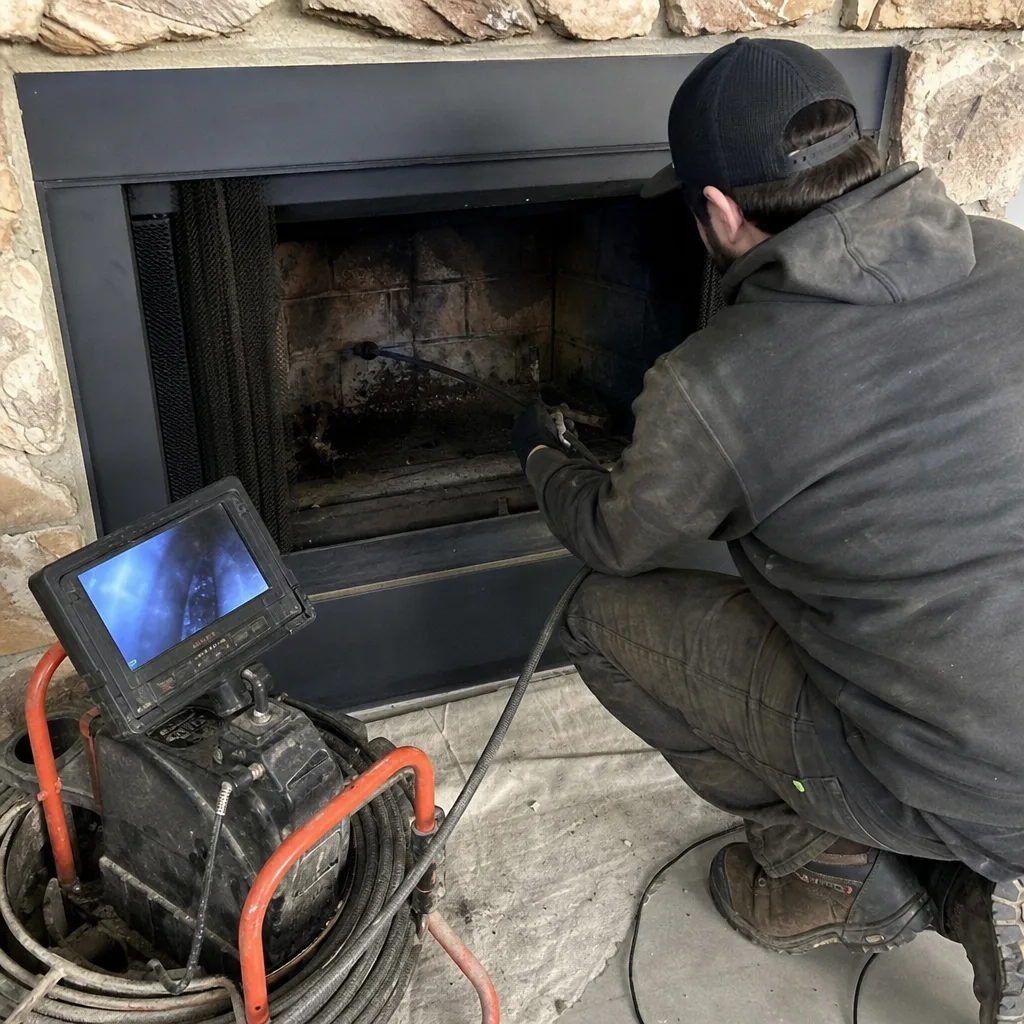
Symptoms that appear only when the fire is burning are the most urgent category. They indicate active conditions that can escalate during the fire itself.
Smoke Rollout at the Damper or Fireplace Opening
Smoke entering the room during operation means combustion products are not exiting through the flue. The possible causes, in order of severity:
- Flue obstruction: Bird nest, squirrel cache, or collapsed flue liner blocking the passage. This is a stop-immediately scenario. A partially blocked flue can backdraft carbon monoxide into living space without visible smoke.
- Liner failure or breach: Cracked clay flue tiles or detached metal liner sections allowing smoke to leak into the chimney cavity, then find paths back into the house through gaps in the masonry. Requires camera inspection to confirm.
- Draft reversal due to negative pressure: Common in Puyallup’s newer tight-construction homes, especially in neighborhoods like Sunrise and Edgewood where whole-house fans, range hoods, and clothes dryers depressurize the home. The chimney can’t overcome the negative pressure, so smoke follows pressure gradients into the room.
- Improper fire construction: Too much paper, wet wood, or closed damper. Rule this out first, but don’t assume it’s the cause if the fire previously drew properly.
Popping or Ticking Sounds from the Chimney Structure
Metallic popping or sharp ticking during a fire typically indicates thermal expansion of a metal chimney component that’s constrained, or water trapped in masonry flashing rapidly converting to steam. In chase-mounted factory-built chimneys, we’ve found popped siding fasteners and separated chase covers that whistle or tick as they heat. Clay flue tiles can also produce sharp cracks when differential thermal expansion stresses a cracked tile further. Any new sound during firing warrants investigation before the next fire.
Delayed Ignition or Difficulty Establishing Draft
A fire that smolders, produces excessive smoke at startup, or requires repeated relighting suggests inadequate airflow. In Puyallup’s low-lying areas near the Puyallup River, heavy morning fog and temperature inversions can suppress natural draft until the chimney warms. But if this is new behavior for your fireplace, check for:
- Closed or partially closed damper (verify full open position)
- Debris at the flue base (fallen tile, animal nesting material)
- Creosote buildup narrowing the flue cross-section
- Deteriorated smoke chamber (the area above the damper, below the flue) with rough, corbeled brick that creates turbulence
The smoke chamber is often invisible to the homeowner. It’s the upside-down funnel between the firebox and the flue liner, and NFPA 211 requires it to be parge-coated smooth to reduce turbulence. In homes built before 1980 in Puyallup’s older neighborhoods like the downtown historic district, we’ve found smoke chambers with exposed corbeled brick that creates eddies, causing smoke to spill at the damper even when the flue itself is clear.
Ambient Signals Without a Fire
Signals that appear when no fire is burning are often misattributed. Homeowners spend money on air fresheners, HVAC filters, and duct cleaning when the source is the chimney.
Campfire Odor in Summer
This is the signature symptom of draft reversal under negative pressure. Here’s the mechanism: your air conditioner, especially a heat pump running in cooling mode, creates slight negative pressure in the home. If the damper is open or leaky, and the flue top is open, air follows the path of least resistance down the chimney, picking up the odor of old soot and creosote deposits on the flue walls. The smell is strongest on humid days because moisture reactivates the organic compounds in the deposits.
This is not a cleaning problem in the usual sense. The flue may be clean enough for safe operation, but the odor indicates two conditions: an open or failed damper seal, and negative pressure pulling air the wrong direction. The fix is typically a top-sealing damper (we install models from Gelco and Olympia Chimney) combined with resolving the home’s pressure balance. In Puyallup, where summer humidity regularly exceeds 70 percent, we see this complaint peak in July and August.
Cold Air Falling from the Fireplace
Cold air at the hearth in winter means the damper isn’t sealing or there’s no damper installed. The stack effect in a heated home pushes warm air upward and out leaks at the top; replacement air enters wherever it can, including down the chimney. A metal damper with a warped frame, rusted-through plate, or missing handle can’t seal. A top-sealing damper, installed at the chimney crown, seals much more effectively because it closes against gravity and isn’t exposed to the corrosive byproducts of combustion.
Animal Sounds or Debris Falling into the Firebox
Scratching, chirping, or the sound of debris dropping into the firebox indicates an uncapped flue or a failed cap screen. In Puyallup’s wooded areas, particularly around Bradley Lake Park and the Meridian corridor, raccoons, squirrels, and starlings commonly enter chimneys. A raccoon can remove a poorly installed cap. A starling can fit through a 1-inch gap. The debris you hear falling is often nesting material, which is dry, flammable, and frequently infested with mites or parasites. We remove animal material during every sweep, but the permanent fix is a proper cap with intact mesh from Famco or Copperfield, sized to the flue and secured with stainless steel fasteners.
“Watch This” Versus “Stop Using Immediately”
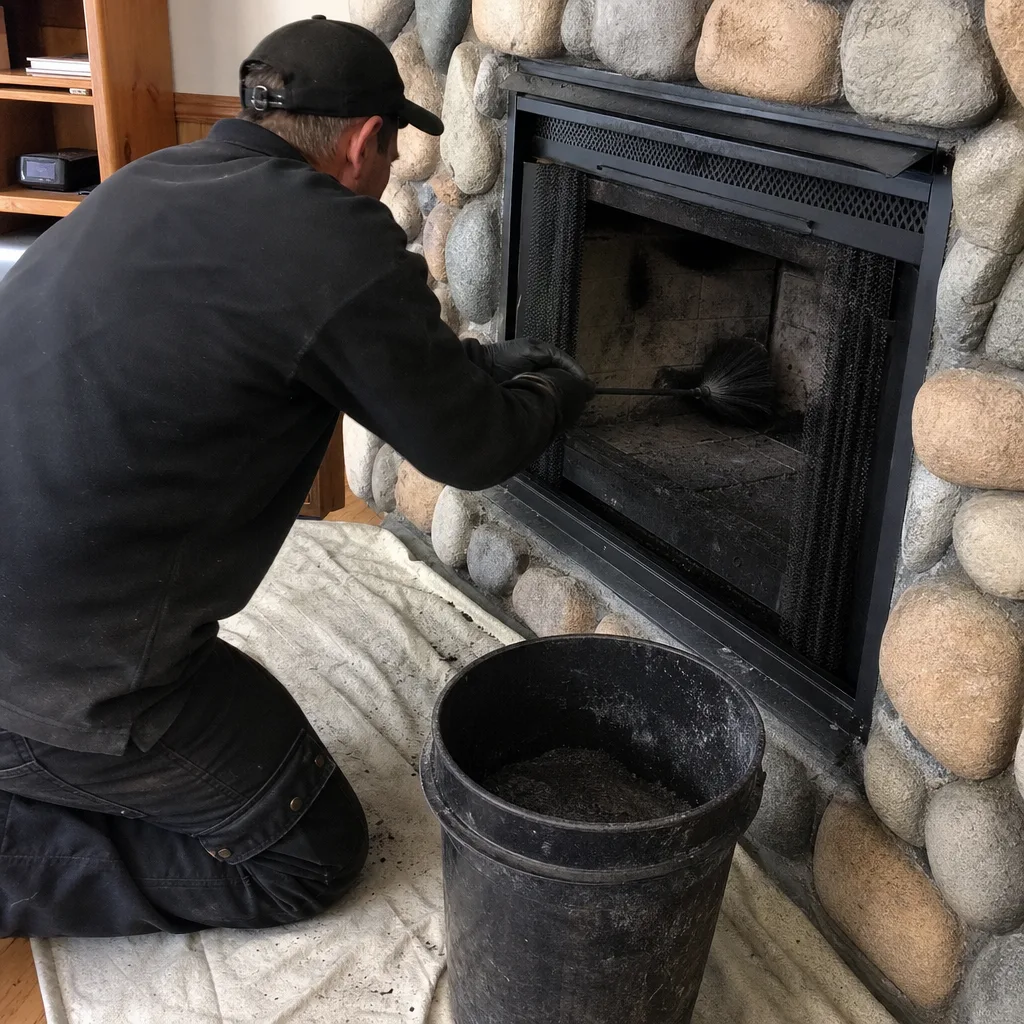
Not every warning sign demands an emergency response. Misreading the urgency level costs money in unnecessary panic calls, or costs safety in delayed action. Here’s how we categorize what we’ve found across 38,000 inspections.
Monitor Annually (Schedule Next Routine Sweep)
- Light white efflorescence on exterior brick, less than 1/4 inch thick, not accompanied by spalling (surface flaking)
- Small rust spots on exterior metal components, no through-corrosion
- Minor soot staining on firebox walls, no glaze
- Single hairline crack in firebrick, no displacement
Schedule Within 30 Days (Don’t Delay, But No Emergency)
- Orange rust staining with visible metal thinning on damper or fire grate
- White efflorescence with spalling brick (surface flaking or pitting)
- Smoke chamber with exposed corbeled brick, no parge coat
- Chimney cap missing or visibly damaged, no animal entry yet
- Crown with hairline cracks, no separation from flue tiles
Stop Using Immediately (Camera Inspection Before Next Fire)
- Any smoke rollout into the room during operation
- Black, glossy creosote visible on firebox walls or at the damper
- Black streaking at the crown indicating exhaust gas escape
- Debris or animal nesting material visible in the flue (shine a flashlight up)
- Cracked or displaced flue tile visible from the firebox opening
- Any new structural crack in the firebox or surrounding masonry wider than 1/8 inch
- Water dripping into the firebox during rain
The distinction between “monitor” and “stop using” often comes down to whether the condition can worsen catastrophically during a single fire. Creosote ignition, liner breach with flame impingement on combustibles, or blocked flue backdrafting CO are all single-event failures. Rust progression or efflorescence accumulation are gradual processes. When we document conditions during a Chimney Repair in Puyallup inspection, we mark the category on the written report so the homeowner has our recommendation in writing, not from memory.
How to Photograph and Describe Warning Signs for Your Sweep
The language you use when calling a sweep determines whether you’re scheduled for a routine cleaning or an urgent inspection, and whether the technician arrives prepared-something we cover in How to Hire a Chimney Cleaning Contractor in Puyallup: A Step-by-Step Guide. Vague descriptions lead to unprepared techs, rescheduled appointments, and frustration. Specific descriptions get accurate scheduling and accurate pricing.
Photography Guidelines
- Include a reference object for scale. A coin, a pen, or your hand next to the stain or crack. “Crack is wider than a nickel” communicates more than “there’s a crack.”
- Photograph the location in context. One frame close on the stain, one frame showing its position on the chimney or firebox. “Black stain at the rear left corner of the firebox, 8 inches above the firebrick floor” is actionable.
- Capture lighting conditions. Flash on for texture, flash off for color accuracy. Stains look different under warm indoor light versus camera flash.
- Document the date and recent weather. “Stain appeared after the December windstorm” or “Water in firebox only during heavy rain” helps distinguish active leaks from old damage.
- Photograph any previous repair. If someone else patched the crown or sealed the flashing, show the repair and whether it’s holding.
Language That Communicates Urgency Accurately
| Avoid | Use Instead | Why |
|---|---|---|
| “The chimney smells” | “I smell campfire odor in the living room when the AC runs, no fire burning” | Identifies draft reversal, not a dirty flue |
| “There’s a crack” | “Vertical crack in the exterior brick, width of a dime, runs 6 courses from the crown down” | Structural versus cosmetic, active versus historical |
| “Smoke comes out” | “Smoke rolls out at the damper opening 10 minutes after lighting, with damper fully open and dry hardwood” | Rules out user error, points to flue or draft issue |
| “It’s making noise” | “Metallic ticking from the chimney chase during the first 20 minutes of a fire, stops as the fire dies” | Thermal expansion pattern, indicates metal component under stress |
| “There’s stuff in it” | “Twigs and dried grass visible at the flue base, with scratching sounds in the morning” | Animal nesting, active occupancy, flammability risk |
When you call Level Two Chimney Puyallup home with this level of detail, we can tell you whether you’re looking at a standard sweep, a Level 2 camera inspection, or an urgent stop-use situation. We can also quote the work in writing before we dispatch, which is Clause 1 of the Haven Standard: every customer receives a written price, written scope, and written warranty before anyone starts work.
How Puyallup’s Climate Amplifies Specific Risks
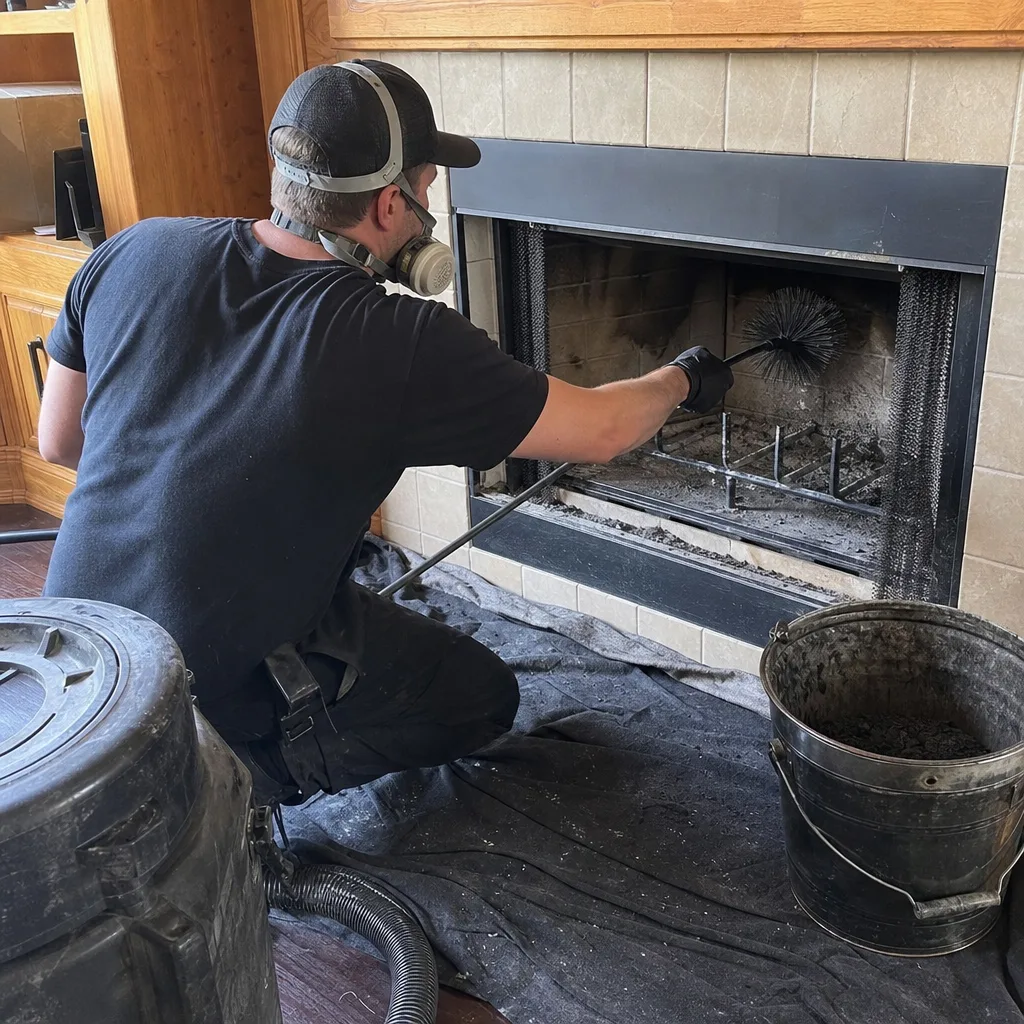
Puyallup’s location in the Puyallup River valley, with the Cascades to the east and Puget Sound influence from the west, creates chimney conditions that differ from drier inland climates or colder mountain regions.
Freeze-thaw cycling: Our winter temperatures oscillate around the freezing point more than they do in colder climates. Water enters masonry cracks, freezes overnight at 28-32 degrees, expands, and thaws the next afternoon at 38-42 degrees. This repeated cycling, sometimes dozens of times per winter, accelerates spalling and mortar deterioration faster than sustained cold. Chimneys in Puyallup’s older neighborhoods with original mortar from the 1940s-1960s show this damage most severely. We’ve replaced crown assemblies in the historic district where the original mortar had completely powdered out from decades of this cycling.
Wind-driven rain: South Hill and North Hill elevations catch prevailing southwest winds directly. A chimney crown with even a slight slope error or missing drip edge channels water into the flue system rather than shedding it. The result is saturated masonry that doesn’t dry between storms, promoting efflorescence and, eventually, interior water damage to framing.
Wood moisture content: Puyallup’s ambient humidity means firewood cut locally rarely seasons below 25 percent moisture without covered storage and active airflow. Burning wood at 25-30 percent moisture (versus the ideal 15-20 percent) produces cooler fires, incomplete combustion, and accelerated creosote accumulation. We regularly find Class II creosote in Puyallup fireplaces where the homeowner burns “seasoned” wood that was split only six months prior and stored uncovered.
Temperature inversions: Valley fog and inversions, common October through February, can suppress natural draft in chimneys that otherwise draw adequately. A marginal flue (slight creosote buildup, minor liner roughness) that works fine in September may fail to draft in January during an inversion. This seasonal pattern means symptoms that appear in mid-winter may not have been present during fall inspection, and homeowners sometimes blame the sweep for “missing something” when the condition is actually new.
Common Mistakes to Avoid
- Assuming a gas fireplace chimney doesn’t need inspection. Gas appliances produce water vapor and corrosive condensate. The flue liner for a gas insert degrades differently than a wood-burning liner, but it still degrades. We find failed gas flue liners in Puyallup townhomes where the homeowner assumed “it’s gas, so it’s clean.”
- Using the fireplace as an incinerator for wrapping paper, cardboard, or construction scraps. These materials burn hot and fast, producing floating embers that can exit the flue top and ignite roof debris. They also create rapid temperature spikes that stress clay flue tiles. We’ve documented tile cracks after holiday parties where gift wrap was burned in quantity.
- Installing a chimney cap yourself with generic hardware-store sizing. Caps that are too small leave gaps; caps that are too large create ledges where debris collects. Improper fastening fails under wind load. We replace dozens of failed DIY caps annually, often after they’ve blown off and damaged roofing or gutters.
- Ignoring a “small” water leak because it stops when the rain stops. Intermittent leaks cause more damage than constant leaks because homeowners delay repair. By the time the leak becomes constant, the damage has extended to framing, insulation, and interior finishes. In Puyallup’s climate, a leak that appears only in driving rain is still admitting significant water volume.
- Accepting a verbal diagnosis without photo documentation. If a sweep tells you the liner is cracked, the crown is failing, or the creosote is hazardous, ask to see the camera footage. Clause 4 of the Haven Standard requires a documented photo record on every job specifically because verbal descriptions are insufficient for informed consent. A contractor who won’t show you what they found is a contractor who may be selling unnecessary work.
- Sweeping only when there’s a problem. NFPA 211 recommends annual inspection and cleaning as needed. Waiting for symptoms means the condition has progressed to the point of producing visible or audible signals. Preventive maintenance costs less than reactive repair, and documented annual records support insurance claims if damage occurs.
- Hiring based on lowest price without verifying what’s included. A “$99 sweep” that doesn’t include a Level 2 camera inspection, doesn’t provide a written report, and doesn’t document the work with photos is not comparable to a documented inspection. We’ve been called to second-opinion inspections where the budget sweep missed a detached flue liner because the technician never ran a camera.
When to Call a Professional
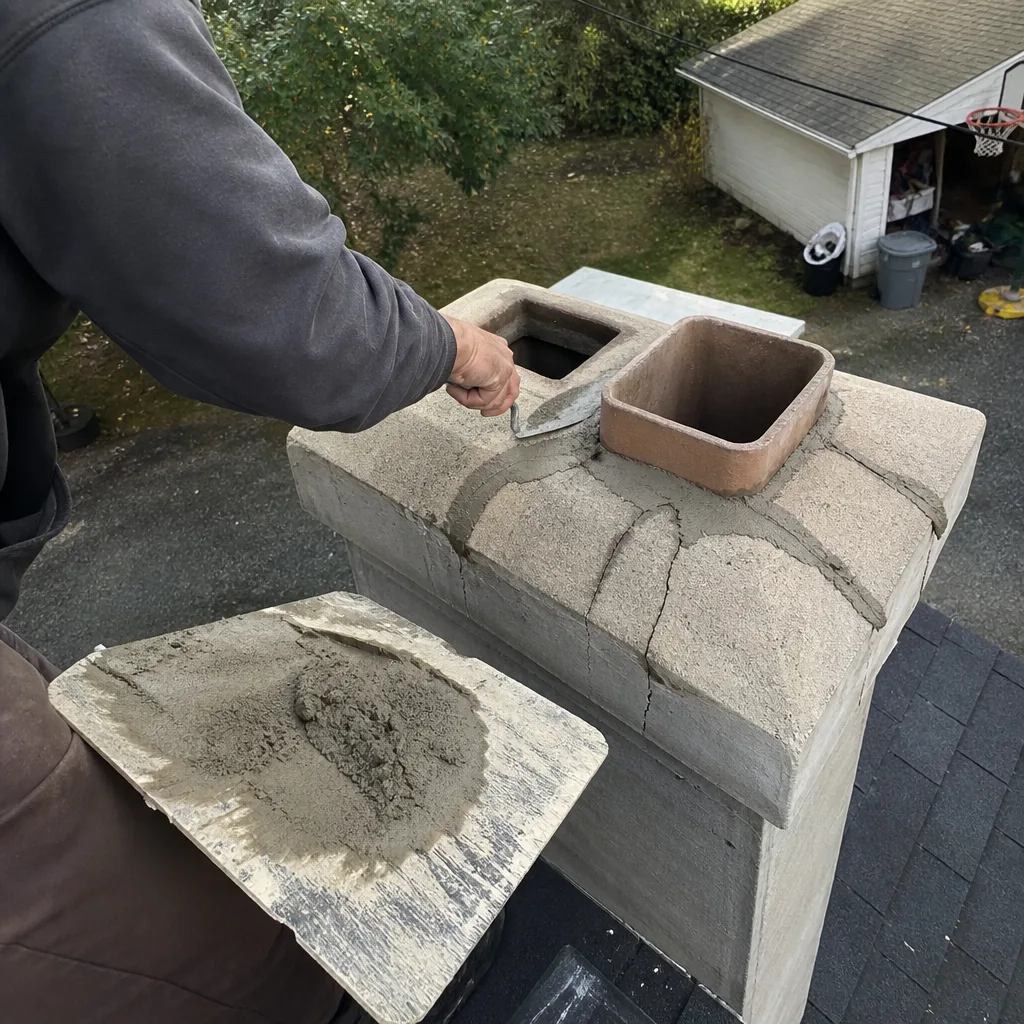
Call for a professional chimney evaluation when you observe any “stop using immediately” sign from the table above, when you smell campfire odor without a fire, when you hear animal activity, or when it’s been more than 12 months since your last documented inspection. In Puyallup, where our climate accelerates wear patterns that progress more slowly elsewhere, annual inspection is the practical minimum for wood-burning systems and every two years for gas.
Level Two Chimney Puyallup offers free estimates in Puyallup. Every estimate includes a written price before work starts, a camera-scan inspection with documented photo record under Haven Standard Clause 4, and the 365-Day Done Right Promise. Call (253) 323-5667 to schedule or to request a free second opinion on any written estimate you’ve received from another company.
Frequently Asked Questions
A standard chimney sweep and NFPA 211 Level 2 inspection in Puyallup typically ranges from $289 to $425, depending on flue accessibility, creosote class, and whether the system is a masonry fireplace, factory-built chimney, or insert. This includes the camera inspection, photo documentation, and written report. We deliver a written price before any work starts, and we never charge for an estimate. Call (253) 323-5667 for an exact quote for your specific system.
You need a new liner when the existing one is breached, detached, or deteriorated to the point that it cannot contain combustion products. We determine this with a camera scan, not a flashlight look. A cracked clay flue tile, a separated metal liner section, or a liner with visible gaps at the joints fails the containment test. We show you the camera footage and explain what we’re seeing before recommending replacement. If another company told you the liner needs replacement but didn’t show you camera evidence, bring us their written estimate for a free second opinion.
NFPA 211 recommends annual inspection for all chimney systems, with cleaning as needed based on creosote accumulation. In Puyallup, where firewood often burns at higher moisture content due to our humid climate, many wood-burning systems need annual sweeping. Gas systems typically need inspection every one to two years, with cleaning less frequently unless venting issues produce corrosive condensate. The specific interval for your system depends on fuel type, burn frequency, and wood quality. We document the recommended return date on every written report.
Skipped maintenance leads to three predictable outcomes: creosote accumulation increases fire risk and restricts draft; moisture intrusion degrades masonry and metal components; and minor liner or crown damage progresses to major structural repair. In Puyallup’s climate, moisture damage accelerates particularly fast. We’ve rebuilt chimney crowns and replaced water-damaged framing in homes where maintenance was deferred five to seven years. The cost pattern is consistent: annual maintenance at $289-$425, or deferred repair at $3,000-$8,000 for crown rebuild, liner replacement, or masonry reconstruction.
That’s draft reversal under negative pressure. Your air conditioner or whole-house fan creates slight negative pressure inside the home. If the damper is open or leaking, air flows down the chimney, picking up soot and creosote odors from the flue walls. Humid summer air reactivates the organic compounds in old deposits, making the smell stronger on muggy days. The fix is typically a top-sealing damper to seal the flue at the top, plus addressing home pressure balance. It’s not a cleaning issue; it’s a pressure and sealing issue.
We don’t recommend DIY chimney cleaning for several safety reasons. First, proper evaluation requires a camera scan of the full flue length, which most homeowners don’t have equipment to perform. Second, Class III creosote requires chemical treatment and mechanical removal that risks flue tile damage if done incorrectly. Third, working on a roof to inspect or clean the crown and cap involves fall risk. Fourth, and most important, a DIY cleaning produces no documented record. If you later have an insurance claim or sell your home, you have no proof the work was performed to NFPA 211 standards. Our pricing includes documentation that protects your investment and your liability exposure.
A Level 1 inspection is a visual examination of readily accessible portions of the chimney exterior and interior, appropriate for annual maintenance of systems with no changes or known problems. A Level 2 inspection includes everything in Level 1 plus examination of accessible attics, crawl spaces, and basements, and a camera scan of the interior flue surface. Level 2 is required when a system is being sold, after a chimney fire or seismic event, or when any change is made to the system. Level Two Chimney Co. performs NFPA 211 Level 2 inspection as our default on every visit, because a flashlight look misses what a camera finds. We’ve identified detached liners, hidden crown leaks, and internal spalling that were invisible from the firebox opening.
The Bottom Line
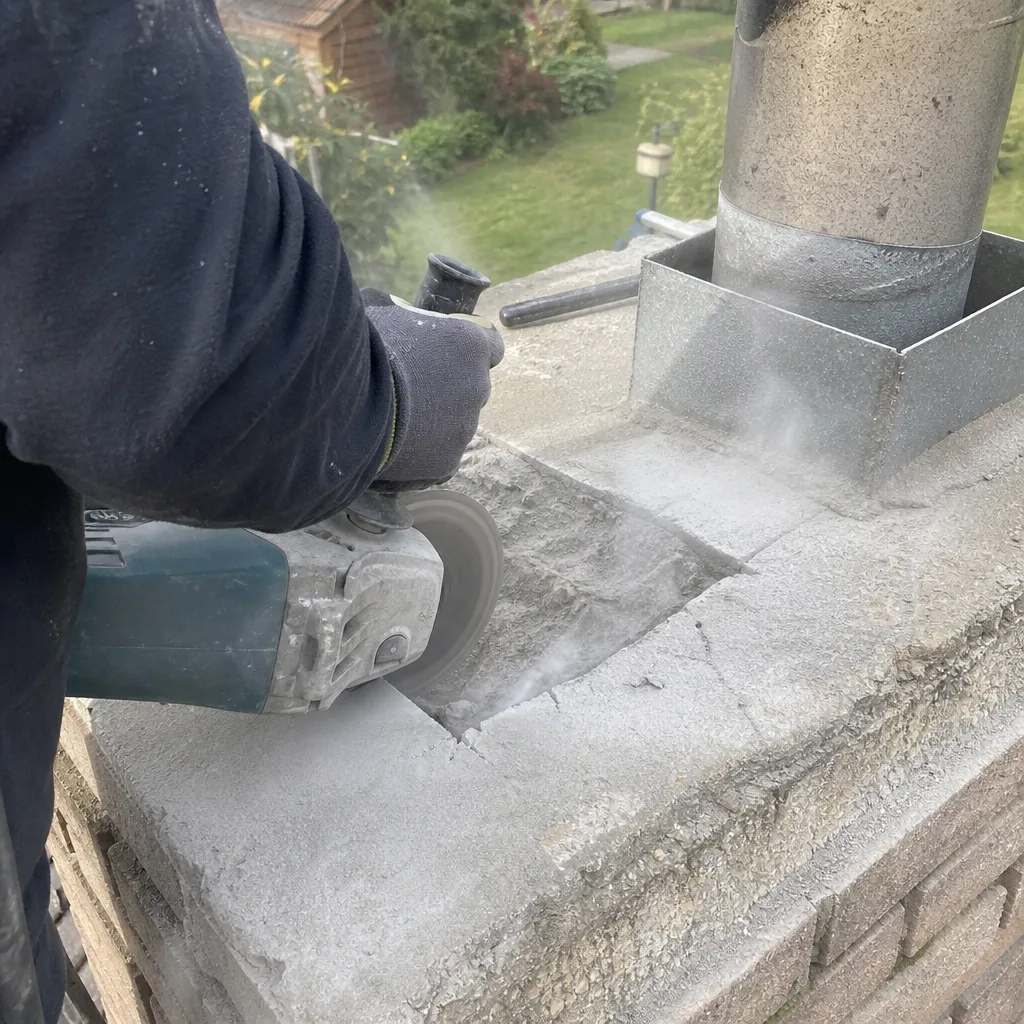
Your chimney communicates through specific, decodable signals. White stains mean water is moving through masonry. Smoke rollout means combustion products aren’t exiting the flue. Summer campfire odor means negative pressure is pulling air down an open flue. Each sign maps to a failure mode, and each failure mode has a specific repair path and urgency level. The goal of this guide is to give Puyallup homeowners the vocabulary and framework to match what they’re seeing to what’s actually happening, so they can have informed conversations with any sweep, recognize when camera documentation is essential, and avoid both unnecessary panic and dangerous delay. For more guides & resources, visit our blog.
We’ve completed more than 38,000 chimney inspections and cleanings since 2009, every one with a written price before work started and a documented photo record on completion. That practice, established years before regulators or insurers asked for it, became Clause 4 of the Haven Standard. If you’re seeing warning signs you can’t decode, or if you want a second opinion on another company’s written estimate, call (253) 323-5667. Estimates are free, and we answer live 24 hours a day.
Written by Corrine Halstead, Owner at Level Two Chimney Puyallup, serving Puyallup since 2009.