
Last updated September 22, 2026
Level 1 sweep and inspection to the NFPA 211 annual standard - flue, crown, cap, and flashing checked and photographed
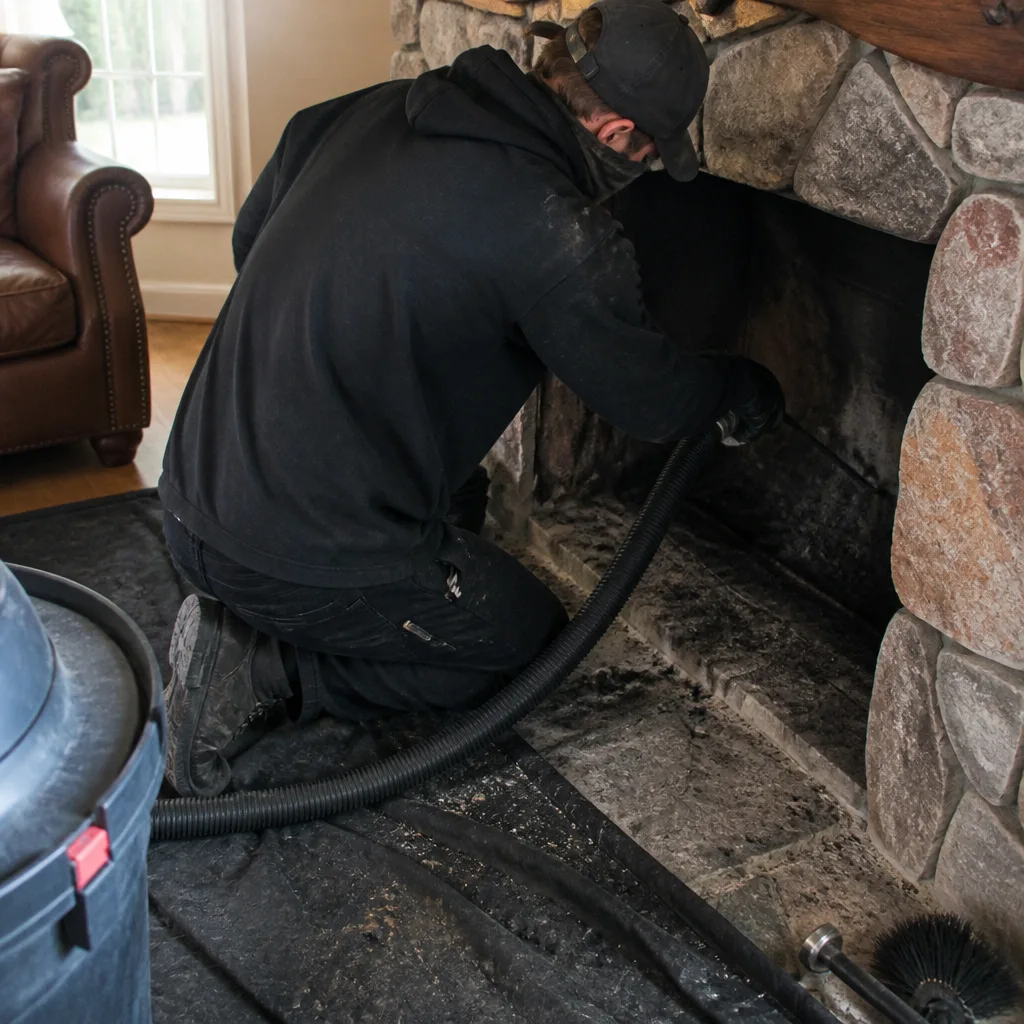
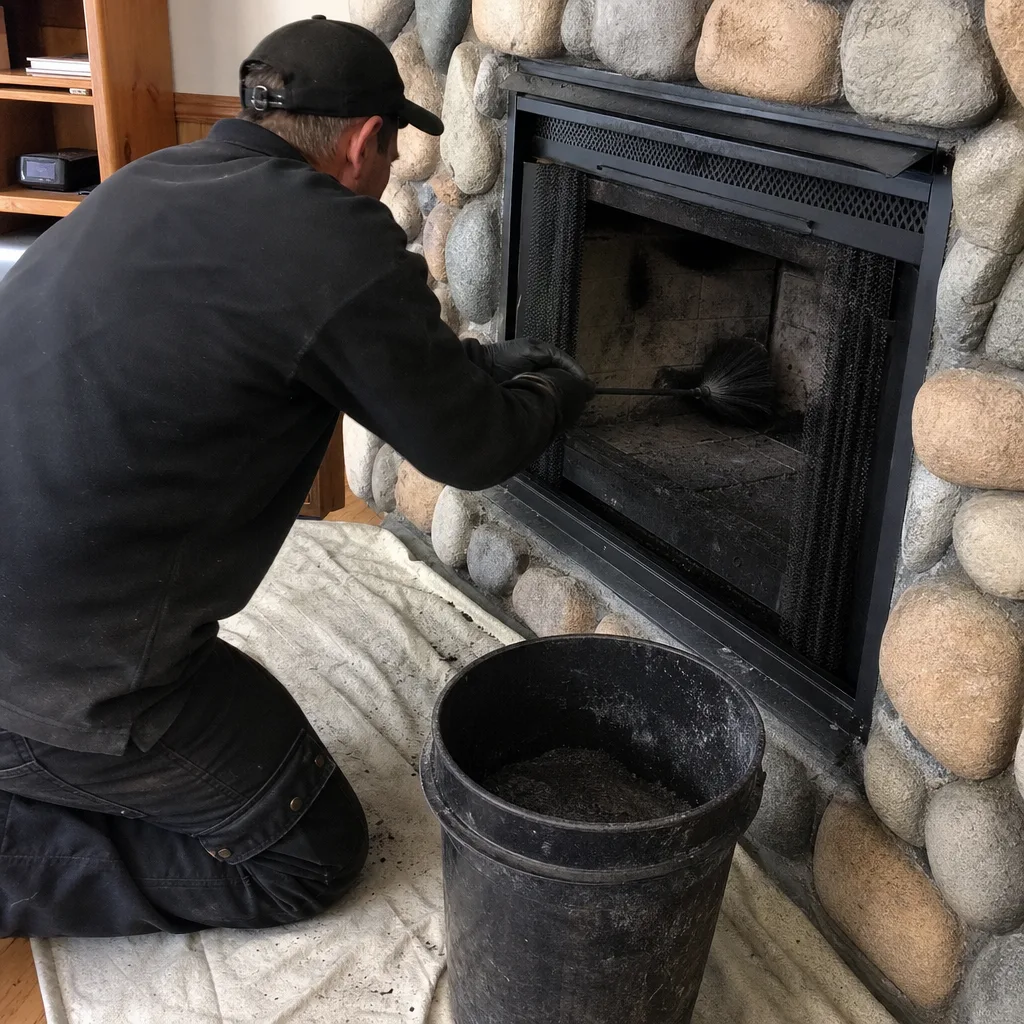
Chimney sweep logs do not sweep chimneys. They loosen some creosote - which then falls where a brush and vacuum still have to collect it.
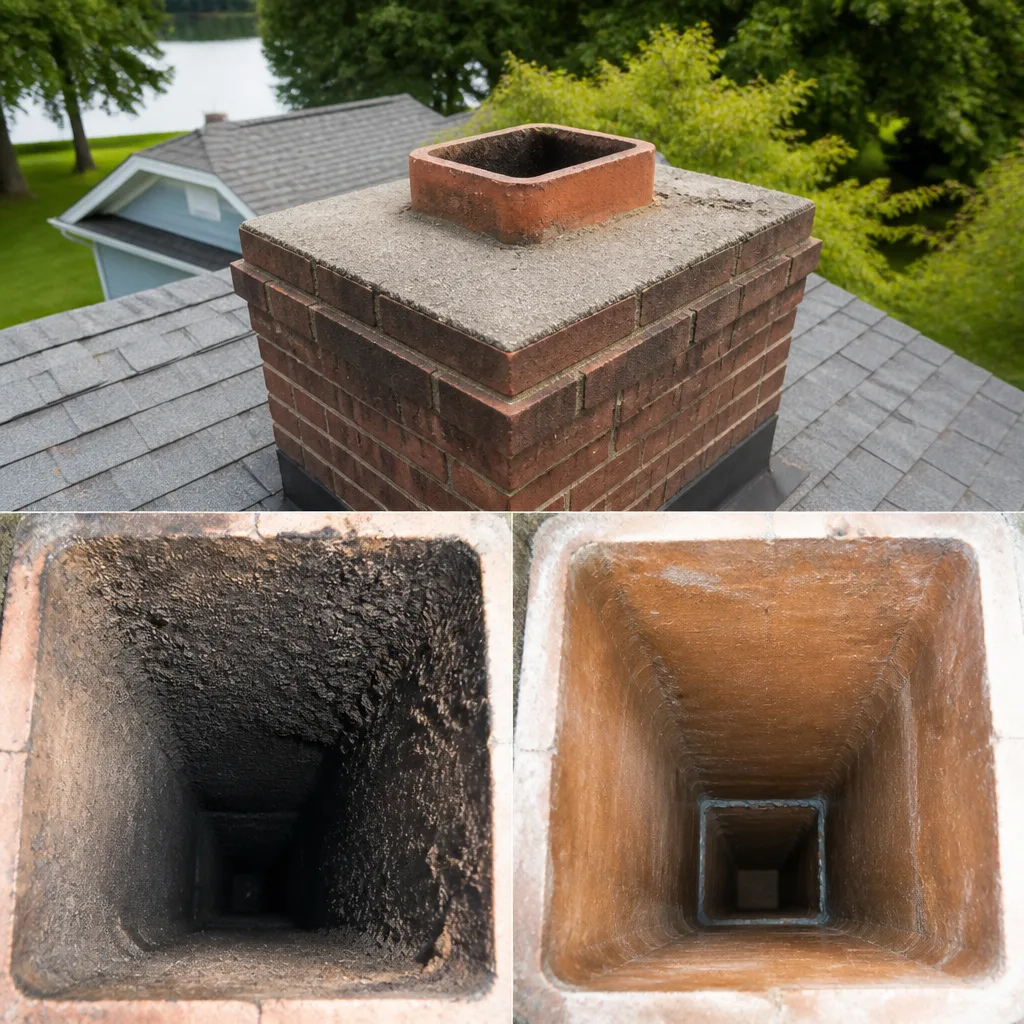
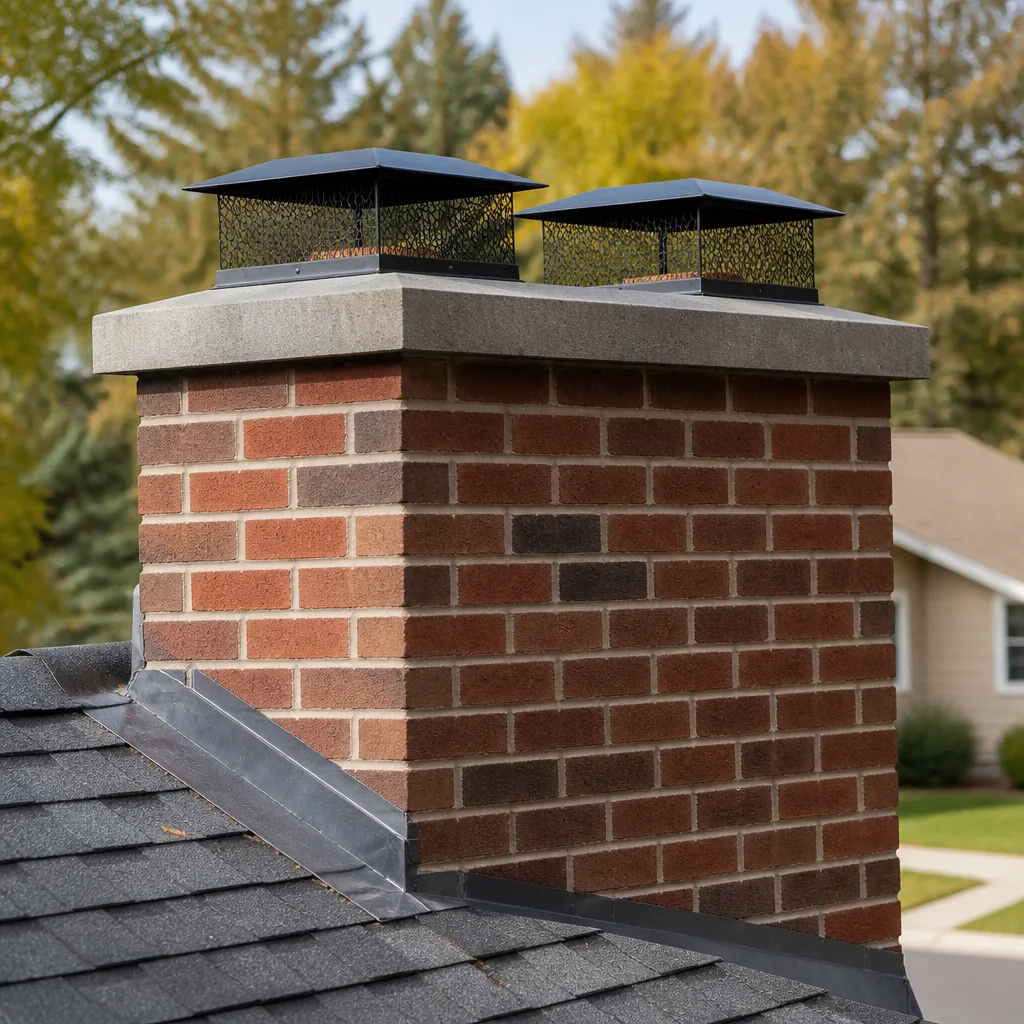
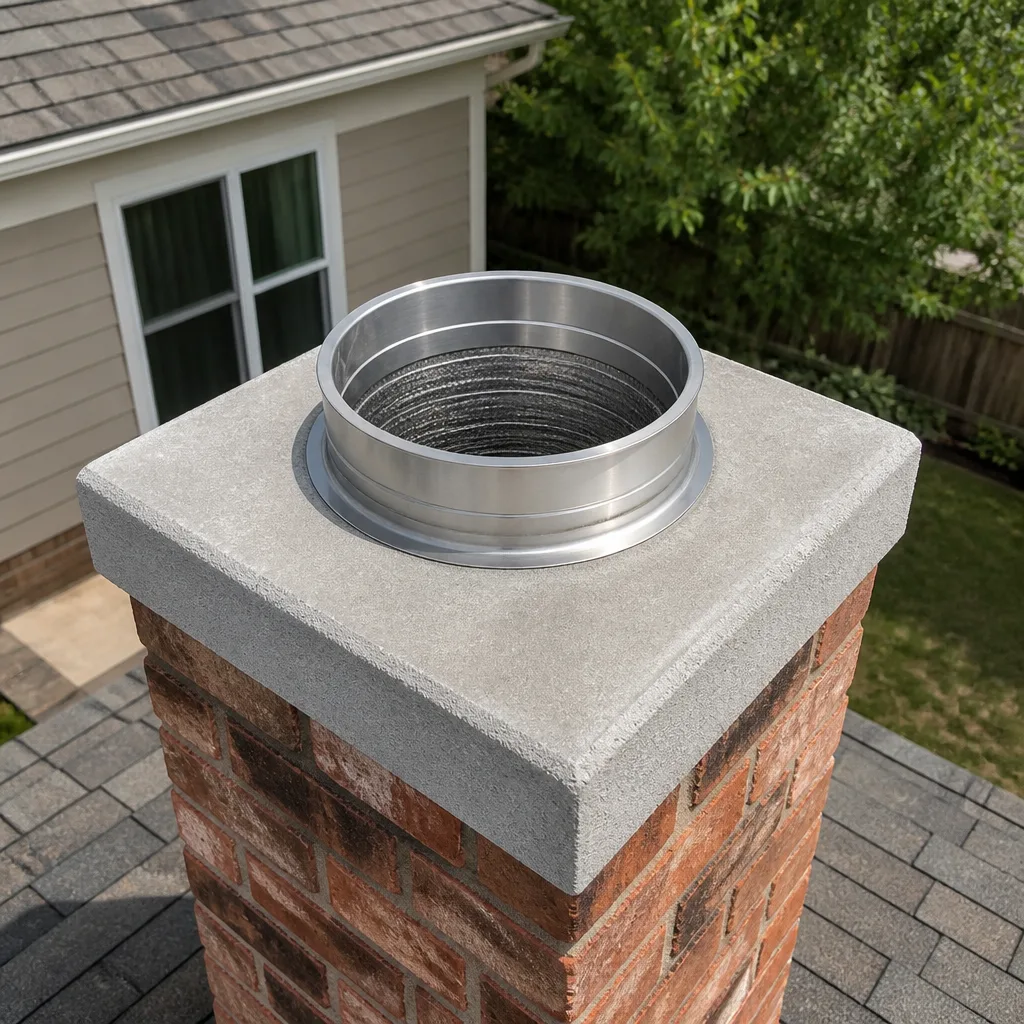
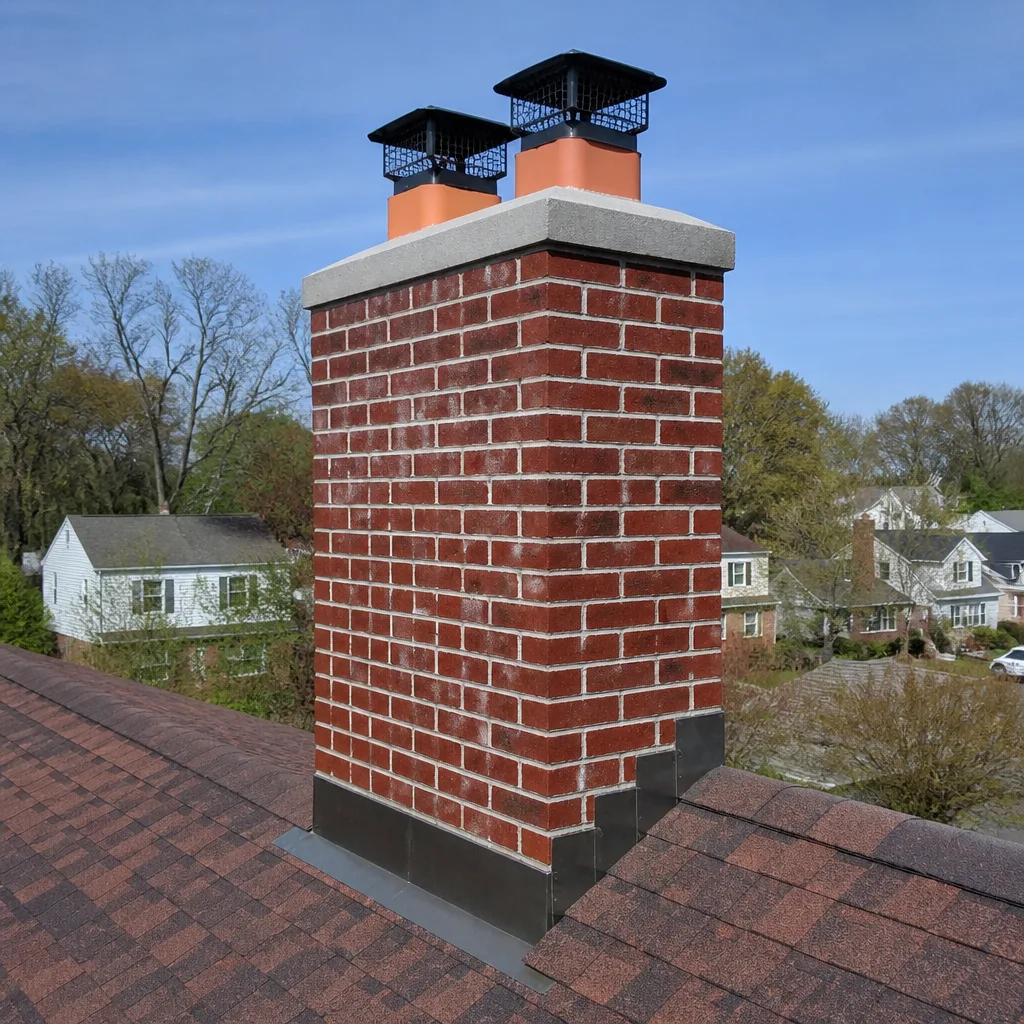
 Before
 After
After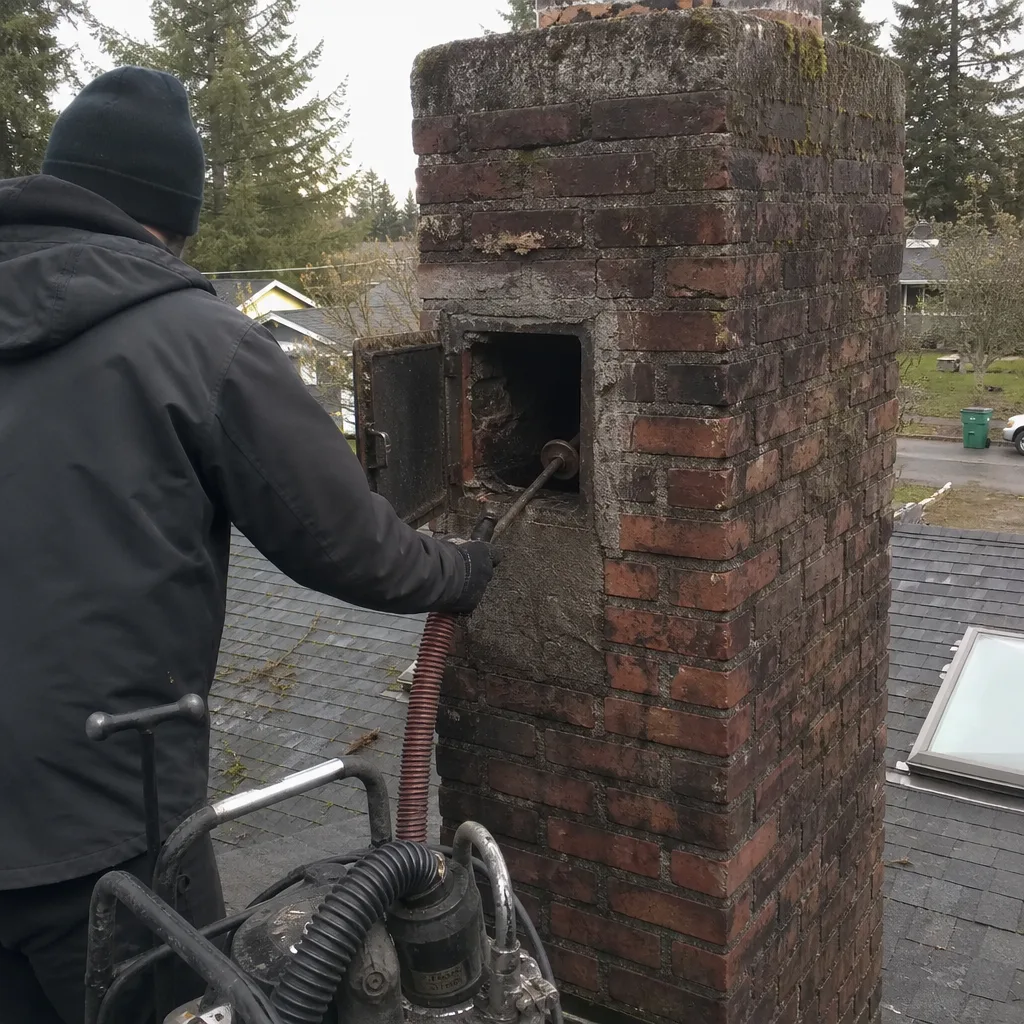 Before
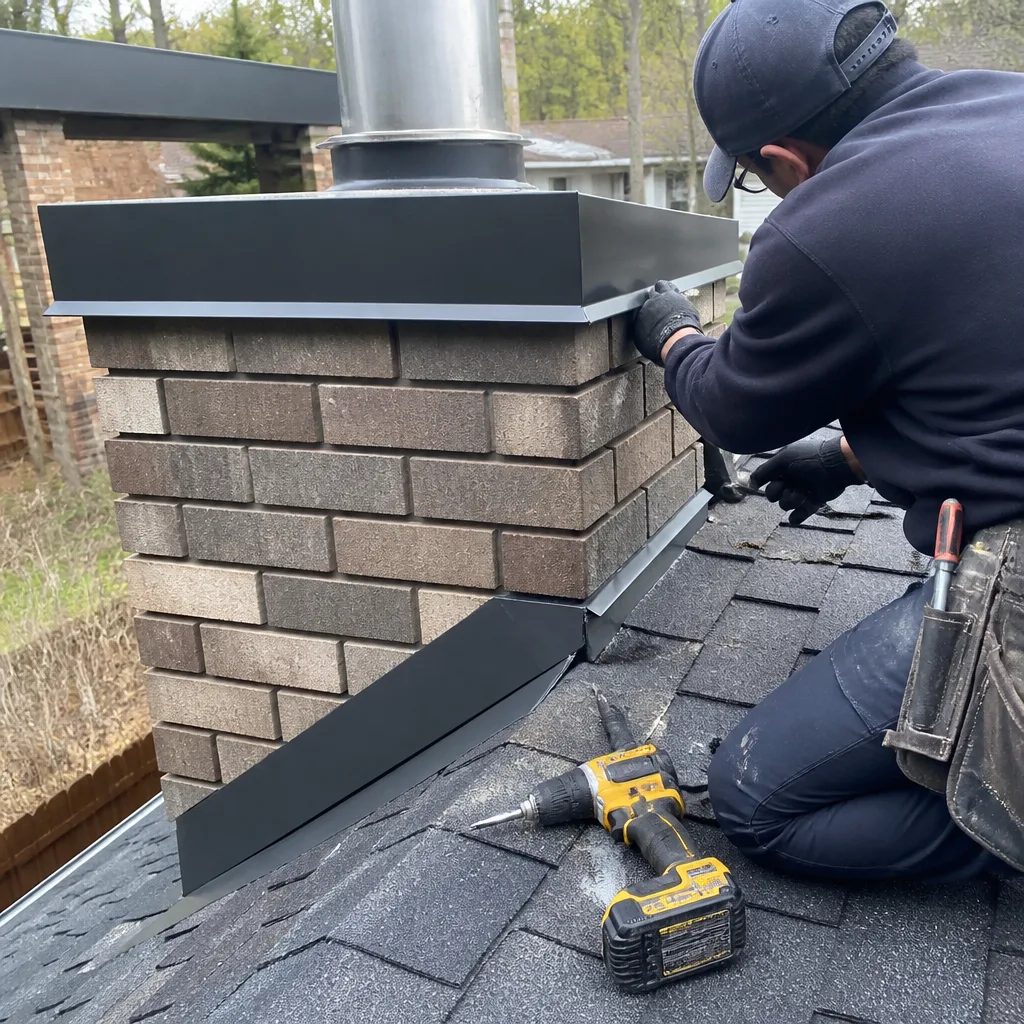 After
After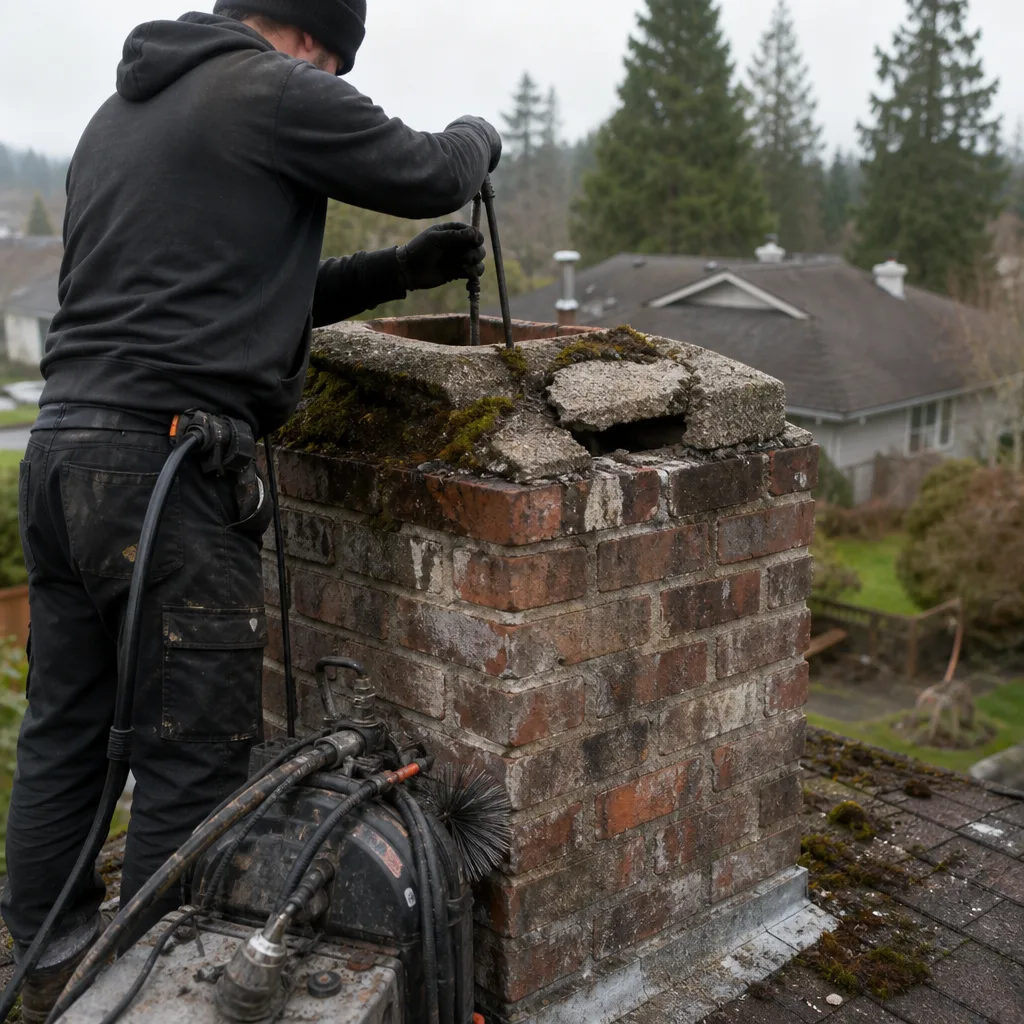 Before
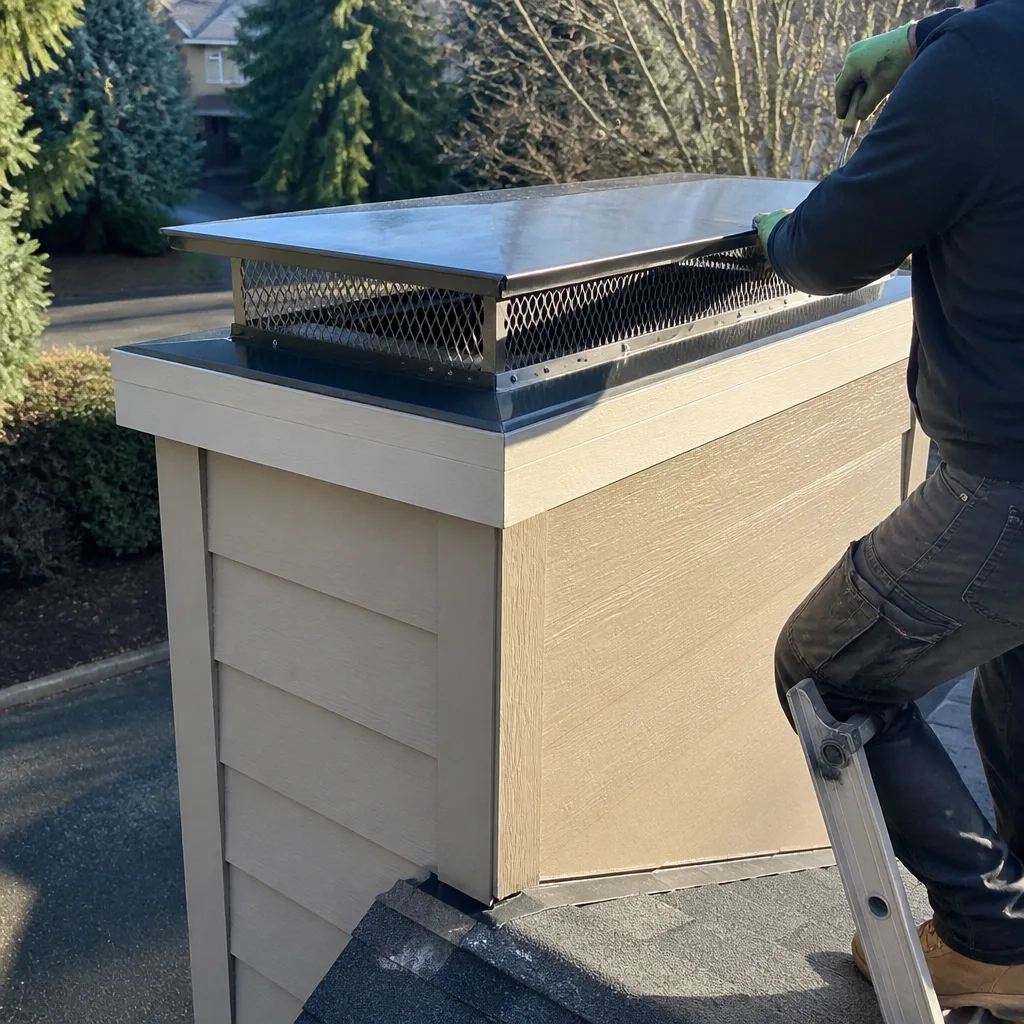 After
AfterChimney Cleaning Permits, Codes & Inspections in WA: What You Need to Know
A liner replacement done without a mechanical permit in Pierce County isn’t just a code violation - it’s a documented reason for an insurer to deny a fire claim, and most homeowners don’t learn this until the adjuster does. We’ve been sweeping chimneys in Puyallup since 2009, and the pattern repeats every fall: a cleaning reveals cracked flue tiles or deteriorated mortar joints, a homeowner accepts a quick repair quote, and two years later they’re holding a denied claim because the work was never permitted. This guide - alongside our Complete Guide to Chimney Cleaning in Puyallup - explains exactly which chimney work requires permits in Washington, which codes apply, and how to protect your coverage.
Quick Answer
Chimney cleaning and sweeping in Washington require no permit. However, chimney repairs uncovered during that cleaning - including liner replacement, firebox rebuilds, crown reconstruction, and structural modifications - almost always require a mechanical permit under WAC 51-51 and IRC Chapter 10. In Pierce County, unpermitted chimney work can void the homeowner’s insurance policy under standard “maintained to code” clauses, and only a permitted repair with a certificate of completion provides defensible documentation.
Table of Contents
- What Requires a Permit: Cleaning vs. Repairs vs. Rebuilds
- How NFPA 211 Becomes Washington Law
- What a Level 2 Inspection Actually Documents
- The Insurance Clause That Voids Your Claim
- Getting a Chimney Permit in Pierce County
- When Real Estate Sales Force a Level 2 Inspection
- Certificates, Photo Records, and Your Home File
- Common Mistakes to Avoid
 Before
 After
AfterWhat Requires a Permit: Cleaning vs. Repairs vs. Rebuilds
Washington State separates chimney maintenance into three categories, and only two of them trigger permit requirements. Understanding this distinction saves homeowners from both code violations and coverage gaps.
No permit required: Chimney sweeping and cleaning - the mechanical removal of creosote, soot, and debris from the flue, smoke chamber, and firebox. This includes standard Chimney Cleaning & Sweep in Puyallup services using brushes, rods, and vacuum systems. WAC 51-51-0301 exempts routine maintenance from permit requirements, and this is why a basic sweep can be scheduled and completed same-day.
Permit required - mechanical permit: Any modification, repair, or replacement of the chimney’s structural or venting components. This includes:
- Flue liner replacement or relining (stainless steel, DuraFlex, or cast-in-place systems like HeatShield)
- Firebox reconstruction or refractory panel replacement
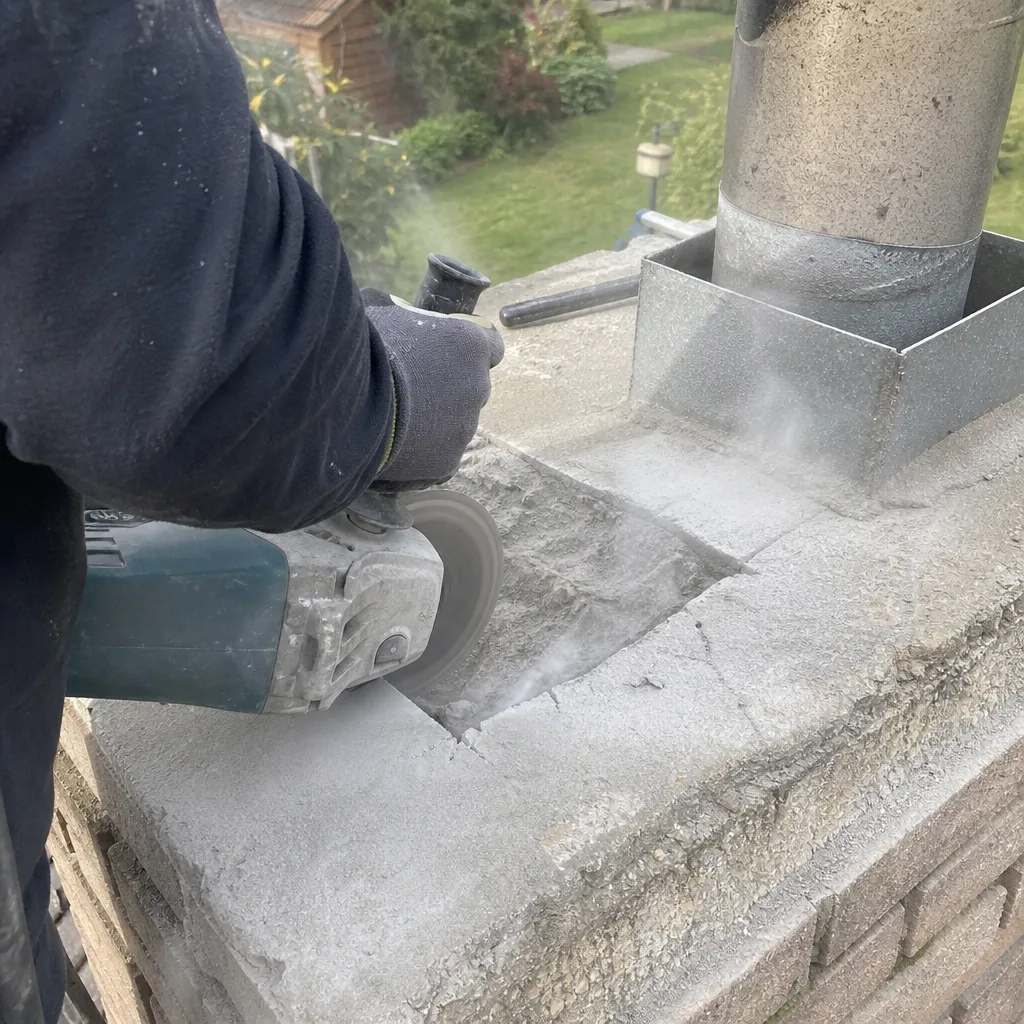
- Crown repair or complete rebuild
- Chimney cap installation that modifies the flue opening or termination height
- Smoke chamber parging or modification
- Structural repairs to the chimney chase, exterior masonry, or foundation support
Permit required - building permit (in some jurisdictions): Chimney demolition, complete rebuilds, or modifications affecting roof penetration, clearances to combustibles, or hearth extension dimensions. In Puyallup and unincorporated Pierce County, these fall under the building division rather than mechanical, and IRC Chapter 10 clearances to combustible materials become the governing standard.
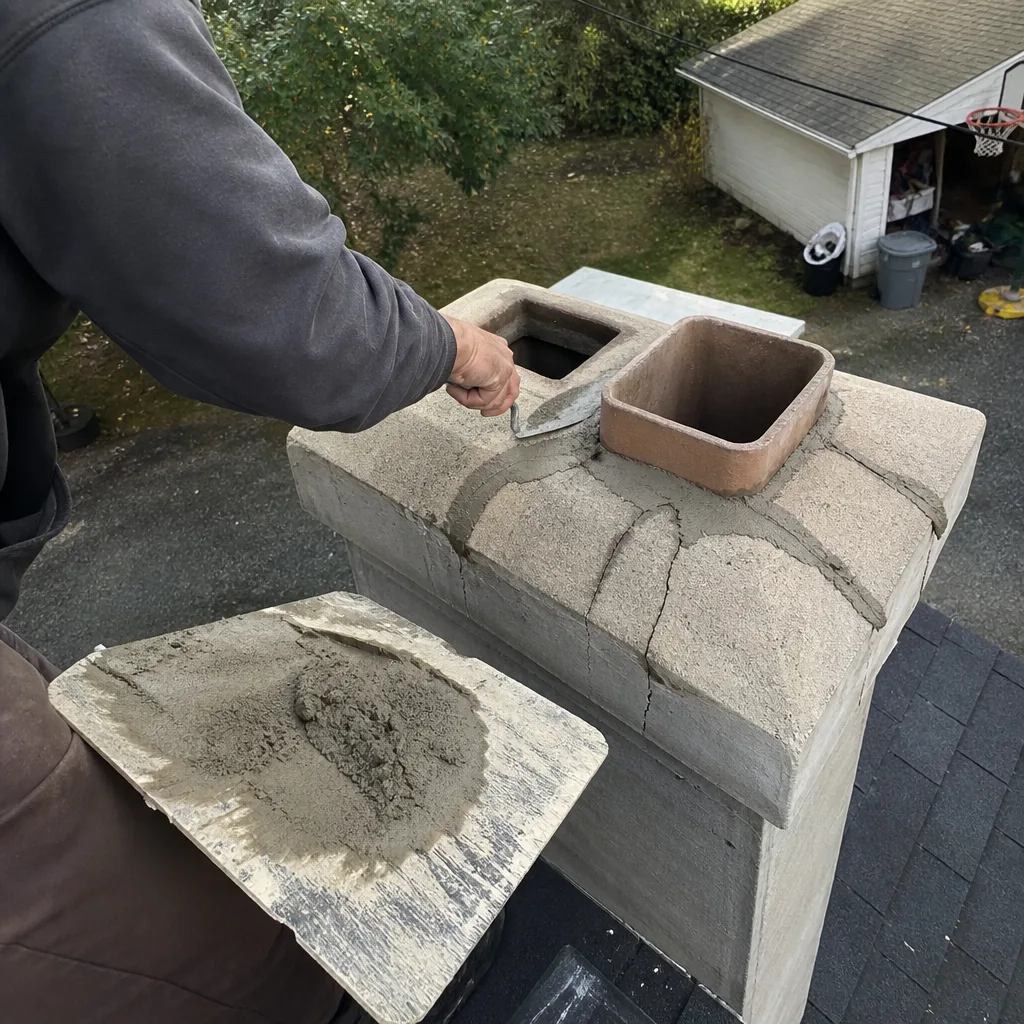
The practical implication: when our technician runs a camera down your flue and finds spalling flue tiles or a deteriorated smoke chamber, the written price we deliver before any work starts separates cleaning costs from repair costs - and flags which repairs will require permit application and inspection. This is Haven Standard Clause 1: the written scope distinguishes maintenance from modification, and the permit requirement is disclosed before you commit.
In Puyallup’s older neighborhoods - particularly the historic district near Pioneer Park and the mid-century homes around South Hill - we’ve found that roughly 40% of routine sweeps reveal conditions requiring permitted repair, which is why our Chimney Cleaning & Sweep Maintenance Checklist for Puyallup Homeowners emphasizes what to watch for. The 1960s ranch homes with original terra cotta flue liners are especially prone to thermal shock cracking after decades of Pacific Northwest heating seasons.
How NFPA 211 Becomes Washington Law
NFPA 211, the Standard for Chimneys, Fireplaces, Vents, and Solid Fuel-Burning Appliances, is published by the National Fire Protection Association as a voluntary consensus standard. In Washington, it becomes enforceable through a specific legal pathway that most homeowners never encounter until a dispute arises.
The adoption chain works like this:
- IRC Chapter 10 (International Residential Code) references NFPA 211 for chimney construction, maintenance, and inspection standards
- Washington State adopts the IRC with state amendments through WAC 51-51
- Local jurisdictions - Pierce County, the City of Puyallup, Tacoma, and others - adopt the state code with additional local amendments
- Insurance policies reference “maintained in accordance with manufacturer and code requirements,” which courts interpret as including referenced standards like NFPA 211
This means NFPA 211 isn’t merely a best-practice guideline in Washington - it’s the technical standard that determines whether your chimney is “to code” for insurance purposes. And NFPA 211 specifically defines three inspection levels, with Level 2 required for real estate transactions, changes of appliance type or fuel, and after chimney fires or seismic events.
The 2019 edition of NFPA 211, currently referenced by Washington’s adopted codes, requires Level 2 inspections to include “a visual examination by video scanning or other means in order to examine the internal surfaces and joints of all flue liners incorporated within the chimney.” This is why Level Two Chimney Co. made camera-scan documentation the default practice in 2009 - years before it became a regulatory expectation. Our Haven Standard Clause 4 requires a documented photo record on every visit, not because regulators demanded it, but because a photograph is evidence and a flashlight opinion is not.
Puyallup’s position in the Puyallup River valley creates specific conditions that make this documentation especially valuable. The area’s clay soils expand and contract with seasonal moisture changes, putting lateral stress on chimney foundations. We’ve documented lateral flue liner displacement in homes near the valley floor that would be invisible without camera inspection - and that displacement becomes a critical factor in both permit requirements and insurance documentation.
What a Level 2 Inspection Actually Documents
A Level 2 inspection under NFPA 211 is not a flashlight look up the flue. The standard specifies both the method and the documentation requirements, and understanding what must be recorded helps homeowners evaluate whether they’re receiving a compliant inspection.
The inspection must cover:
- Accessible portions of the chimney exterior and interior
- Accessible portions of the appliance and chimney connection
- Video scanning or equivalent documentation of all flue liner internal surfaces
- Clearances to combustibles in accessible locations
- Proper construction and condition of the chimney structure and all flue liners
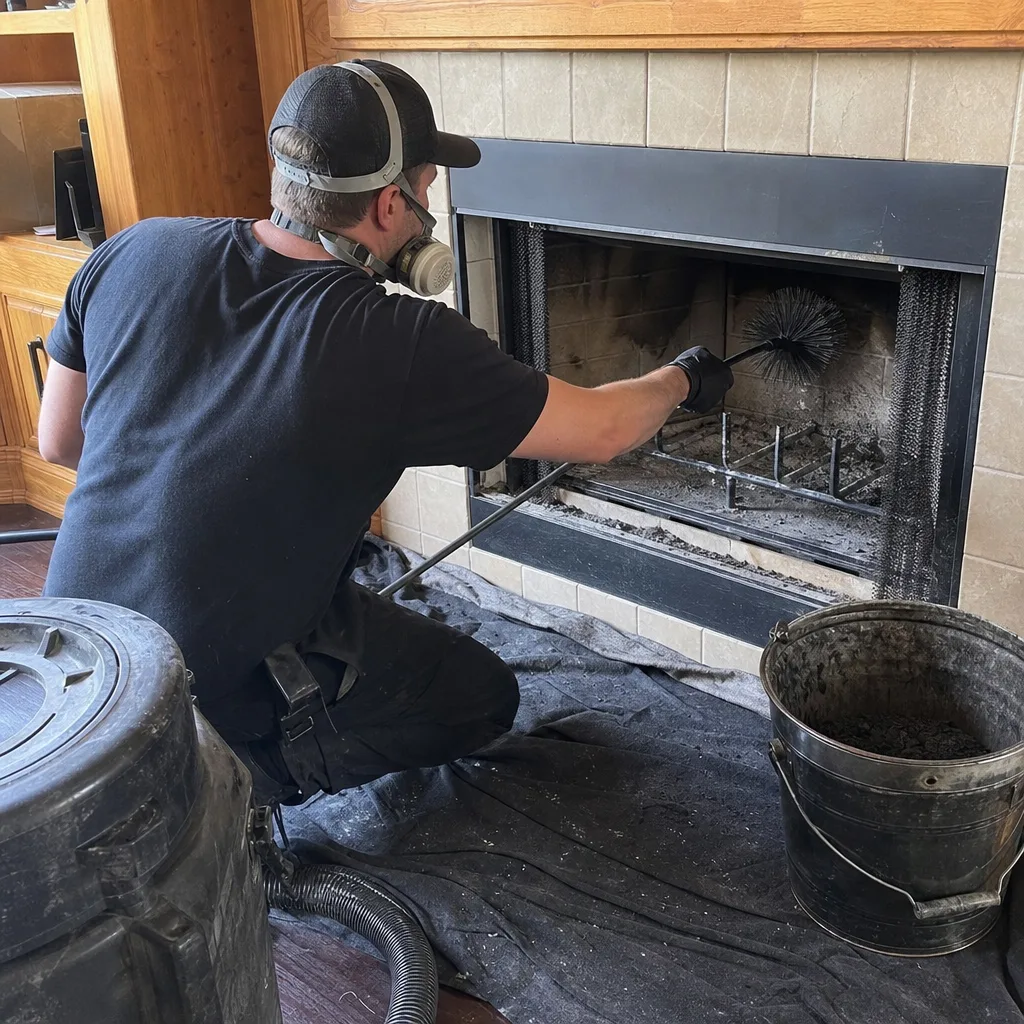
What this means in practice: our technician arrives with a Chim-Scan or equivalent video inspection system, runs the camera the full length of every flue, and records the condition of every joint, every tile, every mortar surface. The homeowner receives still images from the video, a written condition assessment, and - if defects are found - a written scope of repair with permit requirements identified.
The documentation standard matters because insurance adjusters and building inspectors increasingly request this record. After the 2021 Pacific Northwest heat dome and the subsequent emphasis on fire prevention, we’ve seen Pierce County building officials specifically request Level 2 documentation before issuing repair permits. A handwritten checklist from a flashlight inspection doesn’t satisfy this requirement.
Our 38,000+ chimney inspections since 2009 have produced a documented archive that demonstrates what Puyallup-area deterioration patterns look like. In the South Hill area, where many homes were built during the 1970s and 1980s construction booms, we regularly find Class III glazed creosote - a hardened, tar-like deposit that requires chemical treatment before mechanical removal and indicates a history of slow, smoldering fires. In the older homes near downtown Puyallup, we find more spalling brick and deteriorated mortar from decades of moisture penetration through failed crowns. These patterns inform our inspection focus and our repair recommendations, and they’re recorded in every photo archive.
Materials matter for permit compliance too. When relining is required, we specify stainless steel systems from DuraFlex or cast-in-place systems from HeatShield, with documentation of manufacturer specifications and installation procedures. This documentation becomes part of the permit inspection record - the building inspector verifies that the installed system matches the approved plan, and the homeowner retains proof that the work was done to listed standards.
The Insurance Clause That Voids Your Claim
Standard Washington homeowner’s policies contain a version of this language: “We do not cover loss caused by … faulty, inadequate, or defective … maintenance; or material used in repair, construction, renovation, or remodeling.” More critically, most policies include a maintenance clause requiring the property be “maintained in accordance with manufacturer and code requirements.”
This clause operates retroactively in chimney fire claims. If a fire originates in a chimney with unpermitted liner work, the insurer’s forensic investigation will examine:
- Whether the liner was listed for the appliance and fuel type
- Whether the installation was performed under permit
- Whether the installation passed inspection
- Whether maintenance (sweeping) was performed at appropriate intervals
The absence of a permit doesn’t automatically void coverage - but it shifts the burden of proof. The homeowner must demonstrate that the work was performed to code equivalent, which requires documentation most unpermitted jobs lack. In practice, insurers deny claims where permitted work would have been covered, and the cost of that denial falls on the homeowner during an already catastrophic event.
We’ve reviewed competitor estimates for Puyallup homeowners where the scope included liner replacement with no permit line item and no mention of inspection requirements. The price is lower - permit fees in Pierce County run $150-$400 depending on project scope, and the inspection scheduling adds time. But the homeowner who accepts that lower price carries the insurance risk, often unknowingly.
Our written prices include permit costs when required, identify the inspecting jurisdiction, and specify what documentation the homeowner will receive. Haven Standard Clause 1 requires this transparency - the price before work starts includes all costs that protect the homeowner’s interests, not just the costs that complete the repair.
The specific documentation that protects coverage: the permit application showing approved scope, the inspection sign-off, and the certificate of completion. These documents, kept with the Level 2 inspection report and photo record, create a defensible chain of compliance that satisfies both building officials and insurance adjusters.
Getting a Chimney Permit in Pierce County
The permit process for chimney work in Pierce County is straightforward but specific, and understanding the steps helps homeowners evaluate contractor proposals and timeline commitments.
Step 1: Determine permit type
Mechanical permits cover liner replacement, firebox repair, and most component replacements. Building permits apply to structural modifications, demolition, or clearance modifications. In unincorporated Pierce County, the Pierce County Building and Fire Safety Division issues both. Within Puyallup city limits, the City of Puyallup Building Division processes permits with reference to the same WAC 51-51 and IRC Chapter 10 standards.
Step 2: Submit application with scope documentation
The permit application requires a description of work, materials specifications, and often a diagram or manufacturer’s installation instructions for listed systems. For DuraFlex or HeatShield installations, we submit the manufacturer’s specification sheet with the permit application - this demonstrates that the proposed materials are listed for the intended use.
Step 3: Pay permit fees
Pierce County mechanical permit fees for chimney work typically range from $150 for minor repairs to $400 for liner replacements with multiple inspections. The fee schedule is published and consistent - any contractor who won’t specify permit costs in writing should be questioned.
Step 4: Schedule inspections
Most chimney repairs require two inspections: a rough inspection during installation (for liner work, this means before final connections) and a final inspection after completion. The inspector verifies clearances, proper materials, correct installation, and compliance with the approved scope. In Pierce County, inspections can typically be scheduled within 2-3 business days.
Step 5: Receive certificate of completion
The signed inspection card or certificate of completion is the document that matters for insurance and resale. We provide this to the homeowner with the final invoice and photo documentation, and we recommend keeping it with the home’s permanent records.
Puyallup’s growth has strained permit timelines in recent years. The city and county have both added inspection staff, but fall scheduling - when homeowners discover heating-season chimney problems - can extend waits. We factor realistic permit timelines into our project scheduling and communicate them in our written scope, so homeowners aren’t surprised by a two-week process that a competitor promised to complete in three days by skipping permits.
When Real Estate Sales Force a Level 2 Inspection
NFPA 211 Section 14.2 specifies five events that require a Level 2 inspection, and real estate transactions are explicitly listed. Yet most Puyallup-area buyers’ agents don’t request this inspection, and most sellers don’t volunteer it - creating liability that surfaces during negotiations or after closing.
The five triggering events under NFPA 211:
- Upon the sale or transfer of the property
- Upon a change of appliance type or fuel (for example, converting from wood to gas insert)
- Prior to relining or replacement of flue liners
- After a chimney fire, building fire, or seismic event
- When substantial changes are made to the appliance or chimney system
The real estate trigger is particularly relevant in Puyallup’s active market. Homes in the North Hill neighborhood, the historic district, and the newer developments around Meridian have changed hands frequently since 2015, and many transactions included only a general home inspection - not a Level 2 chimney inspection. A general home inspector typically examines the chimney exterior and may note visible damage, but lacks the equipment and training to evaluate flue liner condition internally.
We’ve performed post-purchase Level 2 inspections that revealed $3,000-$8,000 in necessary repairs that a general inspection missed. In one South Hill home purchased in 2022, the camera revealed a completely detached flue liner section in a second-floor fireplace - a condition that would have been invisible from the roof or firebox, and that represented both a fire hazard and a significant repair cost the new owners hadn’t budgeted.
For sellers, a pre-listing Level 2 inspection with documentation provides negotiating leverage. For buyers, requesting the inspection as a contingency protects against undisclosed defects. In either case, the inspection must be performed by a qualified technician with camera equipment and NFPA 211 training - not a generalist with a flashlight.
Our Fireplace Services in Puyallup include pre-listing inspections with full documentation, and we provide the photo record in a format that can be shared with potential buyers or their agents. This transparency - naming what we found, not what we felt about it - is consistent with how we approach every inspection.
Certificates, Photo Records, and Your Home File
The documents generated by permitted chimney work have specific retention requirements and practical value that most homeowners underestimate. Organizing them correctly protects both insurance coverage and resale value.
What to keep:
- Level 2 inspection report with photo/video documentation - retain permanently, update with each new inspection
- Permit application and approved scope - retain permanently
- Inspection sign-off cards or certificates of completion - retain permanently
- Written scope of work, written price, and written warranty for all repairs - Haven Standard Clause 1 documentation
- Manufacturer specifications for installed materials (DuraFlex liner specs, HeatShield application records, etc.)
Why this matters for resale:
Washington’s seller disclosure form specifically asks about permits for structural and mechanical work. A chimney liner replacement performed with permits and inspections can be disclosed with confidence; the same work performed without permits becomes a disclosure liability. In Puyallup’s competitive market, buyers with knowledgeable agents increasingly request permit documentation for mechanical systems - and the absence of that documentation can trigger price negotiations or deal termination.
Why this matters for insurance:
In a claim scenario, the adjuster’s first request is typically for maintenance records and permits. The homeowner who produces a complete file - inspection photos showing pre-repair condition, permit showing approved scope, inspection sign-off showing compliance, and photo record showing completed work - has a defensible position. The homeowner who produces only a receipt has shifted the burden of proof onto themselves.
Our Haven Standard Clause 4 requires that every customer receive this documentation automatically. Since 2009, we’ve maintained our own archive of every photo record we’ve produced - over 38,000 chimney documentation sets - and we can reproduce a customer’s record on request even years later. This isn’t a convenience feature; it’s evidence preservation.
For Chimney Repair in Puyallup work that requires permits, we coordinate the entire documentation chain: permit application, inspection scheduling, sign-off collection, and final delivery to the homeowner. The customer receives a complete file, not a collection of receipts to organize themselves.
Common Mistakes to Avoid
- Assuming cleaning and repair permits are the same thing. A sweep requires no permit, but the liner replacement it reveals does. Homeowners who don’t understand this distinction accept “one-price” quotes that omit permit costs and compliance steps.
- Accepting verbal repair scopes after a cleaning. Without a written scope, written price, and written warranty - Haven Standard Clause 1 - there’s no documentation of what was promised, what was found, or what materials were specified.
- Letting a contractor pull permits in their name only. The permit should reference the property address and the homeowner’s interest; the certificate of completion should be available to the homeowner directly from the jurisdiction, not filtered through the contractor.
- Discarding inspection documentation after the repair. We’ve had Puyallup homeowners call years after a repair, needing documentation for an insurance claim or sale, who discarded their file because “the work was done.” Permits and inspections are permanent property records.
- Hiring based on speed claims that skip permits. A liner replacement “completed in one day” without permit scheduling is almost certainly unpermitted work. The time saved is borrowed against the homeowner’s insurance coverage.
- Confusing a home inspection with a Level 2 chimney inspection. General home inspectors in Washington are not required to run cameras down flues or evaluate internal liner condition. Their chimney assessment is limited to visible components.
- Ignoring neighborhood-specific risk patterns. In Puyallup’s valley-floor areas, foundation movement from clay soil expansion creates liner stress that doesn’t exist on firmer ground. A generic inspection without local experience may miss these patterns.
When to Call a Professional
For more guides & resources on chimney care, call a qualified chimney technician when: your last sweep was more than a year ago and you burn wood regularly; you’re buying or selling a home and need documentation for disclosure; you’ve changed appliance type or fuel; you’ve experienced a chimney fire, building fire, or seismic event; or a sweep reveals conditions requiring repair and you need a written scope that identifies permit requirements.
Level Two Chimney Puyallup offers free estimates in Puyallup - call (253) 323-5667. Every estimate includes a written price before work starts, identification of permit requirements when applicable, and a documented photo record on completion. We also provide free second opinions on any competitor’s written estimate.
Frequently Asked Questions
No. Chimney sweeping and cleaning - the mechanical removal of creosote, soot, and debris - is classified as routine maintenance under WAC 51-51 and requires no permit in any Washington jurisdiction. However, repairs uncovered during that cleaning, including liner replacement or firebox reconstruction, typically do require permits. Call (253) 323-5667 for a free estimate that identifies permit requirements for any needed repairs.
A standard chimney sweep in Puyallup typically ranges from $199 to $289 for a single flue, depending on accessibility, creosote accumulation level, and whether a Level 2 camera inspection is included. Level Two Chimney Puyallup includes camera-scan documentation on every visit as standard practice, not an add-on. A written price is provided before any work starts - call (253) 323-5667 for an exact quote; estimates are free.
A general home inspection examines visible chimney components from the exterior and firebox, but does not evaluate internal flue liner condition. A Level 2 inspection under NFPA 211 requires video scanning or equivalent documentation of all internal flue surfaces, evaluation of clearances to combustibles, and assessment of the chimney structure and appliance connection. For real estate transactions in Puyallup, a Level 2 inspection provides documentation that a general inspection cannot.
The condition of your existing liner determines whether repair or replacement is appropriate. Cracked terra cotta tiles can sometimes be repaired with HeatShield cerfractory foam for minor damage, but detached sections, severe spalling, or multiple cracks typically require stainless steel relining with a listed system like DuraFlex. We don’t recommend either approach without camera evidence you can see for yourself - and we’ll tell you plainly when repair can safely wait. Call (253) 323-5667 for a free inspection with photo documentation.
NFPA 211 recommends annual inspection for all chimneys, with cleaning frequency determined by use and fuel type. Wood-burning fireplaces and inserts in regular Puyallup use typically need annual sweeping due to creosote accumulation; gas appliances may require less frequent cleaning but still need annual inspection for venting integrity and debris obstruction. The maritime climate around Puget Sound promotes moisture-related deterioration that makes annual inspection particularly important for masonry chimneys.
Skipped maintenance leads to creosote accumulation, which increases chimney fire risk - a Class III glazed deposit can ignite at temperatures above 450°F and reach 2,000°F, damaging liners and spreading to structural members. Moisture intrusion from failed crowns or caps causes spalling brick, deteriorated mortar, and rusted metal components. In Puyallup’s wet climate, we’ve documented advanced deterioration in chimneys that skipped just two years of inspection. The repair costs typically exceed maintenance costs by ten to twenty times.
Yes. Washington’s seller disclosure form requires disclosure of unpermitted structural and mechanical work, and chimney repairs fall in this category. Buyers with knowledgeable agents increasingly request permit documentation, and the absence of permits can trigger price renegotiation or deal termination. A permitted repair with certificate of completion provides clean disclosure; unpermitted work creates liability that may persist beyond closing.
The Bottom Line
Chimney cleaning in Washington requires no permit, but the repairs it uncovers almost always do - and that distinction protects your insurance coverage, your disclosure obligations, and your home’s value. NFPA 211’s Level 2 inspection standard, adopted through IRC Chapter 10 and WAC 51-51, provides the documentation framework that makes permits defensible and claims payable. The homeowners who fare best are those who demand written scopes, written prices, and documented photo records before work starts; who verify that required permits are included in the project; and who retain certificates of completion with their permanent home records. In Puyallup’s varied housing stock - from historic Victorians to mid-century ranches to new construction - the specific conditions vary, but the documentation requirements remain constant.
Written by Corrine Halstead, Owner at Level Two Chimney Puyallup, serving Puyallup since 2009.