
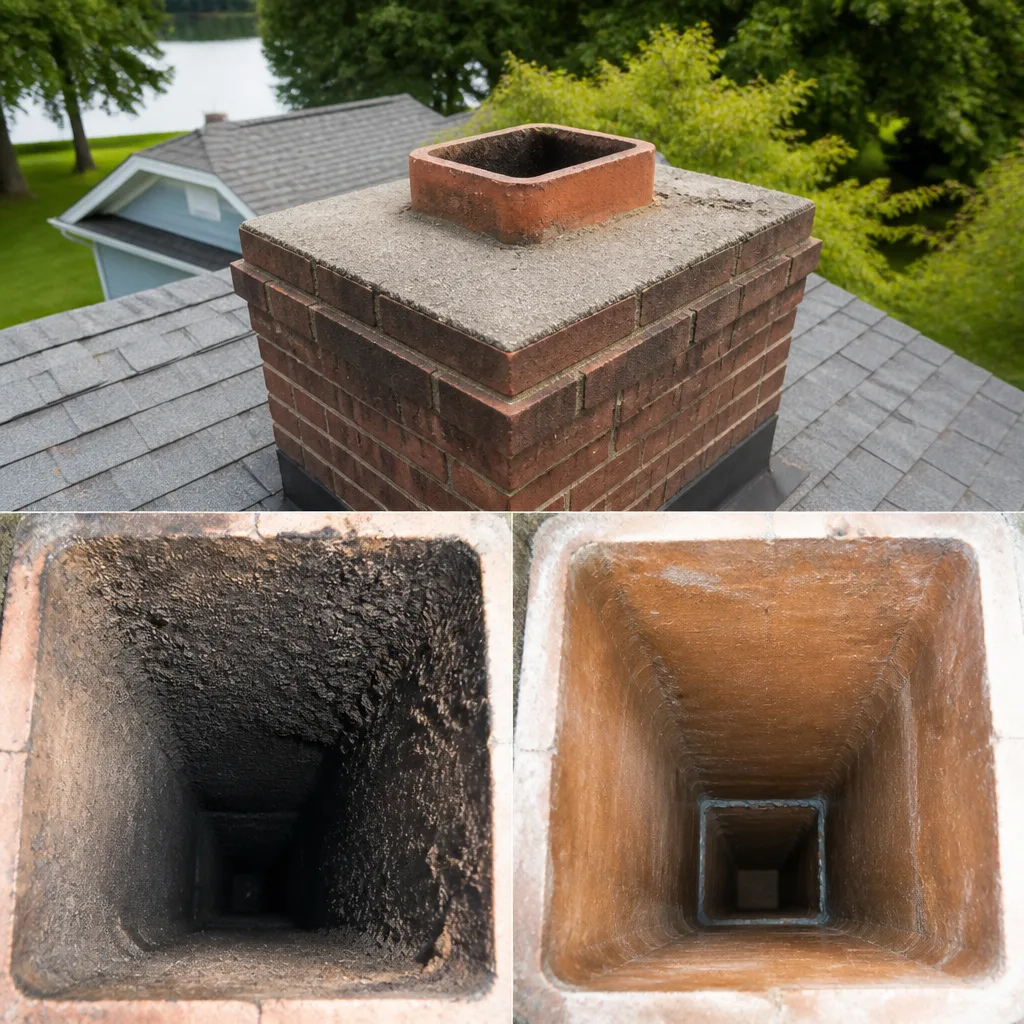
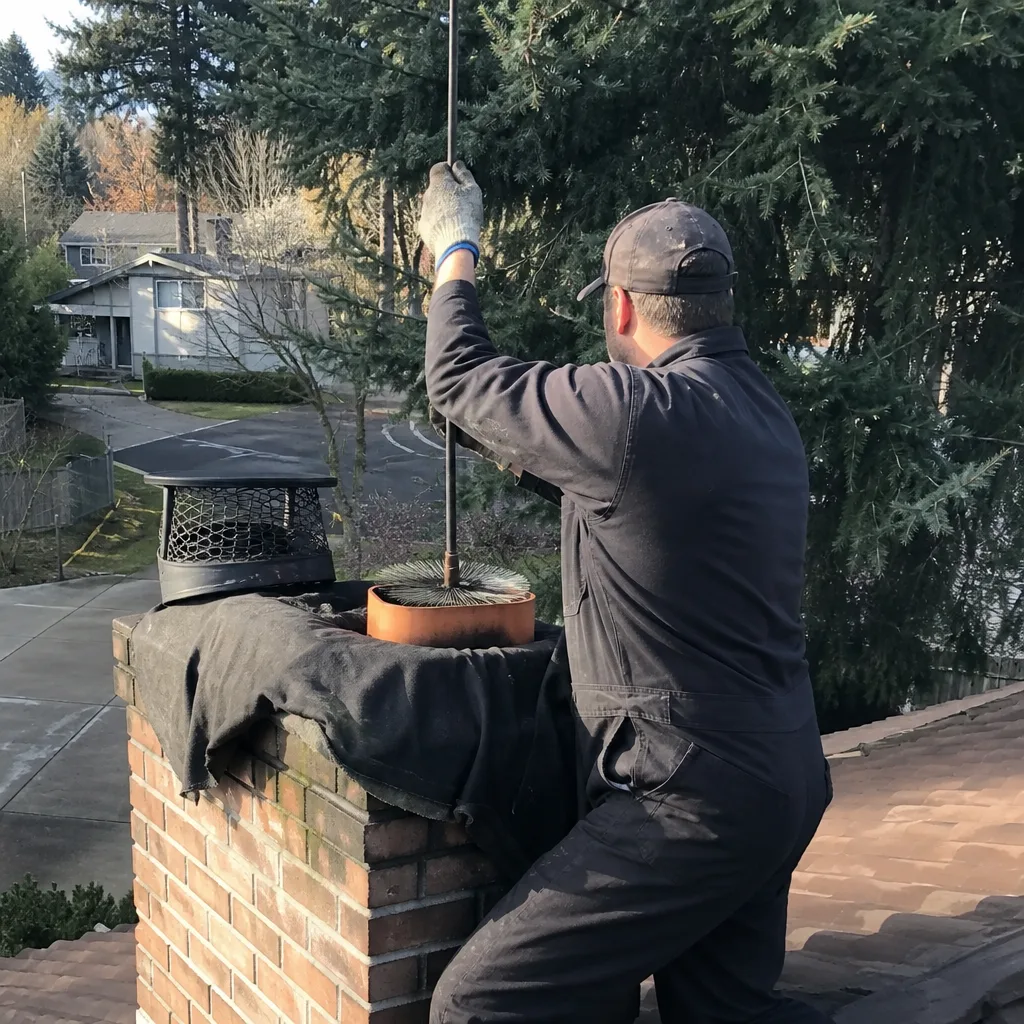
Level 1 sweep and inspection to the NFPA 211 annual standard - flue, crown, cap, and flashing checked and photographed
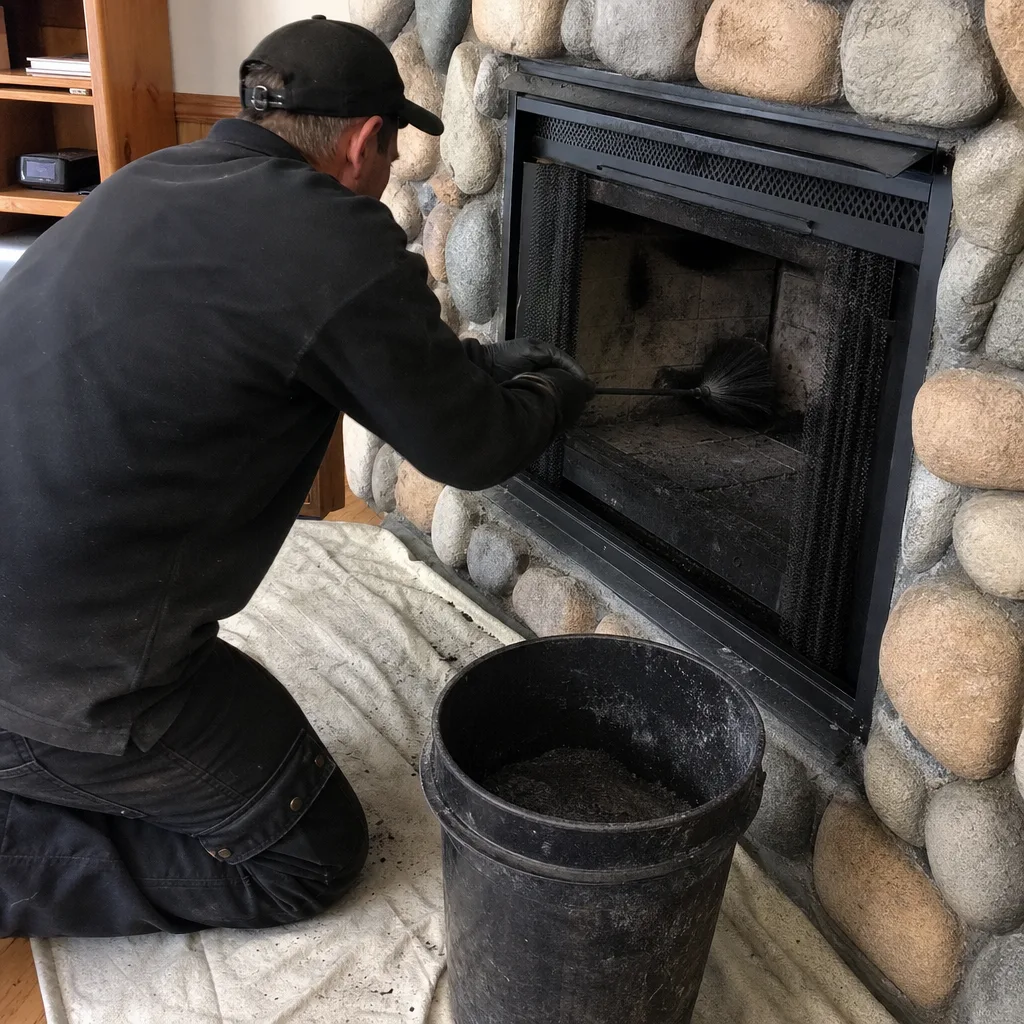
Chimney sweep logs do not sweep chimneys. They loosen some creosote - which then falls where a brush and vacuum still have to collect it.
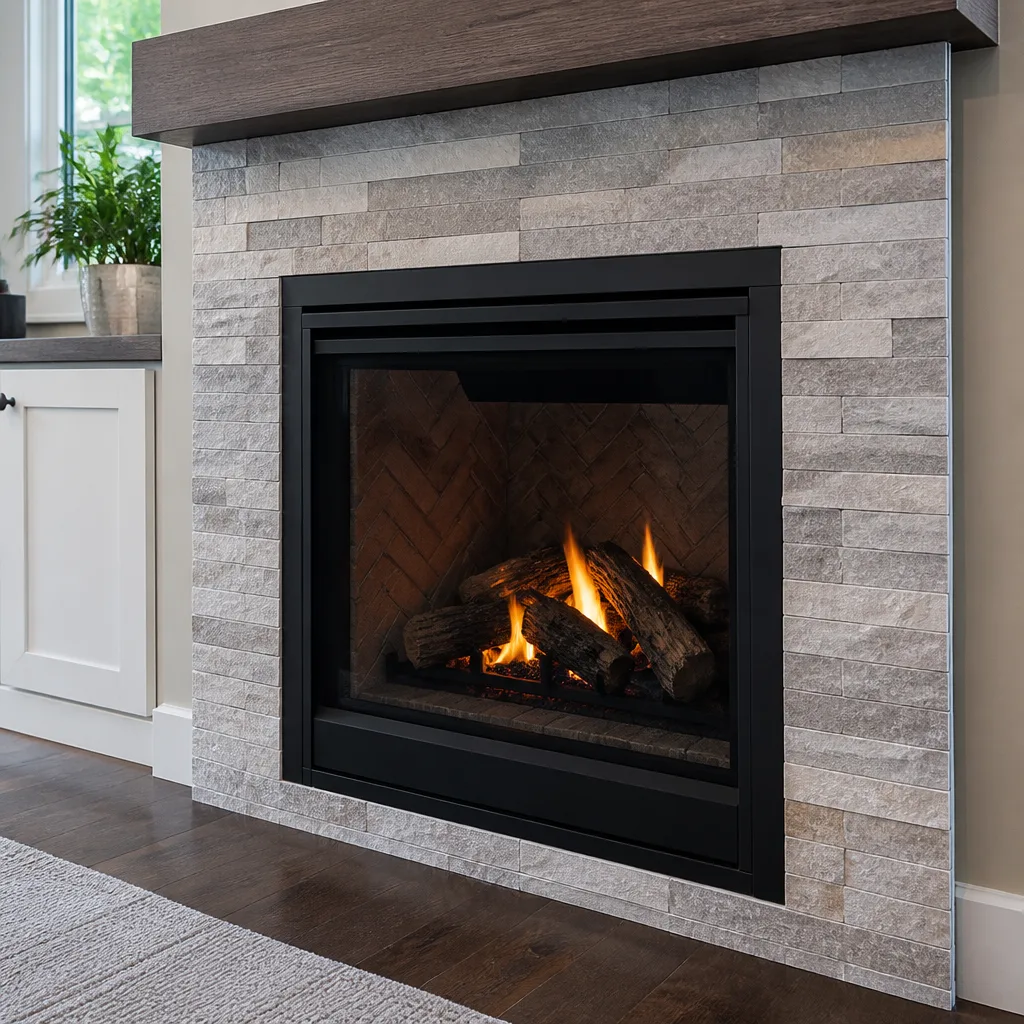
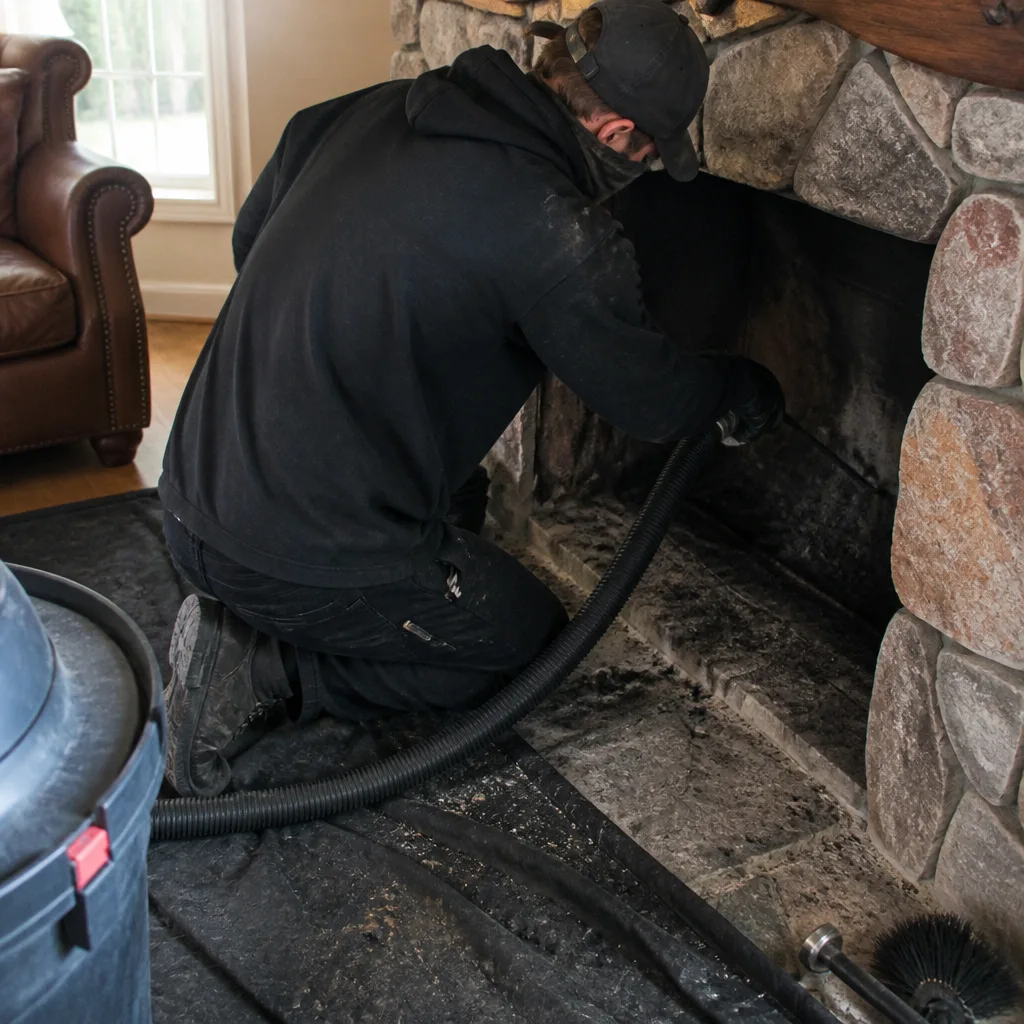 Before
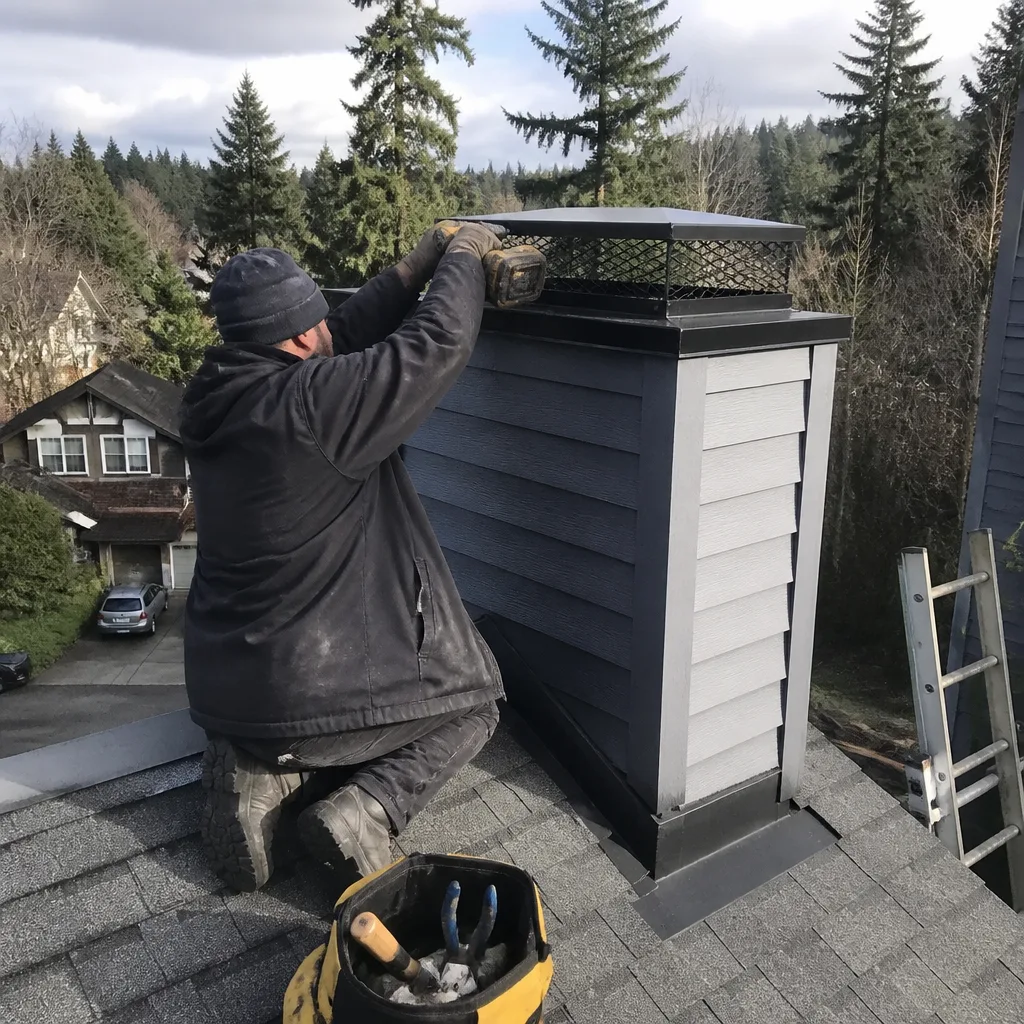 After
After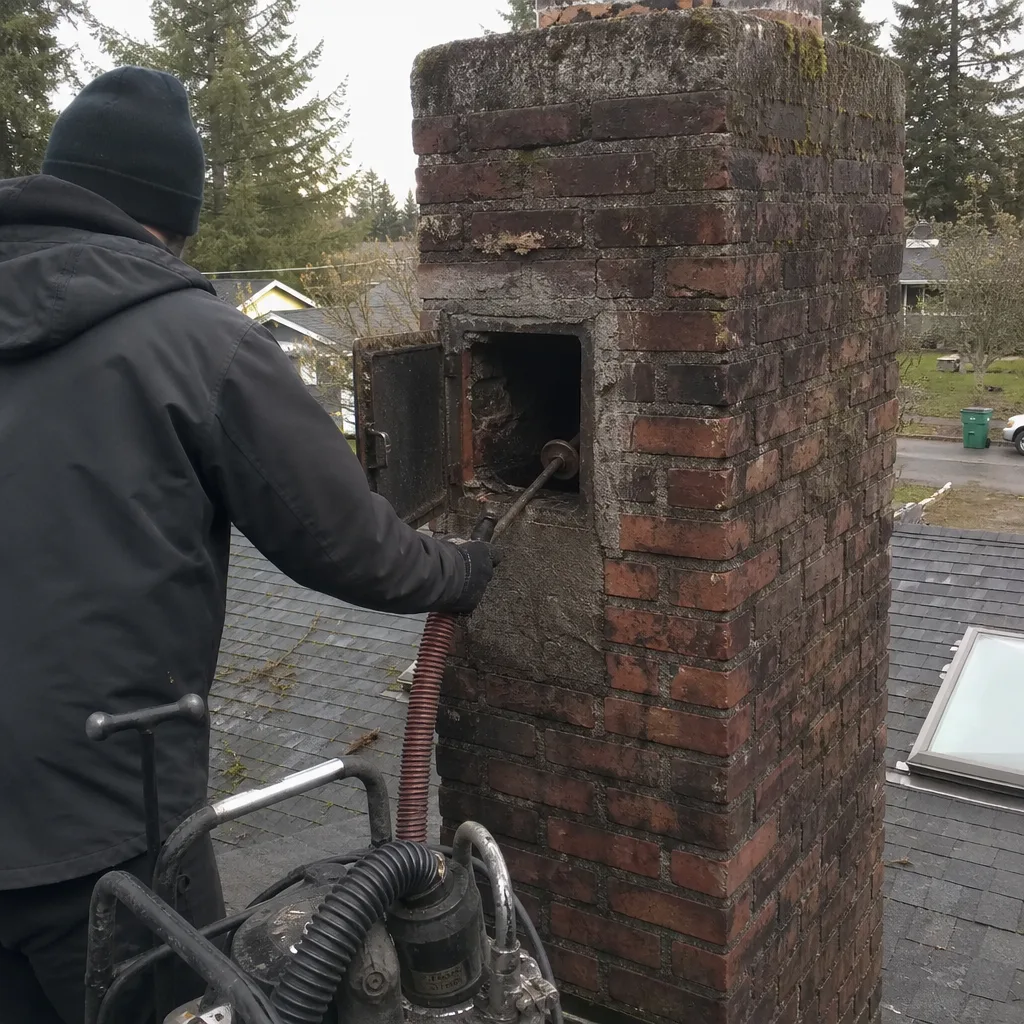 Before
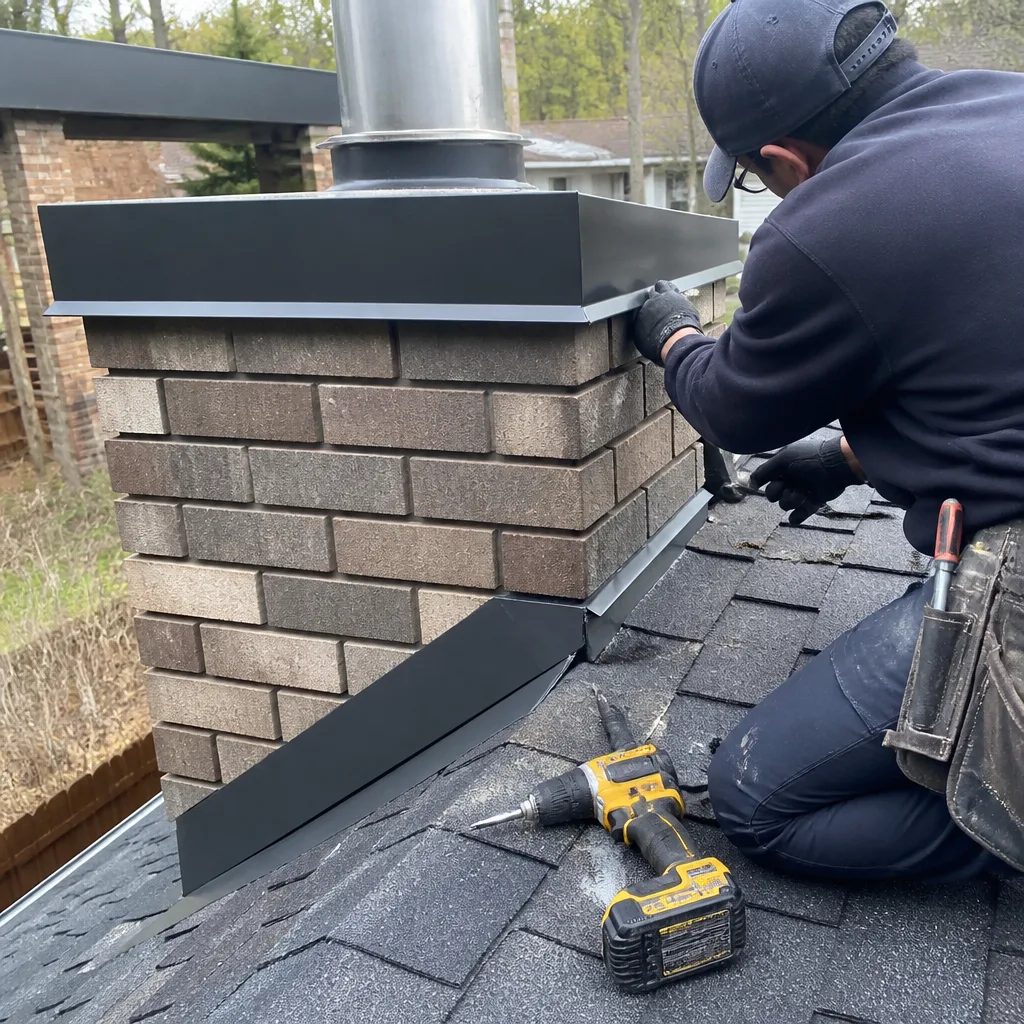 After
After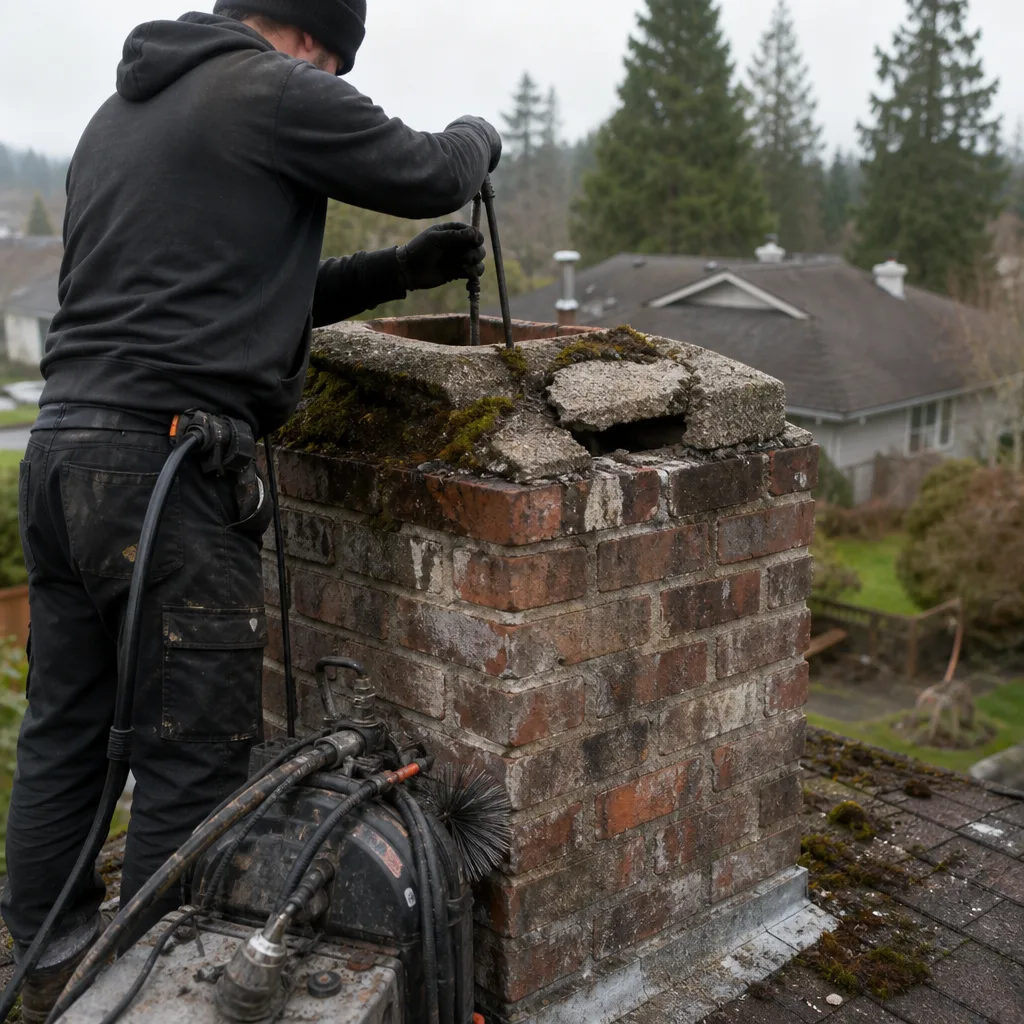 Before
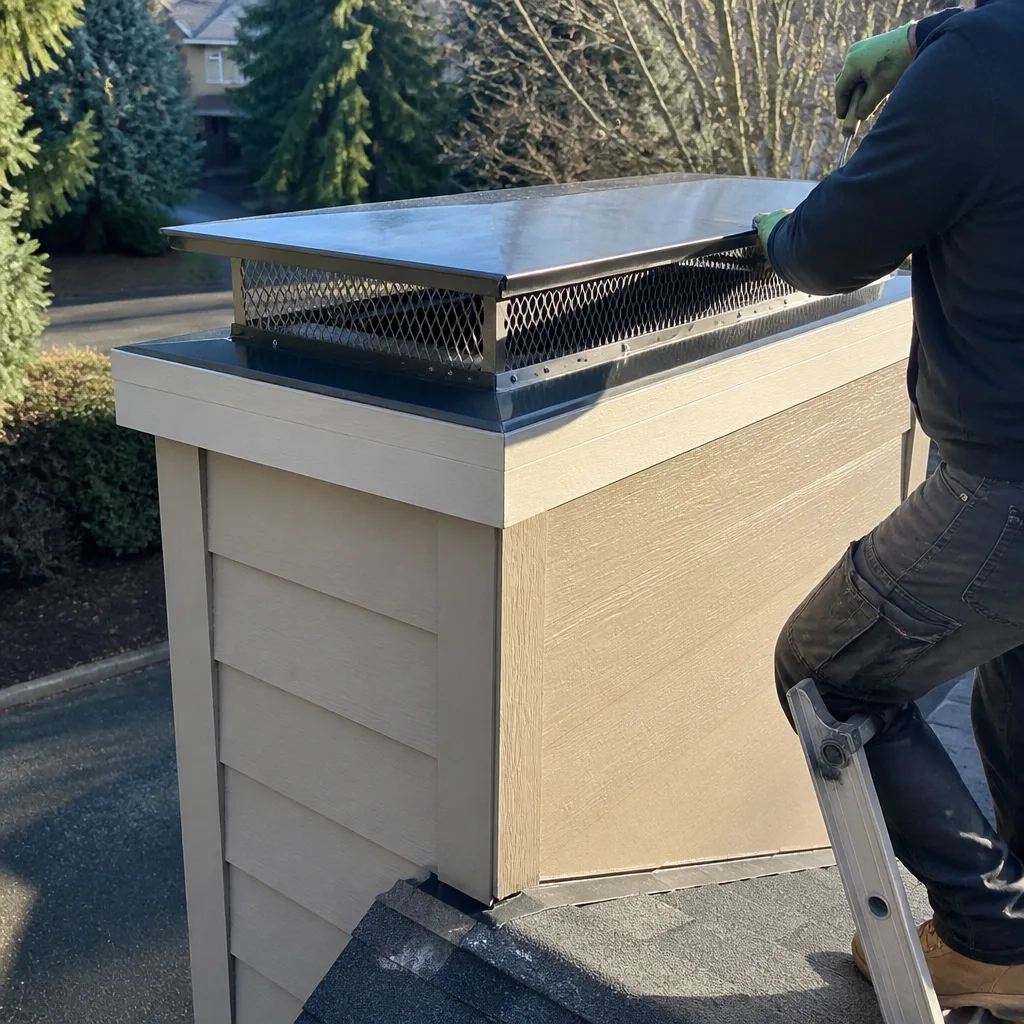 After
AfterOlympia Chimney Chimney Cap Installation: The Puyallup Owner’s Guide
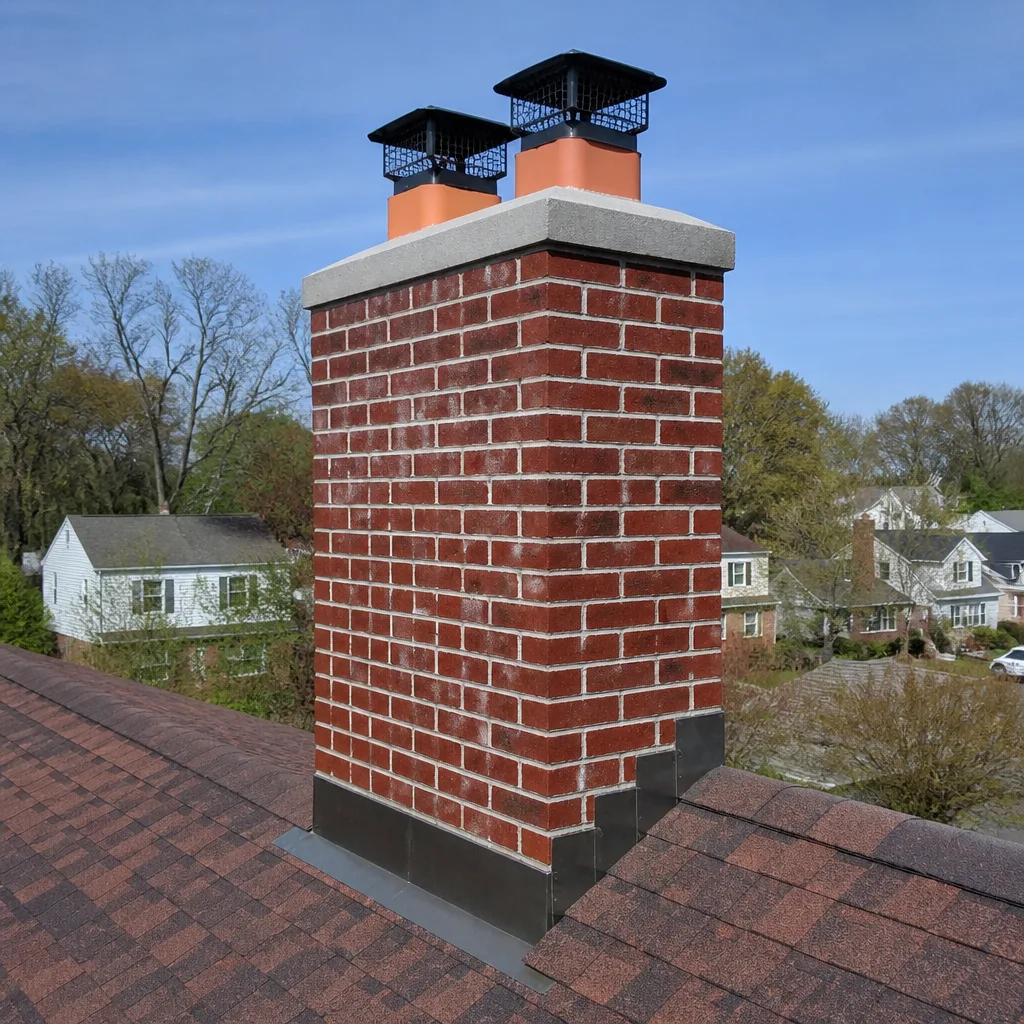
Olympia Chimney chimney cap installation in Puyallup typically runs $280-$520 for most single-flue applications, including the cap, flashing collar, and labor. We stock Olympia Chimney-compatible caps in common sizes on our trucks, and most replacements are completed in under two hours once the written price is approved. The caps that fail fastest in our climate are the galvanized models after seven to ten years of wet Puyallup winters, when the seam welds at the lid start weeping rust onto the crown below.
Most owners don’t notice the cap itself. They notice the water stain on the firebox wall, or the rust flakes in the hearth after a windstorm, or the squirrel that suddenly has access to the flue. By then the cap is usually past saving, and the crown beneath it may be taking damage too. That’s why we run the camera before we quote anything, even for something that looks like a simple swap.
Which Olympia Chimney Models This Applies To
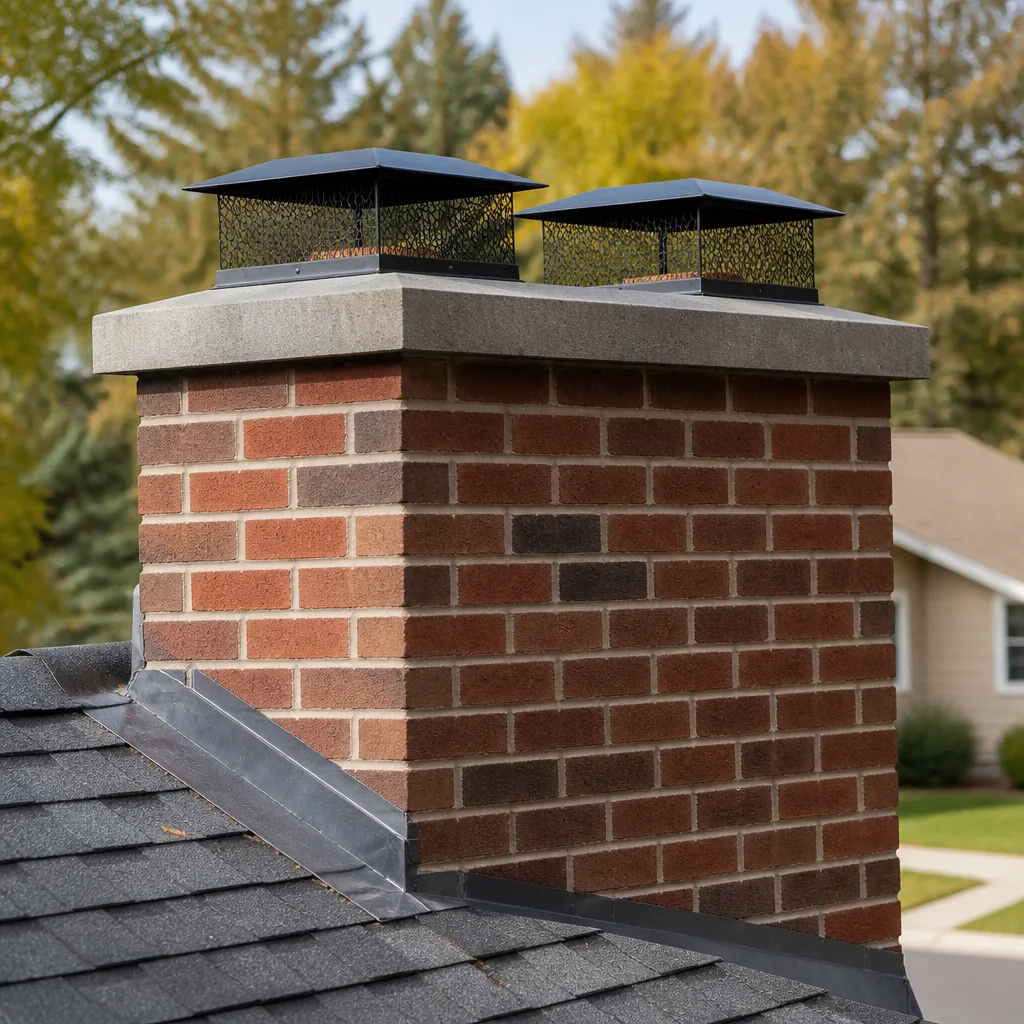
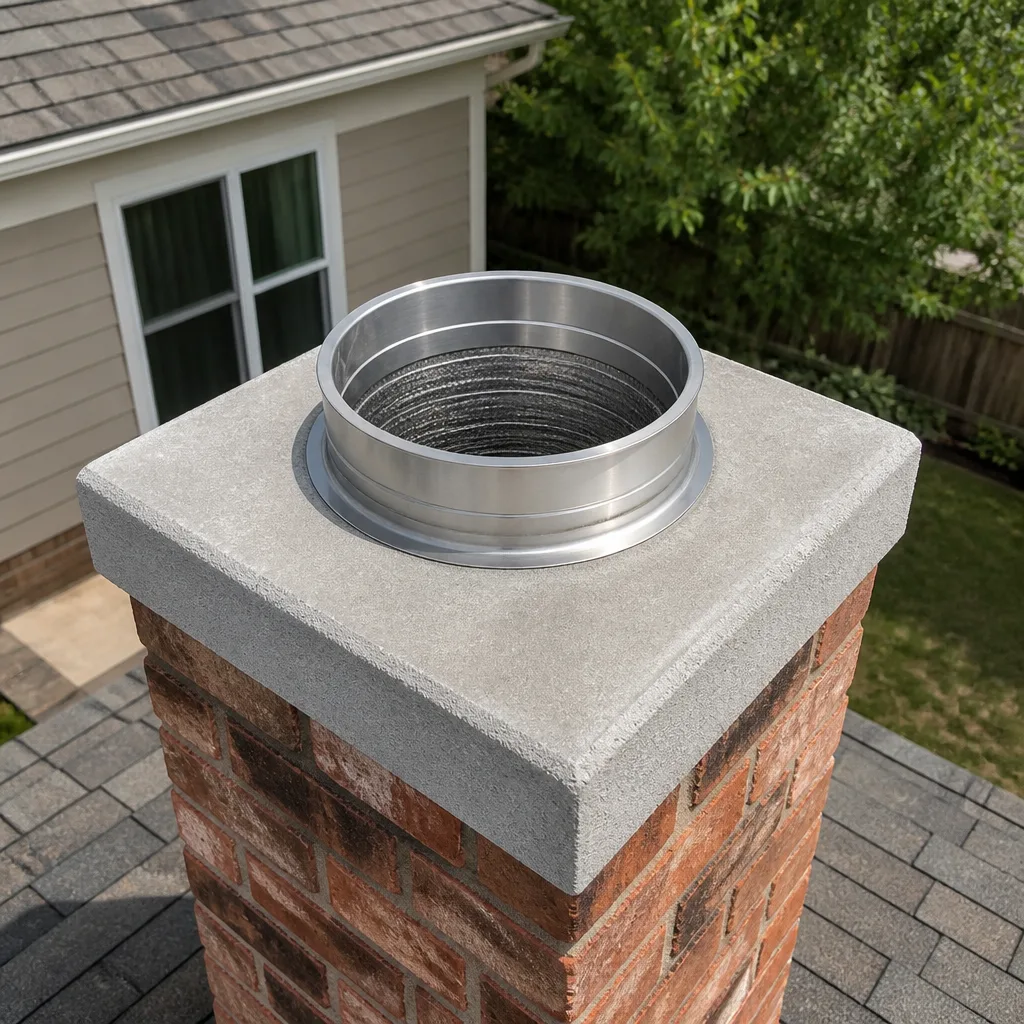
Olympia Chimney caps are not universal. The company produces three main series that we see in Puyallup homes: the standard galvanized line, the 304 stainless steel line, and the copper line used on higher-end installs. The critical match points are flue tile outside diameter, flue count, and whether the flue is extended above the crown or flush with it. A 13×13 flue tile with an extended flue takes a different collar than a 13×13 that sits flush. We’ve seen homeowners order the wrong Olympia Chimney cap twice in the same month on South Hill because they measured the crown instead of the flue.
OEM Olympia Chimney caps come with the company’s stamped lid and specific mesh spacing, 5/8-inch on most models, which meets Washington State code for spark arresting. We also install quality aftermarket equivalents from Gelco and Famco when the homeowner wants a faster turnaround or a different finish. The aftermarket caps we use match the 304 stainless spec and carry the same mesh rating. For copper, we stick with Olympia Chimney OEM or source through our Haven buying network, since the patina match matters on visible rooflines.
To identify your part, look for the Olympia Chimney stamp on the underside of the lid, or measure the flue tile’s outside dimensions with a tape measure. Bring that number when you call. If the cap is already missing, we can pull the flue specification from a camera inspection.
Signs Your Olympia Chimney Chimney Cap Installation Is Failing
- Rust streaks down the chimney face. On galvanized Olympia Chimney caps, the lid seam and the corners of the mesh screen are the first failure points. Water wicks through the weld, freezes overnight during a Puyallup cold snap, and pushes the seam open. The rust runs down the brick or siding and stains it permanently if it goes too long.
- Mesh screen pulled away from the frame. Squirrels and raccoons test every cap eventually. Olympia Chimney’s 5/8-inch mesh is tight enough for most wildlife, but if the cap is already rust-weakened, animals can pry the screen loose. Once they’re inside the flue, removal gets expensive fast.
- Lid sitting crooked or blowing off in wind. The lid on an Olympia Chimney cap is held by screws or a friction fit depending on the series. After years of thermal cycling, the screw holes wallow out or the friction tabs fatigue. A lid that lifts in a 40-knot gust is a lid that will be in your neighbor’s yard by February.
- Water in the firebox after rain. This means the cap is either missing, severely corroded, or the wrong model for the flue configuration. Olympia Chimney makes caps with both flat and pitched lids; a flat lid on a flue that extends high above the crown will pool water and leak eventually.
- Spalling or cracking on the crown surface. The crown is the concrete slab at the top of your chimney. A failed cap lets water saturate it, and in Puyallup’s wet-freeze cycles, that water expands and pops the surface off in flakes. Crown repair runs $400-$900. Catching the cap early avoids it.
 Before
 After
AfterReplacement Cost & What’s Included
| Component | Price Range |
|---|---|
| Olympia Chimney stainless steel cap, single flue | $180-$290 |
| Olympia Chimney galvanized cap, single flue | $120-$180 |
| Copper cap, custom order | $340-$520 |
| Labor: removal, fit, seal, photo documentation | $160-$200 |
| Crown assessment and minor seal (if needed) | $0-$85 |
| Typical total installed | $280-$520 |
The range depends on three things: cap material, flue height and access difficulty, and whether the crown needs sealing while we’re up there. We don’t guess at any of it. Corrine Halstead and our technicians run the camera first, write down what it shows, and quote the repair before touching a brush. Camera goes in first. Price gets written down second. Work starts third. Every quote is itemized, every warranty is written, and every job is backed by our 365-Day Done Right Promise under the Haven Standard.
DIY or Call Us?
You can safely check two things from the ground: whether the cap lid is still seated square, and whether there are visible rust streaks or missing mesh. Use binoculars. Don’t climb the roof. Chimney work at height is genuinely dangerous, and the slope of most Puyallup roofs in the South Hill and North Hill neighborhoods is steeper than it looks from the driveway.
Where DIY goes wrong: the cap may seem to fit, but if the collar doesn’t seat properly on the flue tile, you’re channeling water straight into the flue gap. We’ve found caps held on with sheet metal screws driven through the flue liner, which cracks it. We’ve found aftermarket caps with 3/4-inch mesh that don’t meet Washington spark arrestor code. And we’ve found plenty of “simple swaps” that turned out to be covering a cracked crown that needed repair first. If the cap failed because the crown is failing, putting a new cap on top hides the problem until it’s a rebuild.
Call (253) 323-5667 and we’ll quote it in writing. No charge to look, no pressure to book.
FAQs
Galvanized caps last 7-10 years in our wet climate before seam rust sets in; 304 stainless caps last 15-20 years; copper lasts indefinitely with proper maintenance. The determining factor is usually the lid seam, not the mesh. Call (253) 323-5667 for an exact quote - estimates are free.
Usually no. Once the seam weld or the mesh attachment has failed, the cap’s structural integrity is compromised, and patch repairs don’t hold through another freeze cycle. We replace rather than repair so the work is warrantable under our 365-Day Done Right Promise.
Most Olympia Chimney cap replacements take 45 minutes to 90 minutes on site, including the camera inspection, written price approval, and photo documentation. Copper or custom-fit caps may take longer if flashing modification is needed.
We stock stainless and galvanized single-flue caps in the most common Puyallup sizes: 8×8, 8×12, 13×13, and round 10-inch and 12-inch. Multi-flue and copper caps are sourced through our Haven buying network with Olympia Chimney, Gelco, and Famco, typically with next-day availability.
Written by Corrine Halstead, Owner, Level Two Chimney Puyallup at Level Two Chimney Puyallup, serving Puyallup and nearby areas.